The first generation to retire in towns they moved to for work, surrounded by neighbors they never bothered to learn — and now can't.
Marvin is 74. He lives in a cul-de-sac in a Sunbelt suburb he moved to in 1987 for a regional sales manager position that ended in 2009. His wife died four years ago. The house across the street has changed hands twice since the funeral, and he could not tell you the name of the family living there now. He waves. They wave back. That is the entire architecture of his daily human contact, minus the cashier at the grocery store and a son who calls on Sundays from a different time zone. Thirty-seven years in the same neighborhood, and yet it might as well be a hotel he checked into last month.
Marvin is not unusual. He is, in fact, the demographic baseline for an entire generation that did exactly what the postwar economy asked them to do — pack up, move for the job, repeat — and is now discovering that the bill for that compliance comes due in your seventies, not your forties.
The conventional read on boomer loneliness is that it's a personality problem. They didn't invest in friendships. They worked too much. They expected their kids to be their social life. That read is partly true and almost entirely beside the point. The deeper story is structural. Boomers are the first American generation to grow old in places they have no roots in, having spent the productive decades of their lives chasing employment across a geography that kept rearranging itself underneath them.
And nobody warned them this is what the ending would feel like.
The job wasn't a job. It was a country.
If you graduated from high school in 1968 and went to work for a company that promised upward mobility, the implicit contract was geographic. You went where the work was. You took the transfer to Cincinnati, then Dallas, then Phoenix. Each move was framed as progress. The kids would adjust. The wife would make new friends at the new church or the new tennis club. The neighbors were temporary anyway, because the next promotion was probably eighteen months out.
What nobody explained was that the people you were leaving behind every four years were the same people who, in earlier generations, would have been at your funeral. They would have known your kids. They would have brought casseroles when your wife got sick. They would have been the structural backbone of what we now clinically call social support in late life.
Instead, those relationships were treated as expendable. Friendly enough at the time. Forgotten by the next zip code.
Robert Putnam has been documenting this collapse for thirty years. His work on the erosion of social capital and community engagement tracks exactly the cohort we're talking about — the generation that watched bowling leagues empty, civic clubs dissolve, and front-porch culture get replaced by attached two-car garages that allow you to enter and exit your home without ever once making eye contact with the people who live ten feet from you.
Putnam didn't predict boomer loneliness. He documented its construction in real time.
The geography of disposable neighbors
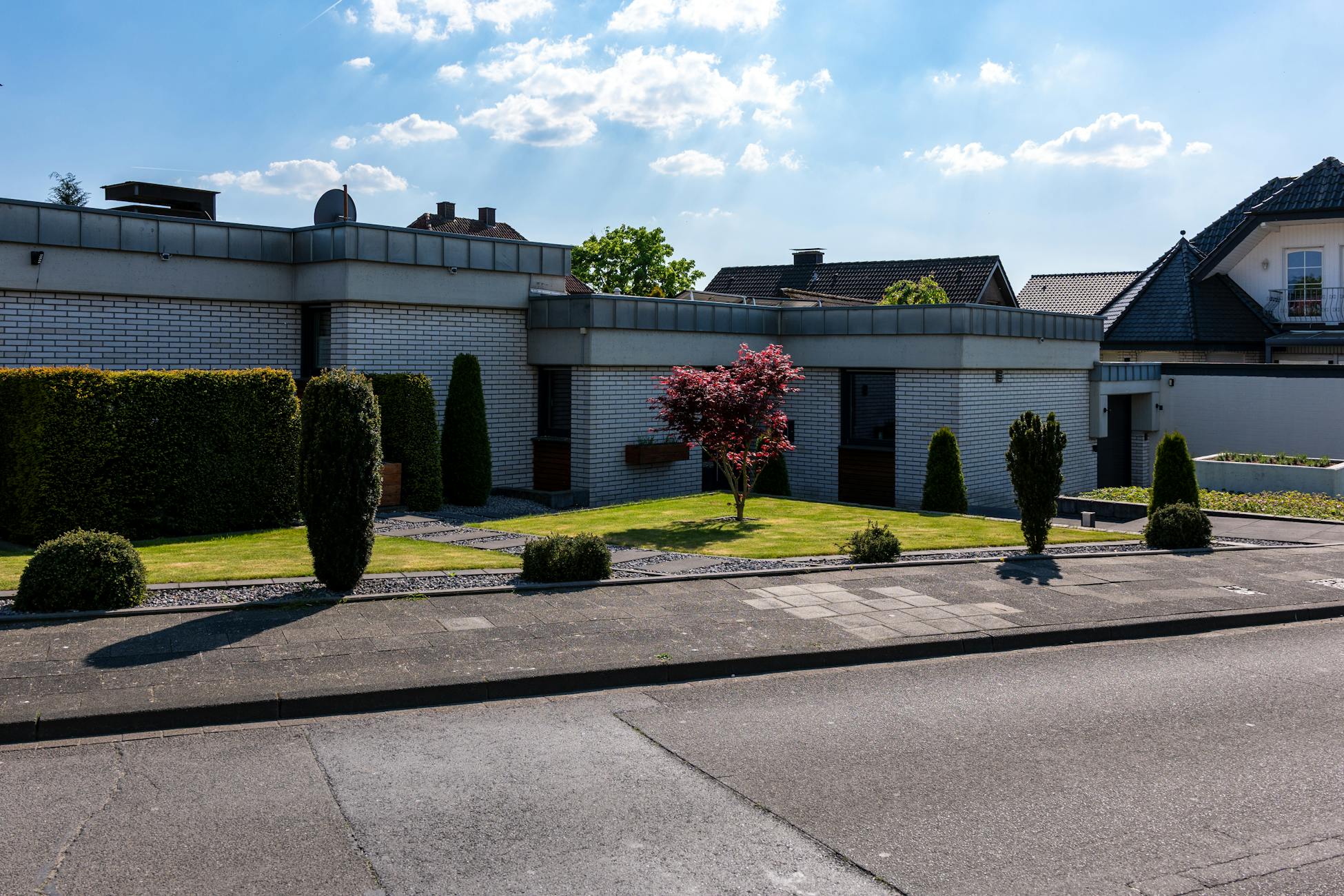
There's a specific kind of American suburb that was built for the boomer career arc, and it was not designed for old age. The cul-de-sac model — large lots, attached garages, no sidewalks connecting to anything, the nearest coffee shop a four-mile drive — works beautifully when you are 42 and commuting to an office. It becomes a quiet kind of prison when you are 74 and no longer driving at night.
Researchers have started connecting these dots. Studies on urban sprawl and mobility have found that the physical design of postwar American suburbs actively impedes the kind of casual, repeated, low-stakes contact that builds genuine neighborhood familiarity. You don't bump into people. You don't share a stoop. The architecture itself was optimized for privacy and resale value, not for the slow accumulation of belonging.
A boomer who moved into one of these neighborhoods in 1985 to take a better job was buying into a community design that promised independence. The fine print, never read aloud, was that the same independence becomes isolation the moment you stop having anywhere to drive to.
The job ended. The commute ended. The kids left. And what was left was a four-bedroom house on a quiet street where the only sound after 8 p.m. is somebody's HVAC system.
The thirty-year acquaintanceship
Here's the part that disturbs me most when I read accounts from people Marvin's age. They will tell you, with no apparent self-consciousness, that they have lived next to the same family for fifteen or twenty years and don't know the names of the children. They know the dog's name. They know what kind of car the husband drives. They wave at the holidays. That's the relationship.
This is not the residue of a few personal failures. It's a generational pattern. The comparative research on generational strengths suggests boomers were socialized into a particular kind of pleasant-but-shallow neighboring style — civil, distant, transactional — that made the constant relocations of the corporate era survivable. You can't get too attached to people you might leave next April.
The problem is that style of protective emotional distance doesn't have an off switch. You can't be a friendly stranger to your neighbors for forty years and then, at 72, suddenly knock on the door and ask if they want to come over for dinner. The muscle for that kind of intimacy has atrophied. Often it was never developed.
So they don't knock. And nobody knocks on theirs.

The loneliness shows up in the body
This is not a soft problem. The medical literature has gotten very clear, very fast, that what we're describing is a public health emergency dressed up as a lifestyle quirk. The National Academies have been documenting the health and medical dimensions of social isolation in older adults, and the findings are not subtle. We're talking about cardiovascular impacts, cognitive decline, immune dysfunction. The body reads chronic loneliness as a sustained physical threat.
More recent work has gone further. Research published last fall examined how isolation, loneliness, and frailty reinforce each other in a feedback loop — the more isolated you become, the more frail you become, and the more frail you become, the harder it is to do anything about the isolation. The 74-year-old in the cul-de-sac who can't drive at night and doesn't know his neighbors isn't just sad. He's medically compromised in ways his cholesterol panel won't catch.
The slow erosion of late-life community is killing people. We just code it as heart disease.
The generation before knew something we forgot
Having lived in cities across the world — Melbourne, London, New York, Bangkok, Ho Chi Minh City, and now Singapore — I've seen vastly different models of how communities hold their older members. In some places, the social fabric is threadbare. In others, it's so tightly woven that aging in isolation would be almost structurally impossible. The difference isn't cultural goodness. It's design. It's whether the physical and social infrastructure of a place was built to keep people near each other, or to help them get away from each other as efficiently as possible.
The postwar American suburb chose the second option. And a generation followed the blueprint faithfully.
None of this is Marvin's fault. He did what the economy told him to do. He moved for opportunity. He maintained his home. He was a good neighbor in the narrow American sense — quiet, helpful when asked, respectful of property lines. What he wasn't given was any structural reason to invest in the people next door. The system treated neighbors as scenery, and he treated them accordingly.
Now the scenery is all he has.
The real question isn't why boomers are lonely
It's why we built an entire economy around the assumption that moving people away from their communities every few years would have no long-term cost.
The cost is Marvin, sitting in a house he's owned for thirty-seven years, waving at people whose names he doesn't know, waiting for Sunday when his son calls.
That's not a failure of character. It's the predictable outcome of a system that priced belonging out of the equation and called it upward mobility.
We just never bothered to calculate what the loneliness would cost on the back end. Now the invoice is arriving — in doctor's offices, in emergency rooms, in four-bedroom houses where the silence after 8 p.m. is the loudest sound in the room.
And the generation that was told to keep moving is finally standing still, in places that were never built to hold them.