A man returns to his childhood cafeteria where he ate alone for a year, only to discover the room still holds his ten-year-old loneliness perfectly preserved—and that some feelings wait decades for us to be ready to reclaim them.
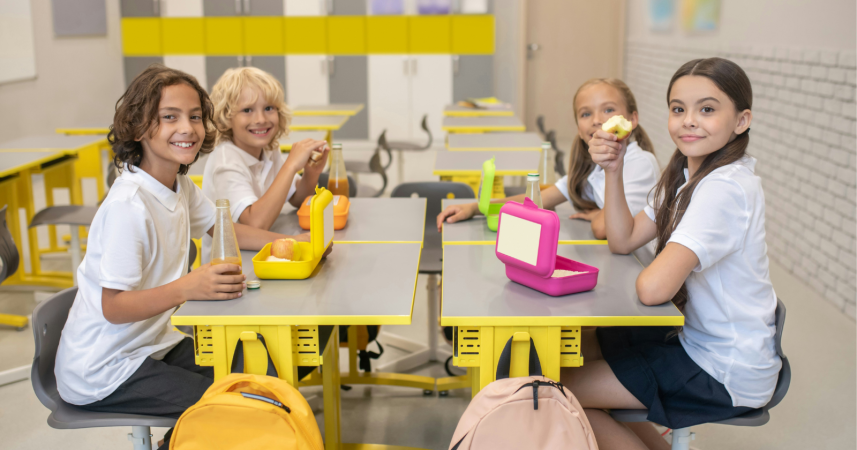
The fluorescent lights still hummed the same tune. That was the first thing I noticed — standing in the middle of the cafeteria at the elementary school I'd attended in suburban Sacramento, the lights buzzing in that exact key I hadn't heard in thirty-four years. The lunch tables, those endless rows where I'd sat with my sandwich and my silence, were still bolted to the floor. The room had shrunk. Or maybe I'd just grown.
They'd let me walk through during summer break, which is how I came to be standing there at forty-four, alone, on a Tuesday afternoon.
What struck me wasn't the size, though. It was the feeling that still lived there, waiting thirty-four years for someone to come claim it.
The geography of our emotions
Have you ever walked into a room and felt something shift in your chest? Not because of what's happening there now, but because of what happened there before?
Psychologists call this "place-dependent memory," but that clinical term doesn't quite capture what I'm talking about. This goes deeper than remembering. This is about the emotional fingerprints we leave on spaces, and how those spaces hold onto them long after we've gone.
Think about it. Where did you first experience real heartbreak? Can you drive past that street corner without feeling something twist? Where were you when you got the news that changed everything? Does that room still feel different to you?
We talk about carrying our past with us, but what if it's also true that our past stays exactly where we left it? Waiting. Patient. Unchanged.
Why we avoid going back
Most of us don't return to our old elementary schools. We don't revisit the apartment where we lived during our darkest year. We don't walk through the park where we had that conversation that ended everything. And there's good reason for that avoidance. Going back means confronting not just who we were, but how we felt. Raw. Unprocessed. Exactly as we left it. We're good at constructing narratives about our past that make sense of our present — we smooth out the rough edges, add meaning that wasn't there, turn confusion into clarity, at least in the retelling. But places don't revise themselves. They hold the original draft, and that's the part that scares us.
That cafeteria held my ten-year-old loneliness in its purest form. Not the story I'd told myself about it. Not the lesson I'd extracted from it. Just the feeling itself.
The unexpected gift of returning
Here's what surprised me: picking up what I'd left there didn't hurt the way I expected it to.
Standing in that smaller-than-remembered room, I could hold that loneliness differently. My forty-four-year-old hands knew what to do with it in a way my ten-year-old hands never could. I could feel it fully without drowning in it.
There's something powerful about meeting your younger self's pain with your current self's perspective. You realize that feeling wasn't wrong or weak or something to be ashamed of. It was just true. A ten-year-old kid eating lunch alone, feeling exactly how that feels.
What would happen if you went back to one of your difficult places? Not to relive the pain, but to reclaim it? To hold it with the compassion you couldn't access then?
The courage to collect what's yours
Walking through those hallways — past the drinking fountain that used to seem so tall, past the classroom where Mrs. Patterson taught long division — I thought about all the places where I've left pieces of myself. The college dorm where imposter syndrome nearly broke me. The coffee shop where I learned about my limits. The street where I realized I'd been wrong about almost everything.
Each of these places holds something that belongs to me. Not in a possessive way, but in a "this is part of my story" way. And maybe there's value in going back to collect these pieces. Not to carry them as burdens, but to integrate them as experiences that shaped who I've become.
Viktor Frankl wrote about finding meaning in suffering, but sometimes I think we need to find the suffering first. Really find it. Stand in the room with it. Let it be exactly what it was before we can transform it into something else.
What stays and what goes
Not everything we leave behind needs to be picked up again. Some things are better left where they are, monuments to versions of ourselves we've outgrown.
But the deep feelings, the ones that shaped us, the ones we've been running from or explaining away? Those might be worth retrieving.
Because here's what I learned in that cafeteria: the loneliness I felt then became the empathy I carry now. That kid eating lunch alone developed an eye for others sitting by themselves. He learned to notice. To include. To remember what it feels like to be on the outside looking in.
I couldn't have known that at ten. But at forty-four, I can see the thread connecting that feeling to my work, my relationships, even my decision to go vegan (initially armed with statistics and righteousness, sure, but ultimately driven by a deep recognition of suffering and isolation).
The invitation in the empty room
Schools in summer are perfect for this kind of reckoning. Empty. Quiet. Stripped of their daily purpose.
In that emptiness, you can hear things you couldn't before. Feel things that were drowned out by bells and voices and the chaos of hundreds of kids trying to figure out who they are.
Maybe that's why they let me walk through. Maybe someone understood that sometimes we need to go back. Not to change anything, but to acknowledge it. To say: this happened here. I felt this. It mattered.
Wrapping up
I stood there for a long time. Long enough that the janitor probably wondered what I was doing. Long enough to pick up what I'd left, and turn it over in my hands, and recognize the weight of it.
The ten-year-old wasn't stuck in the cafeteria anymore. Whether that means he's coming with me, or whether something else is true that I don't have words for yet, I can't quite say.
I walked back down the hallway toward the door. The lights were still humming. The tables were still bolted to the floor. And somewhere behind me, the room kept doing whatever rooms do when no one's left in them to feel anything at all.