I spent five years chasing purpose and staying hollow until I replaced the question with a simpler one — what makes me forget to check the time — and the answer rebuilt my days around absorption instead of obligation

Add VegOut to your Google News feed. 
I was sitting in my sunroom last April, writing something that had no audience and no deadline, when I looked up and the light had changed. Not subtly — the sun had moved from one side of the room to the other. Two and a half hours had passed. My tea was cold. My back was stiff. I hadn't shifted position once.
I hadn't checked the time. Not because I'd disciplined myself not to, the way the meditation apps suggest. Because it hadn't occurred to me. For two and a half hours, the question "what time is it" didn't exist. There was only the writing and the words and the particular feeling of chasing a sentence that hasn't arrived yet but is close — so close you can feel it forming, and the forming is the best part, and you'd rather be inside it than anywhere else in the world.
That evening, I sat with my journal and wrote down what had happened. Not the writing itself, but the disappearing. The way time had dissolved. And underneath my description, I wrote a question that would rearrange the next year of my life: What if this is the answer I've been looking for?
The purpose trap
For five years after retirement, I'd been asking the wrong question. Everyone asks it. Every retirement book asks it. Every well-meaning friend and therapist and Sunday sermon asks it: What is your purpose?
The question sounds generous. Expansive. Like it's offering you a door. But for a woman who'd spent 32 years with a purpose so clear it came with a room number and a class roster, the question was a void dressed in good intentions. What is my purpose now that 30 teenagers no longer need me to make Hamlet feel urgent? Now that my husband is gone and caregiving no longer structures my days? Now that my children are launched and my knees have retired me from the only career I ever had?
I tried to answer it the way I try everything — earnestly, thoroughly, with the diligence of a woman who's been solving problems since she was old enough to sweep a porch. I volunteered more. I joined committees. I signed up for things that sounded purposeful — the literacy tutoring, the shelter work, the church board. All of it meaningful. All of it valuable. And all of it chosen not because it made me lose track of time, but because it made me feel like I was earning the right to still take up space.
Purpose, the way the world frames it, is about contribution. What are you giving? Who are you serving? How are you justifying your continued existence now that the paycheck has stopped and the children have left and the husband is gone? The question assumes that your value is located in your output, and that retirement's task is to find a new output to replace the old one.
I followed that logic for five years. I stayed busy. I stayed useful. And I stayed hollow in a way that busyness couldn't touch because the busyness was treating the symptom — the empty calendar — without addressing the cause, which was that I'd never in my life made a decision based on what absorbed me rather than what was needed of me.
What the sunroom taught me
The writing wasn't on any list. That's important. It wasn't a commitment or an obligation or something I'd told someone I'd do. It started as a journal entry that grew past the margins, took a left turn, and became something I didn't recognize — a personal essay about my grandmother's recipe box that I wrote for no one, with no plan to share it, purely because the sentences were pulling me forward and I wanted to see where they went.
That's the feeling. The pull. The forward motion that doesn't come from discipline or duty or the desire to be useful. It comes from the thing itself — the work, the craft, the particular satisfaction of making something with your hands or your mind that didn't exist before you sat down. Not because someone needs it. Because you need to make it.
I hadn't felt that pull since I was a girl in Pennsylvania, filling notebooks with stories nobody asked for. Before the divorce and the survival mode and the teaching career that I loved but that belonged to a schedule, not to me. Before I learned that time was something you accounted for and productivity was the only acceptable return. There'd been a girl who wrote for hours and didn't notice the light change, and I'd buried her under forty years of doing what was needed, and she'd surfaced in a sunroom on a Tuesday afternoon because, for once, nobody needed anything and I had nothing to prove.
The question that replaced the old one
I stopped asking "what is my purpose." I started asking "what makes me forget to check the time."
The answers came faster than I expected, once I was asking the right question.
Writing. Not the structured kind — not the volunteering or the resume workshops at the shelter, though I still do those. The unstructured kind. The kind where I sit down without knowing what I'm going to say and find out by saying it. The personal essays that started at 66 after a friend suggested I share my stories. The journal entries that run long. The mornings at 5:30 when the house is quiet and the pen moves and I look up and it's 7.
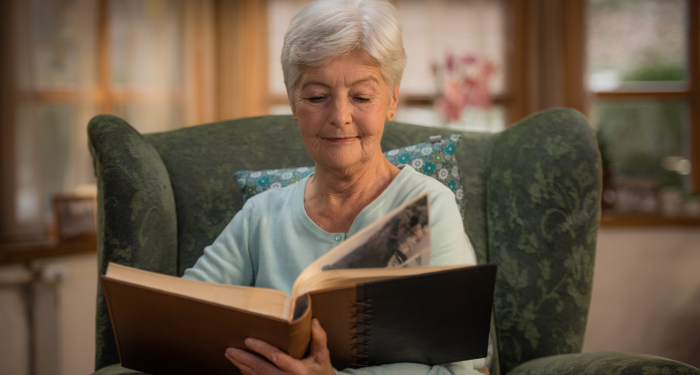
Reading. But not the way I'd been reading — dutifully, a chapter before bed, maintaining my two-books-a-week habit the way I maintained everything, with discipline and consistency and a faint undertone of obligation. Reading the way I read when I was young — glutonously, losing whole afternoons, letting a novel kidnap me so completely that the reentry into my actual life feels disorienting, like stepping out of a movie theater into daylight.
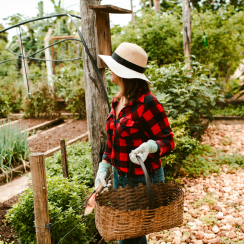
Gardening. But only certain parts. Deadheading the roses — the repetitive, meditative rhythm of it, the way my hands know what to do without consulting my brain. Not the weeding, which feels like a chore. Not the planning, which feels like a spreadsheet. The deadheading. The pruning. The particular conversation between my hands and the plant that requires just enough attention to quiet my mind without tiring it.
And — this surprised me — teaching. Not in a classroom. But the Tuesday afternoons at the literacy center, sitting across from an adult learner who is sounding out a word she's never read before, and the moment when it clicks and her face changes and I feel the same thing I felt in that sunroom. The disappearing. The time-forgetting. The pull toward something that absorbs me so completely I stop existing as a separate thing and become part of the work.
The difference between useful and absorbed
I want to be careful here, because this could sound like I'm dismissing the value of contribution. I'm not. The volunteer work matters. The shelter work changes lives. The church committee serves a community I care about. All of it has purpose, and I don't regret any of it.
But useful and absorbed are different experiences, and I spent five years confusing them. Useful is what you feel when you've done something that helps someone else. It's good. It's necessary. It's also, for me, still tethered to the old operating system — the one that measures my worth by what I produce for others, that locates my value in my output, that treats rest as something earned and pleasure as something justified.
Absorbed is different. Absorbed doesn't ask who benefits. Absorbed doesn't check the clock. Absorbed is the state where the question of whether you deserve to be here dissolves because you're so deep inside the thing that the question can't reach you. It's the closest thing I've found to the feeling I had in my classroom at my best — not performing teaching, but disappearing into it. Becoming it. Losing the boundary between myself and the work.
Purpose never gave me that. Purpose gave me a reason to get up. Absorption gave me a reason to stay.
What the days look like now
I restructured everything. Not dramatically — I'm not a dramatic woman, as anyone who's read my work already knows. But quietly, with the slow deliberateness of someone rearranging furniture in a room she plans to stay in.
I kept the things that absorb me. The writing. The reading. The deadheading. The literacy tutoring. I kept the supper club, which absorbs me in a different way — the way deep conversation absorbs, where time disappears not because you're making something but because the exchange itself is the thing, and you look up and it's 11 p.m. and nobody wants to leave.
I let go of the things I was doing to feel useful rather than absorbed. A committee I'd joined out of obligation. A volunteer role I'd accepted because I couldn't say no, not because it pulled me forward. A standing commitment that I'd been maintaining the way I maintained everything — reliably, dutifully, and without once losing track of time while doing it.
The days are less full than they were. My calendar has more white space. And inside that white space, for the first time in my adult life, I'm not anxious. Not because I've found my purpose. Because I've stopped looking for purpose and started following the pull — the specific, bodily, unmanufactured pull toward things that make me forget I'm 70 and alone in a house and running out of years. Things that make me forget everything except the next sentence, the next page, the next bloom that needs removing so the one behind it can open.
Final thoughts
Last week I sat in my sunroom and wrote for three hours. When I looked up, the light had moved again. The tea was cold again. My back was stiff again. Everything exactly as it was that April afternoon when the question first arrived.
But this time I didn't write it in my journal as a revelation. I wrote it as a Tuesday. Because that's what it's become — not an epiphany but a practice. The practice of following what absorbs me rather than what justifies me. The practice of trusting that a woman who loses track of time is not a woman wasting it.
I wasted years asking what my purpose was. The question was too big, too noble, too weighted with the expectation that retirement should produce a second act as meaningful as the first. What I needed was smaller and truer: What makes me disappear? What makes me forget the clock? What pulls me forward without asking me to explain why?
The answer was always there. In a sunroom, in a notebook, in the dirt under my fingernails and the face of a woman sounding out a word she's never read. It was just waiting for me to stop performing purpose and start paying attention to the pull.
The tea gets cold every time. I've stopped reheating it. The cold tea is proof that something better is happening.