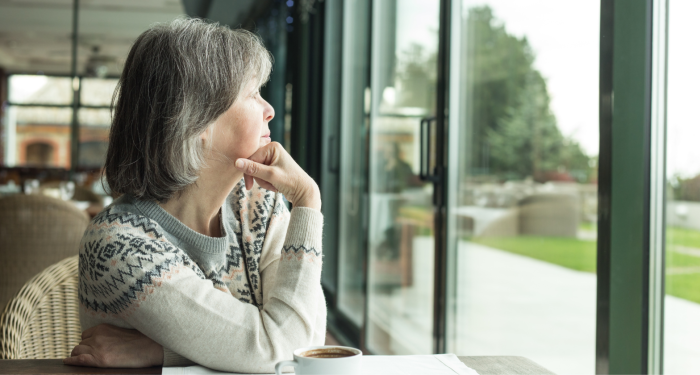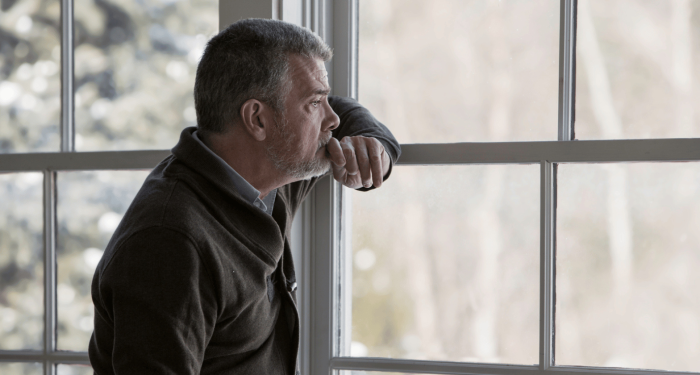
It’s not about hiding their life - it’s about no longer needing it to be seen in order to feel real. As that need for validation fades, so does the urge to share everything, leaving more space to simply live it instead.

Add VegOut to your Google News feed. 
I used to post everything. The sunrise from my apartment in Saigon. The run I finished. The article that did well. The moment with my daughter that made me feel like a good father. If it happened and it felt good, it went online.
Then about a year ago, I noticed something. The happier I felt about something, the less I wanted to share it. Not because I became more private. Because the impulse just wasn't there anymore. The experience felt complete without an audience.
That shift confused me at first. I thought maybe I was withdrawing. Maybe something was wrong. Then I started looking at what psychology actually says about the relationship between social media use and wellbeing, and what I found made the whole thing click.
The social comparison machine
A landmark 2014 study published in Psychology of Popular Media Culture by Erin Vogel and colleagues at the University of Toledo found that people who used Facebook most frequently had lower self-esteem, and that this relationship was driven by upward social comparison. The more time people spent looking at curated versions of other people's lives, the worse they felt about their own.
But here's the part that doesn't get talked about enough. The comparison doesn't just happen when you're scrolling. It happens when you're posting. Every time you share something, you're entering the comparison arena. You're putting a version of your life out there and, whether you admit it or not, waiting to see how it measures up. The likes, the comments, the shares: they're all data points your brain uses to evaluate whether your life is good enough.
When your self-esteem depends on that feedback loop, you post more. And the more you post, the more your sense of self becomes tied to the response.
What the research actually shows
The 2026 World Happiness Report, which dedicated an entire section to social media's impact on wellbeing, found something striking. Many people use social media not because it makes them happy, but because other people use it. Researchers found that people would pay very little to keep using platforms like Facebook, but would demand significant compensation to stop. In other words, people know social media isn't making them happier. They just can't stop.
The report also found that when people stayed off Facebook for a month, they were measurably happier, less anxious, and less depressed. Yet even after experiencing that improvement, they still went back.
That's not a choice driven by enjoyment. That's a compulsion driven by the fear of missing out, social obligation, and the need to stay visible to maintain a sense of relevance. Happy people don't need that. They've already got what the posting is trying to produce.
Research from the University of British Columbia, covered by ScienceDaily, found that the most commonly used function of Facebook was passively checking a newsfeed, not actually connecting with people. And it was this passive, comparison-heavy use that was most strongly linked to reduced subjective wellbeing. People weren't posting to connect. They were scrolling to compare. And the more they compared, the less happy they felt.
The validation loop
Here's where this gets personal. When I look back at my heaviest posting periods, they weren't my happiest. They were the periods when I was most unsure of myself. I'd just moved countries. I was building a business from scratch. I didn't know if any of it was going to work. And so I posted, because the likes and comments told me I was doing okay when I couldn't tell myself.
That's what Jennifer Crocker's research on contingencies of self-worth would predict. When your self-esteem is staked on external validation, you seek out environments that provide it. Social media is the most efficient validation-delivery system ever built. Post something, get a response, feel temporarily okay about yourself. Repeat.
But the keyword is "temporarily." The boost never lasts. So you post again. And the cycle continues until posting isn't about sharing your life anymore. It's about proving it.
When that contingency fades, when you start feeling okay about yourself without the feedback, the urge to post dissolves on its own. You don't need to announce the sunset because the sunset was enough. You don't need to document the moment with your kid because being in the moment was the whole point.
Why happy people go quiet
A study published in Frontiers in Psychology found that passive social media use was positively linked to upward social comparison, which in turn predicted lower self-esteem and lower subjective wellbeing. People who were high in social comparison orientation, meaning they naturally measured themselves against others, were the most affected. The platform amplified a tendency they already had.
Flip that around. People who have lower social comparison orientation, who aren't constantly measuring their life against someone else's highlight reel, have less reason to be on the platform in the first place. They're not scrolling to see how they stack up. They're not posting to prove they belong. They've already answered those questions internally.
This doesn't mean happy people never use social media. It means they use it differently. They're less likely to use it passively and compulsively. They're less likely to tie their emotional state to the response they get. And they're more likely to put the phone down when the experience in front of them is already satisfying.
What I learned from stepping back
I didn't delete my accounts. I didn't make a dramatic announcement about leaving social media. I just started noticing the impulse to post and asking myself a question: am I sharing this because I want to, or because I need someone to see it?
Most of the time, the honest answer was the second one. And once I saw that, the desire to post quietly deflated.
What replaced it was something I didn't expect: a deeper experience of the things I used to photograph. The run felt better when I wasn't composing a caption in my head. The morning with my daughter felt richer when my phone was in another room. The work felt more satisfying when the only person who knew about it was me.
There's a concept in Buddhist philosophy that maps onto this perfectly. Attachment to external validation is one of the subtlest forms of ego. It doesn't look like arrogance. It looks like sharing. But underneath it, there's a quiet desperation: please confirm that my life is good enough. I wrote about this in my book, Hidden Secrets of Buddhism: How To Live With Maximum Impact and Minimum Ego. Ego doesn't always announce itself. Sometimes it just opens Instagram.
The quietest sign that you're doing well
If your social media presence has gotten smaller and you've been wondering whether you're falling behind, consider the alternative. Maybe you're not falling behind. Maybe you're falling into something better.
The people who are genuinely content aren't performing contentment for an audience. They're just living it. And living it, without the need for anyone to witness it, might be the clearest sign of all that they've found what most of us are still scrolling for.
If You Were a Healing Herb, Which Would You Be?
Each herb holds a unique kind of magic — soothing, awakening, grounding, or clarifying.
This 9-question quiz reveals the healing plant that mirrors your energy right now and what it says about your natural rhythm.
✨ Instant results. Deeply insightful.
Lachlan Brown
Lachlan Brown is a psychology graduate, mindfulness enthusiast, and the bestselling author of Hidden Secrets of Buddhism: How to Live with Maximum Impact and Minimum Ego. Based between Vietnam and Singapore, Lachlan is passionate about blending Eastern wisdom with modern well-being practices.
As the founder of several digital publications, Lachlan has reached millions with his clear, compassionate writing on self-development, relationships, and conscious living. He believes that conscious choices in how we live and connect with others can create powerful ripple effects.
When he’s not writing or running his media business, you’ll find him riding his bike through the streets of Saigon, practicing Vietnamese with his wife, or enjoying a strong black coffee during his time in Singapore.
More Articles by Lachlan