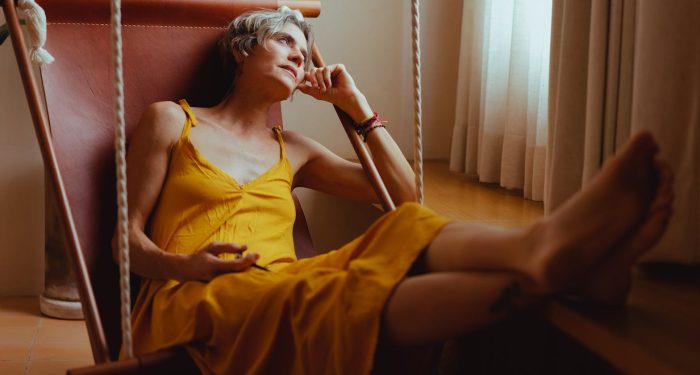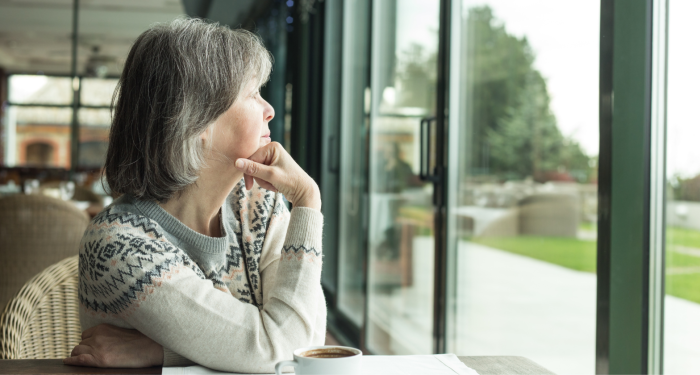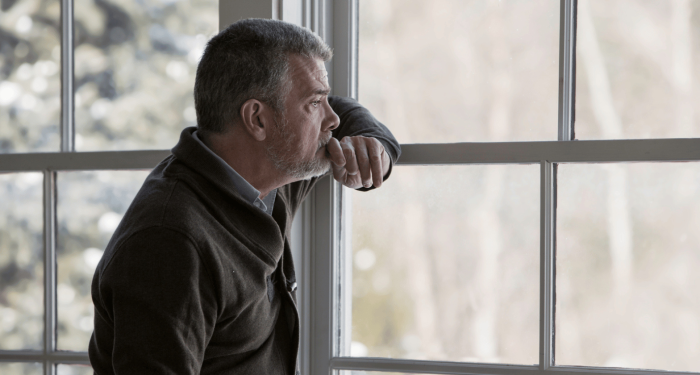
Her words landed like a revelation in my kitchen, cutting through decades of anti-aging propaganda with the sharp clarity of someone who's been proving the beauty industry wrong for half a century.

Add VegOut to your Google News feed. 
Last week, I sat across from my grandmother at her kitchen table, the same one where she'd served me countless Sunday roasts growing up. She was pouring tea with steady hands, her movements graceful and deliberate. At 94, she moves like someone twenty years younger, her skin has this incredible glow, and her eyes sparkle with the kind of vitality you rarely see in people half her age.
"What's your secret?" I finally asked, after years of wondering. "You look 75, maybe younger. What skincare routine? What diet? What supplements?"
She laughed, that warm laugh I've known since childhood, and said something that stopped me cold: "I never once in my life wished I was younger than I was."
I've interviewed dermatologists, nutritionists, and wellness experts for various articles. I've read every anti-aging book that's crossed my desk. But this? This was something entirely different.
The weight of wanting to turn back time
Think about how much mental energy we spend wishing we could go back. How often do you catch yourself thinking "If only I was 25 again" or "I wish I had the energy I had in college"?
We're obsessed with youth. The global anti-aging industry is worth over $60 billion, and it's growing every year. We inject, we supplement, we fast, we do whatever it takes to hold onto something that's already gone.
But what if that constant yearning, that persistent wish to be younger, is actually aging us faster?
Research in psychology shows that acceptance and contentment are linked to lower stress levels. And stress? Well, chronic stress literally shortens your telomeres, those protective caps on your chromosomes that affect how quickly your cells age.
My grandmother never carried that burden. She never looked in the mirror and wished for her 30-year-old face back. She looked and saw exactly who she was supposed to be at that moment.
Living forward, not backward
After our conversation, I started paying attention to how often I referenced the past in conversations. "Back when I was working in restaurants in my 20s..." or "When I first moved to New York for culinary training..."
It was constant. And each time, there was this subtle undercurrent of loss, like those were the glory days and everything since has been a slow decline.
My grandmother talks about the past too, but differently. She shares stories as gifts, not as monuments to better times. When she talks about teaching (she was an educator for 40 years), it's with appreciation, not longing.
She's excited about tomorrow's book club meeting. She's planning her spring garden. At 94, she's still accumulating experiences, not just reminiscing about old ones.
This forward momentum keeps her engaged with life in a way that defies her chronological age. While her peers are often stuck replaying their highlight reels, she's still creating new footage.
The acceptance paradox
Here's what fascinates me: by accepting her age at every stage, my grandmother seems to have slowed down the aging process itself.
She embraced her gray hair in her 40s instead of fighting it with dye for decades. She adjusted her exercise routine as her body changed rather than pushing through pain to maintain some idealized version of fitness. She let her style evolve instead of clinging to outdated trends.
Each acceptance freed up energy that others spend on resistance. And where did that energy go? Into living fully in the present moment.
Studies on mindfulness and aging show that people who practice present-moment awareness have lower levels of inflammation markers and better cellular health. They sleep better, stress less, and maintain cognitive function longer.
My grandmother never called it mindfulness. She just called it living.
The comparison trap
Social media has weaponized our tendency to compare ourselves not just to others, but to our younger selves. We scroll through old photos with a mixture of nostalgia and regret. We see filtered, edited versions of people our age and wonder what we're doing wrong.
My grandmother never had Instagram, but she also never played the comparison game in real life. When her friends would lament their wrinkles or complain about getting older, she'd redirect the conversation to what they were grateful for in the present.
"Every age has its gifts," she told me once. "In my 30s, I had energy but no wisdom. In my 50s, I had confidence but still cared too much what people thought. In my 70s, I finally felt free. And now, in my 90s, every day feels like a bonus round."
Can you imagine treating each decade as an upgrade rather than a downgrade?
The practical magic of presence
Since that conversation, I've been experimenting with my grandmother's philosophy. When I catch myself thinking "I'm too old for this" or "I miss when I could..." I stop and reframe.
Instead of lamenting that I can't party until 4 AM like I did in my restaurant days, I appreciate that I actually enjoy going to bed at a reasonable hour. Instead of missing my 25-year-old metabolism, I'm grateful for my 36-year-old understanding of what actually nourishes my body.
It's not toxic positivity or denial. It's recognition that every age brings its own advantages, and wishing for a different one is like being at a steakhouse and complaining it's not a sushi bar.
The results? I sleep better. I've stopped looking at old photos with that strange mix of pride and sadness. I've even noticed that people have started commenting that I look more relaxed, more present, somehow younger.
Funny how that works.
Final thoughts
My grandmother's secret wasn't a secret at all. It was a choice, made daily, to embrace rather than resist. To look forward rather than backward. To treat aging not as a loss but as an accumulation of experiences, wisdom, and perspective.
She never wished to be younger because she understood something profound: you can't fully inhabit your life if you're constantly trying to live in a different timeline.
The anti-aging industry sells us the promise of turning back the clock. But what if the real secret to aging well isn't about going backward at all? What if it's about being so engaged with where you are that you wouldn't trade it for anything, not even your younger self?
At 36, I'm finally starting to understand what my 94-year-old grandmother has known all along. The fountain of youth isn't a place or a product or a procedure. It's a perspective. And it starts with seven simple words: "I don't wish I was younger."
Try it for a week. When you catch yourself longing for a previous version of yourself, pause and find something about your current age to appreciate instead. You might be surprised at how much younger you start to feel when you stop trying so hard to be young.
What’s Your Plant-Powered Archetype?
Ever wonder what your everyday habits say about your deeper purpose—and how they ripple out to impact the planet?
This 90-second quiz reveals the plant-powered role you’re here to play, and the tiny shift that makes it even more powerful.
12 fun questions. Instant results. Surprisingly accurate.