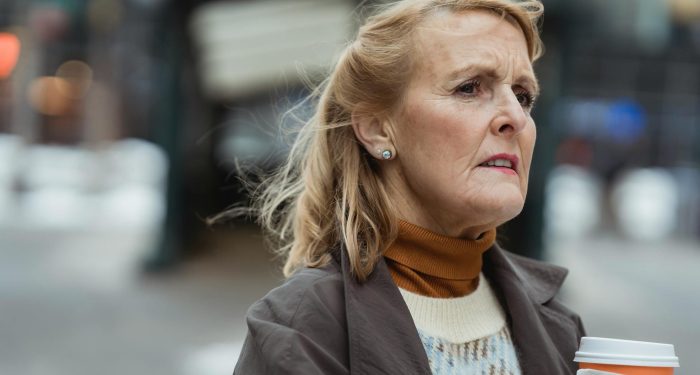
Born into an era of "children should be seen and not heard," the generation that learned to swallow their needs with their morning coffee is now swallowing pain pills in silence, too proud to admit they need help and too practiced at minimizing their own suffering to recognize they're dying from their own strength.

Add VegOut to your Google News feed. 
Last week, I watched my neighbor Patricia water her roses at dusk, her left hand trembling slightly as she gripped the hose. She'd been favoring that arm for months, but when I asked if she needed help, she straightened her spine and said, "Oh no, dear, I've been doing this for forty years." The next morning, an ambulance took her away. Stroke. She'd been having mini-strokes for weeks but hadn't told anyone because she didn't want to worry her children.
Patricia is 68, raised in an era when children were seen but not heard, when asking for seconds at dinner was considered greedy, when crying got you sent to your room to "compose yourself." Now she's part of a generation that's literally dying from their own resilience, sitting in emergency rooms apologizing for taking up space while their bodies fail from years of untreated pain and unspoken needs.
The training started young
If you were born between 1950 and 1965, you probably remember the rules: Don't interrupt adults. Don't ask for things in stores. Eat what's on your plate without complaint. Your problems are your own to solve. These weren't suggestions; they were survival skills in households where father's word was law and mother's sacrifice was sainthood.
I see it in my own habits, even now. Last month, I sat through an entire dental cleaning with tears streaming down my face rather than raise my hand to signal I needed more novocaine. Why? Because somewhere deep in my bones lives a nine-year-old girl who was told that brave girls don't make a fuss. The dentist, thirty years my junior, was horrified when she realized. But I just wiped my eyes and apologized for being "such a baby."
We learned to read rooms before we could read books. Was Dad tired from work? Don't ask about the school play. Was Mom stressed about money? Don't mention the worn-out shoes. We became tiny emotional meteorologists, predicting storms and adjusting our needs accordingly. By adolescence, we'd mastered the art of wanting nothing, needing less.
When strength became silence
The transition from childhood to adulthood only reinforced these patterns. The women of my generation entered workplaces where we had to work twice as hard to be taken half as seriously. Complaining about harassment meant being labeled "difficult." Asking for raises meant being seen as "pushy." Having needs meant risking everything we'd fought to achieve.
I think about my friend Linda, who worked through three miscarriages without taking a single day off because she didn't want to seem "weak" in her law firm. Or Robert, who drove himself to the hospital during a heart attack because he didn't want to bother anyone. These aren't stories of strength; they're stories of people so disconnected from their own needs that they'd rather risk death than inconvenience others.
The men had it just as bad, maybe worse. They inherited their fathers' "strong, silent type" mandate but lived in bodies that were starting to break down from decades of physical labor and emotional suppression. I've watched widowers in my building go months without a real conversation, surviving on frozen dinners and weather talk, because asking for companionship feels like admitting defeat.
The doctor's office dilemma
Now we're in our sixties and seventies, sitting in waiting rooms with a lifetime of minimizing our own experiences. When the nurse asks about pain levels, we automatically subtract two points. When doctors ask about symptoms, we lead with apologies: "It's probably nothing, but..." We've been trained to be low-maintenance patients in a healthcare system that already treats older adults as inconveniences.
Recently, I discovered that my friend Margaret had been managing chronic pain for two years before mentioning it to her doctor. When I asked why she waited, she said, "Well, I thought it was just normal aging. I didn't want to be one of those old people who complains about every little ache." That "little ache" turned out to be severe spinal stenosis that could have been treated much earlier with better outcomes.
How many of us are doing this? Sitting on symptoms, downplaying depression, hiding cognitive changes because we don't want to be burdens? We praise ourselves for "not being like those other old people" who actually advocate for their health, as if needing medical care is a moral failing.
The compound interest of silence
What we don't realize is that every unspoken need compounds over time, gathering interest like a debt we'll eventually have to pay. The back pain we ignore becomes chronic because we waited too long for physical therapy. The depression we won't discuss deepens into isolation. The financial anxieties we keep private prevent us from seeking help before crisis hits.
I wrote about this pattern of self-sufficiency in my piece about redefining independence in our later years, but it bears repeating: the independence we're so proud of often becomes the cage that traps us. We'd rather struggle alone with grocery bags than accept help from a neighbor. We'd rather skip medications than apply for assistance programs. We'd rather sit in pain than "bother" our adult children who've asked repeatedly how they can help.
The cruel irony is that our children often feel shut out, wondering why we won't let them in. They see our struggle but hit the wall of our practiced "I'm fine" response. By protecting them from our needs, we deny them the opportunity to care for us the way we cared for them, creating distance when what we really crave is connection.
Breaking the pattern
Last Tuesday, I did something revolutionary: I asked my neighbor to drive me to a doctor's appointment. The words felt foreign in my mouth, like speaking a language I'd never learned. She was delighted to help, said she'd been wondering how to offer without offending me. We ended up having lunch afterward, the first real conversation we'd had in five years of living next door to each other.
That small act opened something in me. I started noticing all the ways I reflexively reject help, dismiss concern, minimize my own experiences. When my daughter called last week, instead of my usual "Everything's fine," I said, "Actually, I've been feeling a bit lonely lately." The silence on the other end wasn't judgment; it was relief. She'd been waiting years for me to let her in.
I'm not suggesting we become complainers or lose the strength that carried us through genuinely hard times. But there's a difference between resilience and self-destruction, between independence and isolation. Real strength might actually look like admitting when we need help, acknowledging our pain, accepting that we're human beings who deserve care and attention.
Final thoughts
If you recognize yourself in these words, sitting alone with your unspoken needs and minimized pain, know that the resilience everyone praises in you has served its purpose. It got you through decades when you had fewer options, less support, real challenges that required real toughness. But now, in this season of your life, that same resilience might be the heaviest thing you carry. Maybe it's time to set it down, just a little, and see what happens when you let others help carry the load. Your life might actually depend on it.
What’s Your Plant-Powered Archetype?
Ever wonder what your everyday habits say about your deeper purpose—and how they ripple out to impact the planet?
This 90-second quiz reveals the plant-powered role you’re here to play, and the tiny shift that makes it even more powerful.
12 fun questions. Instant results. Surprisingly accurate.