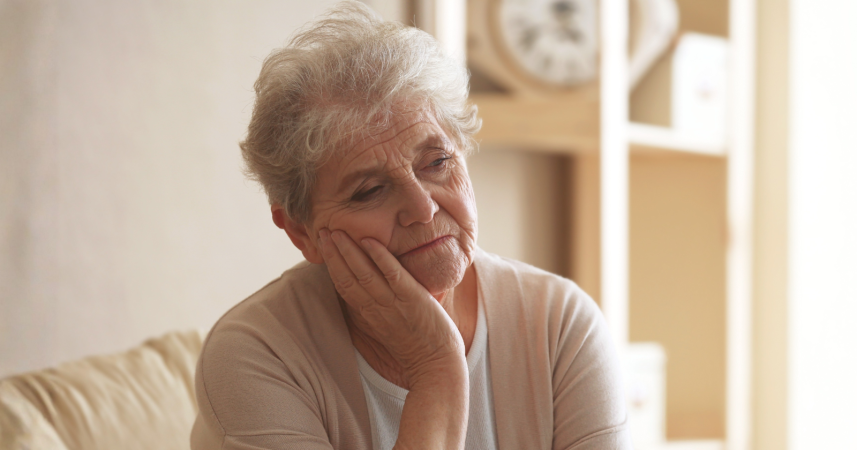
When the last person who knew you as a child with missing teeth and scraped knees disappears from the earth, you discover a loneliness that has nothing to do with being alone and everything to do with being the sole keeper of your own becoming.
The kettle clicked off just after seven. I reached into the cupboard and pulled down four cups before I realized what my hands were doing. Four cups, lined up on the counter like a small choir. One for me. Three for sisters who could no longer drink tea.
I stood there in my robe, watching steam curl up from the kettle, and didn't move to put the extra cups back. The Sunday after my youngest sister's funeral, this is what my body did without asking. Muscle memory from decades of Sunday phone calls hadn't caught up to the new arithmetic. My oldest sister went first, twelve years ago. Ovarian cancer at 58. Then the others, one after another, each death carving away a piece of the constellation we'd formed as children, sharing bedrooms and hand-me-downs in our small Pennsylvania house where Dad delivered mail and Mom hemmed dresses late into the night.
What strikes me most isn't the silence where their voices used to be. It's realizing that when my last sister died, the final person who remembered me at seven, missing my front teeth and crying because someone had hidden my favorite doll, disappeared from the earth. The last person who knew I was afraid of the basement until I was twelve, who remembered our mother's voice calling us in for supper, who could laugh about Dad's terrible jokes that we'd heard a thousand times.
The weight of being unwitnessed
Do you know what it means to become a stranger to your own childhood? My children know me as their mother, their rock during those hard years after their father left. They know the woman who taught high school English for 32 years, who remarried to a gentle man who showed love through fixing things rather than saying it. They know the grandmother who takes their children to the library every other Saturday.
But they don't know the girl who shared a bed with her sister, whispering secrets after Mom turned out the lights. They don't know the teenager who got in trouble for borrowing lipstick without asking. They can't remember the young woman who called her sister crying when her marriage was falling apart, and how she drove hours in a snowstorm just to sit with her while she figured out what to do next.
The grief counselor at church tells me about "complicated grief" and "survivor's guilt." She means well, this kind woman half my age, but she doesn't understand that guilt isn't what I carry. I carry the peculiar weightlessness of being unwitnessed. There's a difference between being remembered and being truly known, between having your story told and having someone who lived it alongside you.
Keepers of each other's becoming
Virginia Woolf once wrote, "The past is beautiful because one never realizes an emotion at the time. It expands later, and thus we don't have complete emotions about the present, only about the past." This rings especially true when you're the sole keeper of a shared past.
My second husband, before Parkinson's took him, used to say I carried my whole family in my pocket like worry stones, always rubbing them smooth with memory. He was right, though I didn't understand it then. Now I realize I was the keeper of their young selves too, just as they kept mine. We were each other's witnesses to the becoming, all those years of growing up and growing old, making mistakes and finding our way.
Last week, while cleaning out my sister's apartment, I found a photograph from 1961. All of us in our Easter dresses, squinting against the sun. I'm maybe seven, my sister's hand on my shoulder, probably to keep me from running off. I stared at that little girl with the lopsided bow and scraped knee, and realized I'm the only person alive who knows she's about to lose her first tooth, who knows she'll grow up to teach thousands of students, raise two children alone, find love again, lose it again, and somehow keep going.
Different shades of loneliness
Throughout my life, I've learned to live with many kinds of loneliness. The loneliness of single motherhood, when the children were asleep and the house creaked with exhaustion. The loneliness of standing in front of a classroom of teenagers who couldn't possibly understand Yeats the way I needed them to. The loneliness of watching my husband disappear into disease, becoming someone who no longer knew our stories.
But this loneliness of being the last one who remembers our beginning sits different in my chest. It's not sharp like grief or hollow like absence. It's more like being the only person who speaks a language, walking through a world where no one else can understand the words.
Sometimes I talk to them while I tend my garden, telling them about my grandchildren's accomplishments, about the book I just read, about how my knees are acting up again. My oldest sister would have advice about the roses. My sisters would make jokes about getting old. They would remind me to wear sunscreen. These conversations happen in my head, but also somehow in my heart, where all the versions of us still exist.
The bridge between what was and what is
Can you carry forward what you can't fully explain? My children have my sister's stubborn streak, another sister's kindness, my sisters' sense of humor, though they never knew these traits came from them. My grandchildren carry forward pieces of people they never met, but who live on in the way they tilt their heads when thinking, the way they hum while they work.
In my DNA, in my gestures, in the way I laugh at terrible jokes like Dad did, in how I can't sit still when I'm worried like Mom, they're all still here. The last one standing becomes the bridge between what was and what is. I'm the translator now, the sole speaker of a family language that will die with me.
The grief counselor suggests I journal about my memories, preserve them somehow. But she doesn't understand that the memories aren't going anywhere. They're carved into me like initials in tree bark, growing wider and deeper with age. The loneliness isn't about forgetting. It's looking at a world full of people and knowing that not one of them can say, "Remember when..." and have it mean what it meant when my siblings said it.
Final thoughts
The tea has gone cold in three of the cups. Outside, a cardinal lands on the feeder my sister gave me one Christmas, the red one she said I'd never be able to keep the squirrels off of. She was right about that, too.
I sit down at the table anyway. I can hear her laughing somewhere, from a kitchen forty years gone, telling me I was always the stubborn one. Maybe I was. Maybe I still am.
The cardinal lifts off. The kitchen is quiet. I drink my tea.
If You Were a Healing Herb, Which Would You Be?
Each herb holds a unique kind of magic — soothing, awakening, grounding, or clarifying.
This 9-question quiz reveals the healing plant that mirrors your energy right now and what it says about your natural rhythm.
✨ Instant results. Deeply insightful.
Marlene Martin
Marlene Martin is a retired high school English teacher who spent 38 years in the classroom before discovering plant-based eating in her late sixties. When her daughter first introduced her to the idea of removing animal products from her diet, Marlene was skeptical. But curiosity won out over habit, and what started as a reluctant experiment became a genuine transformation in how she thinks about food, health, and aging.
At VegOut, Marlene writes about nutrition, wellness, and the experience of embracing new ways of eating later in life. She brings a teacher’s instinct for clarity and patience to topics that can feel overwhelming, especially for readers who are just beginning to explore plant-based living. Her writing is informed by personal experience, careful research, and a belief that it is never too late to change.
Marlene lives in Portland, Oregon, where she spends her mornings reading research papers, her afternoons tending a modest vegetable garden, and her evenings knitting while listening to audiobooks. She has three adult children and two grandchildren who keep her honest about staying current.
More Articles by Marlene