Childhood bedroom photos hidden away reveal a paradox: it's not shame about your past that makes you tuck them away, but a need to protect the version of yourself that existed before your current identity took shape.
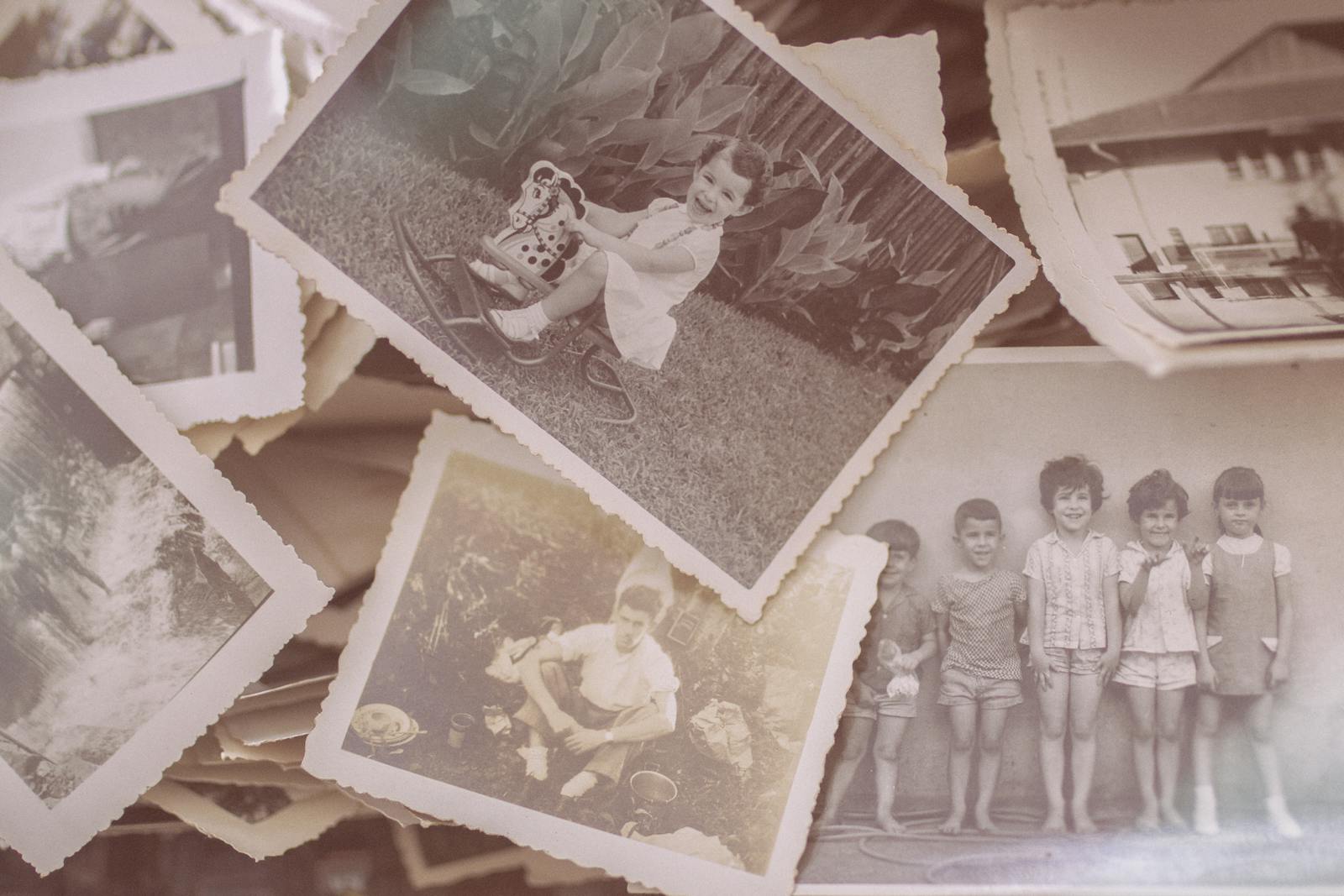
A friend of mine keeps a manila folder in the bottom drawer of her desk. Inside it, there's a photo of her at twelve, sitting cross-legged on a bedspread covered in horses, holding a clarinet she would quit two years later. The wallpaper behind her is mauve. There's a poster of a boy band she now finds embarrassing. She told me about this folder over coffee a few years back, and she described feeling protective of childhood photos, expressing concern about current colleagues seeing them—not out of shame, but out of a desire to protect that earlier version of herself.
She wasn't ashamed of the room. She wasn't ashamed of the girl. She was protecting her.
The conventional reading of this behavior is that adults who hide childhood photos must feel embarrassed by their origins: by class, by aesthetics, by the version of themselves that hadn't yet figured out what was cool. That's the easy story. It's also, according to the developmental psychologists I spoke with, usually wrong.
"In my clinical work, I rarely see shame as the primary driver when adults sequester childhood images," Dr. Lena Okafor, a developmental psychologist at UC Berkeley who studies identity transitions, told me. "What I see far more often is a protective instinct toward a self that the current social environment has no framework for receiving." A 2022 survey by FamilySearch found that roughly 64% of American adults keep meaningful childhood photographs in private storage rather than on display, even when they describe their childhood positively. Embarrassment doesn't account for that gap. Something else does.
The self you can't translate
The cleanest framework for understanding this comes from Patricia Linville's work on self-complexity, first formalized in her 1985 and 1987 studies. Linville found that people who hold more distinct, non-overlapping self-aspects (different versions of themselves across different contexts) are measurably more buffered against stress and depression when one domain falters. A 2019 meta-analysis in Personality and Social Psychology Review confirmed the buffering effect across more than 60 studies. The plural self isn't a problem. It's a protection.
Most adults already know this intuitively. You speak differently to your boss than to your college roommate. You become someone slightly different when you visit your parents. The self adjusts to the room.
This isn't fragmentation. It's architecture.
The childhood bedroom photo lives in a compartment that has no current container. There's nobody in the new life who knew the wallpaper, the clarinet, the boy band, the specific quality of the afternoon light through that one window. To put the photo on a shelf in your adult living room is to ask people who have never met that child to interpret her.
And interpretation is the problem.
Why translation feels like loss
When someone unfamiliar with your past sees a photo of your childhood self, they construct a story. They have to. Research on what psychologists call "thin-slicing" (Nalini Ambady's foundational work at Harvard) shows that observers form confident narrative judgments about strangers within seconds, based on minimal visual cues. So your coworker glances at the photo on your desk and thinks: cute, awkward phase, midwestern, probably had braces. None of that is wrong, exactly. It's just radically incomplete.
For some people, that incompleteness is fine. They don't experience their past self as needing protection.
For others, it lands as a small grief. "There's a real cognitive cost when an internally rich memory gets externally reduced," Dr. Okafor said. "Especially for adults who've undergone significant context shifts—immigration, class mobility, sexuality disclosure—the past self can feel like a ward you're responsible for, not a stranger you're casually introducing."
This is why the photo goes in the drawer. Not because the past is shameful, but because visibility without context is a kind of erasure.
The bicultural and class-mobility version
I think about this often in relation to my own family. My parents ran a restaurant for 23 years, and most of my childhood photos involve places (the back kitchen, the booth by the window, my grandmother's apartment in Taipei) that wouldn't read as anything to anyone in my Oakland life. They'd see a kid in a restaurant. They'd see a Taiwanese grandmother. They wouldn't see what was actually happening in those rooms.
Research bears this out as a structural pattern, not a personal quirk. A 2021 study in the Journal of Cross-Cultural Psychology by Verónica Benet-Martínez and colleagues found that adults with bicultural identities are significantly more likely than monocultural peers to compartmentalize personal artifacts by audience, and that this compartmentalization correlates with higher, not lower, well-being scores. Similar findings appear in sociologist Jennifer Morton's work on first-generation college students in Moving Up Without Losing Your Way: artifacts from the home culture often get privately preserved precisely because their public display invites flattening interpretations.
So you keep them in the drawer. You look at them alone. You give yourself the gift of being the only person in the room who knows what you're looking at.
Compartmentalization is not avoidance
Pop psychology often treats compartmentalization as a defense mechanism in the pejorative sense: something to overcome on the path to integration. The implication is that a healthy person displays all their selves at once, that the goal is a kind of radical transparency.
The clinical literature disagrees. A 2014 study by Showers and Zeigler-Hill on "evaluative compartmentalization" found that keeping certain self-aspects organized by context predicted higher self-esteem and lower depressive symptoms, particularly when the compartmentalized content was positively valenced. Translation: protectively storing a treasured past self is associated with thriving, not pathology.
"There's a clinical difference between compartmentalization that's about avoidance and compartmentalization that's about preservation," Dr. Marcus Reyes, a clinical psychologist in Seattle who specializes in identity work with adult clients, told me. "The first wants the material gone. The second wants it kept correctly. They look identical from the outside and behave very differently in therapy."
The drawer, in other words, is not avoidance. The drawer is curation.
What the photo is actually doing in the drawer
If you ask people who keep these photos hidden where exactly they keep them, the answers are oddly specific. A particular drawer. A particular box. A folder inside a folder on a hard drive. The location is never random.
This is because the photo isn't being stored. It's being protected. Researchers who study autobiographical memory cuing—work like that of Dorthe Berntsen at Aarhus University—have shown that people deliberately structure access to personal artifacts in order to control the emotional context of remembering. The act of occasionally opening the drawer and looking at the photo alone is what Berntsen calls a "voluntary involuntary" memory ritual: chosen access to an unchosen feeling.
In plain terms: I remember her. She's still here. She just doesn't have to perform for anyone.
This is also why partners who go looking through drawers and find these photos sometimes get a strange reaction. The reaction isn't anger about privacy, exactly. It's the disorientation of having a private compartment opened by someone who can't read what's inside.
The aesthetics question
There's a parallel cultural conversation worth noting here, because it complicates the picture. Childhood bedroom aesthetics (the canopy beds, the floral wallpaper, the over-styled girlhood of the late '90s) appear to be having a design moment, with designers reinterpreting the canopy bed and other markers of that era for adult interiors.
Which means the visual vocabulary of those old photos is suddenly, weirdly, on trend. You'd think this would make people more willing to display the photos. But the discomfort was never about whether the wallpaper looked dated. It was about whether the people looking at the photo could see past the wallpaper to the kid. Trends don't fix that.
When the drawer becomes a problem
The protective impulse is often healthy, and I don't want to pathologize it. But there's a version of this behavior that does signal something worth examining.
If the photo isn't in the drawer because you're protecting the child but because you've decided the child is unwelcome in your current life (different person, different story, doesn't count anymore), that's a different situation. That's exile, not curation. Dr. Reyes draws the same line: "When clients describe the past self as someone they're done with, rather than someone they're keeping safe, that's when I start asking what hasn't been integrated."
The test I use is whether opening the drawer feels like reunion or like trespass. Reunion is healthy. Trespass means there's something unmetabolized in the relationship between who you were and who you've become.
The deeper thing the drawer is doing
Most behavior that looks like secrecy is actually about regulation of attention. People aren't hiding things because the things are bad. They're hiding them because attention from the wrong audience changes what the thing means.
A photo on display invites comment. Comment shapes meaning. Meaning, once shaped by other people, is hard to take back. The drawer keeps meaning sovereign.
That's not shame. That's stewardship. And it's consistent with what the research keeps showing: people who hold multiple distinct selves with care, rather than collapsing them into a single performance, do better.
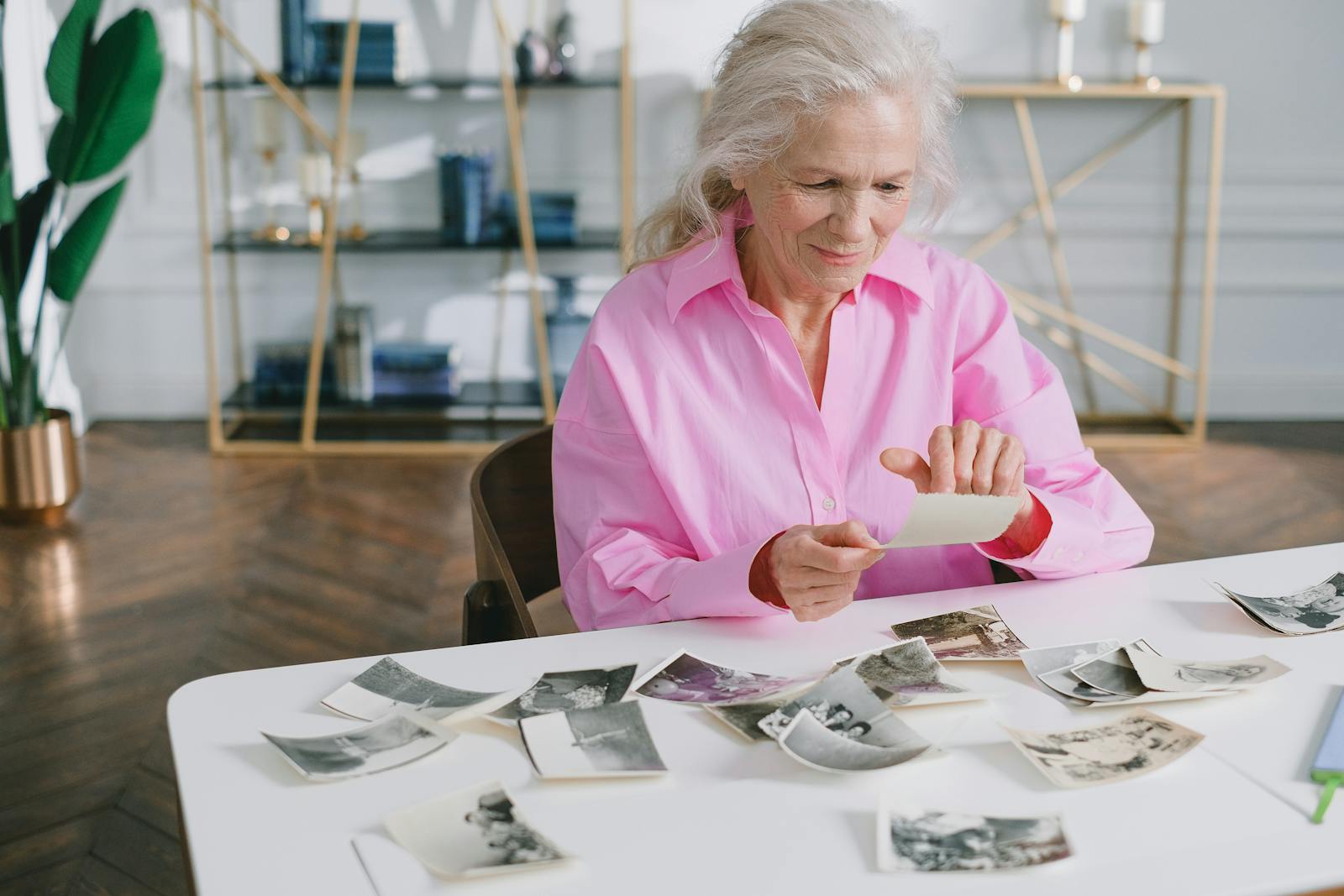
My friend with the manila folder eventually told me she'd started showing the photo to one person: someone she'd known since college, who had met the twelve-year-old version of her in spirit if not in fact. That felt right to her. One person, not none. A small, chosen audience for a self that didn't need a bigger one.
The drawer wasn't the problem. The drawer was the answer. She just hadn't realized she was allowed to keep using it.