We save our finest things for a future moment that may never arrive, turning everyday life into a dress rehearsal for living. The real cost isn't what stays unused—it's the ordinary days we spend waiting.
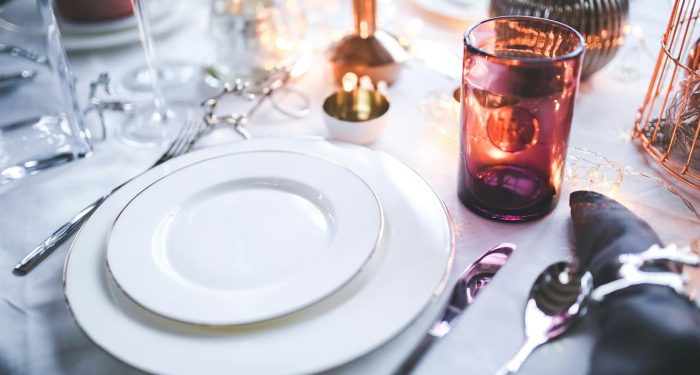
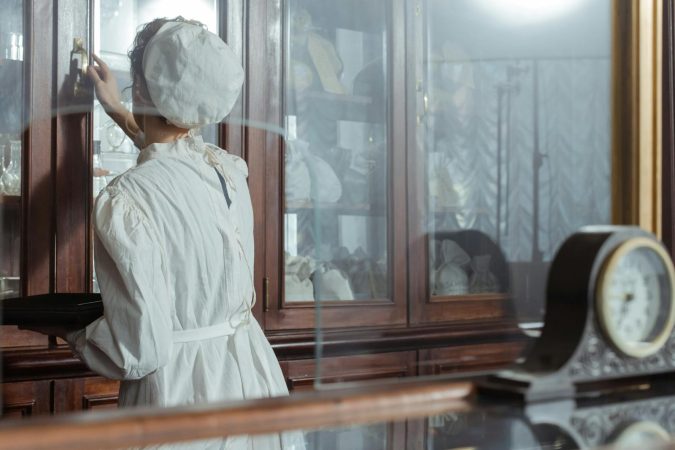
My grandmother keeps a set of porcelain plates in a cabinet behind glass. Robin's egg blue, hand-painted edges, a wedding gift from her own mother. They've been wrapped in the same yellowed tissue paper they came in for over forty years, never used, not even once. I asked her about them the last time I was at her house, and she shrugged like the question had never occurred to her. They were perfect. They were also, in that moment, devastating.
I think about those plates more than I should. Mostly because I do the same thing, just with different objects. The good olive oil I'm "saving." The candle I haven't lit because I'm waiting for a reason. The wine glasses on the top shelf I have to stand on a chair to reach, which means I never reach for them.
There's a whole psychology to this, and it's not really about dishes.
The economy of "later"
Saving things for special occasions sounds like wisdom. Frugality. Maturity, even. The grown-up version of not eating dessert before dinner.
But underneath the prudence is a quieter belief, one that doesn't get examined often: that the special occasion will arrive. That there will be a future worth the wait. That you'll be there to meet it.
This is where it gets interesting. Because the same brain that postpones the good plates is often the brain caught in what therapists call a scarcity mindset, the persistent fixation on what you don't have versus what you do. In a piece for SELF, financial therapist Stephanie Zepeda described how scarcity thinking convinces people there isn't enough to go around, even when the evidence says otherwise. The toilet paper hoarders of 2020 weren't being practical. They were being terrified.
The plate-savers are doing a softer version of the same thing. Hoarding, but inward. Treating their own pleasure as a finite resource that must be rationed.
Who taught us to wait?
This is where I get curious about where the impulse comes from. Because nobody is born believing their everyday self doesn't deserve nice things.
Some of it is generational. My grandmother raised four kids on a teacher's salary in a house where things broke and didn't get replaced. Her good plates weren't just dishes; they were proof of mobility, of having made it. Using them on a Tuesday would have felt like squandering the symbol.
For her, scarcity was real. The plates were a hedge against a world that had taught her things could disappear. What she passed down, without meaning to, wasn't the plates themselves but the posture toward them. The sense that the good stuff was always one step removed from the actual living.
Scarcity dressed up as sophistication
The trick of "saving things for special occasions" is that it sounds elegant. Restrained. The opposite of indulgent. We give it nice names, words like classy and tasteful and proper.
What it often is, underneath, is fear with good manners.
Fear that you won't be able to replace it. Fear that ordinary you, in your sweatpants, on a Tuesday, isn't worthy of the thing. Fear that if you use it now, there will be nothing left for the imagined future moment when you finally become the version of yourself who deserves it.
That future self is a mirage scarcity thinking keeps drawing for us. She's better dressed, better rested, hosting people we haven't met yet in a house we don't live in. She's the one who gets the plates. And the longer we save for her, the more we're confessing that we don't think she's us.
What changes when you stop saving
When I started actually using the things I'd been saving, a few things shifted.
The good olive oil tasted better than the cheap one I'd been substituting for two years. Obvious in retrospect. Less obvious: the meal itself felt different. There's a small dignity in pouring something good over something ordinary. It elevates the ordinary without requiring the ordinary to apologize for itself.
I lit the candle. It burned down. I bought another one. The world did not end.
The wine glasses came down off the top shelf. We started having water in them on weeknights, which sounds absurd until you try it. Water tastes like water. But the ritual of it, the slight ceremony of pouring tap water into a stemmed glass on a Tuesday, makes the whole evening lean in a different direction.
None of this is about the objects. It's about whether you trust that there's enough — enough candles, enough oil, enough Tuesdays — to spend some of it now.
The counterargument worth taking seriously
Here's the honest pushback. Some things genuinely should be saved. Heirlooms. Items that can't be replaced. The dress your grandmother wore. The ring with the chip in it from the day your dad proposed.
I'm not arguing for using everything until it breaks. I'm arguing against the default setting of saving everything indefinitely because we never quite decide we're worthy of it yet.
There's a difference between preservation and avoidance. Preservation has a reason. Avoidance has a vague feeling that someday will be better than today and you should hold out for it.
The plate-users I admire have made the distinction. They know which things are truly heirlooms and which things are just ordinary nice things they've been treating like museum pieces out of habit.
Connection over preservation
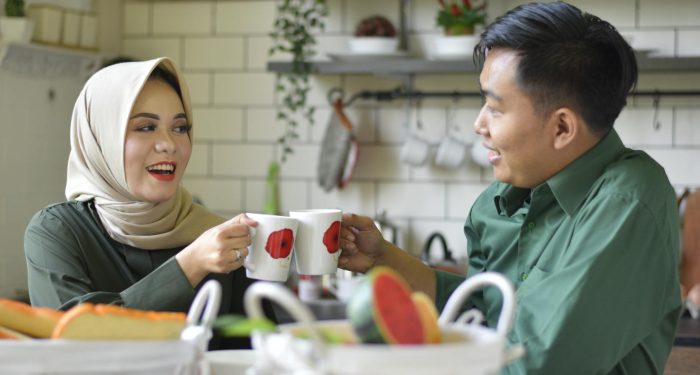
The deepest reason to use the good dishes might be the simplest one. Meal sharing is one of the oldest rituals humans have. The plate is the stage. When we put the everyday food on the everyday plate and serve the people we love on the dishes we'd use for company, we're saying something about who counts as company.
Spoiler: the people you live with should count as company. Your own self, eating alone on a Tuesday, should count as company.
Recent research on parkrun, the weekly community 5K, found that small recurring rituals genuinely improve life satisfaction. Not the once-a-year marathon. The Saturday morning thing you do with your neighbors. The point isn't running. The point is that the meaningful moments tend to be smaller and more frequent than we expect them to be.
The grandmother test
I think about my grandmother's plates as a kind of test now. When I catch myself saving something, I ask: Am I saving this because it can't be replaced? Or am I saving it because I haven't decided I'm allowed to enjoy it yet?
If it's the second one, I try to use the thing.
This is not a dramatic transformation. I'm not throwing dinner parties every weekend. I still have a top shelf with stuff on it. But I've shifted from default-save to default-use, and the apartment feels different. Less like a museum of someday. More like a place where someone actually lives.
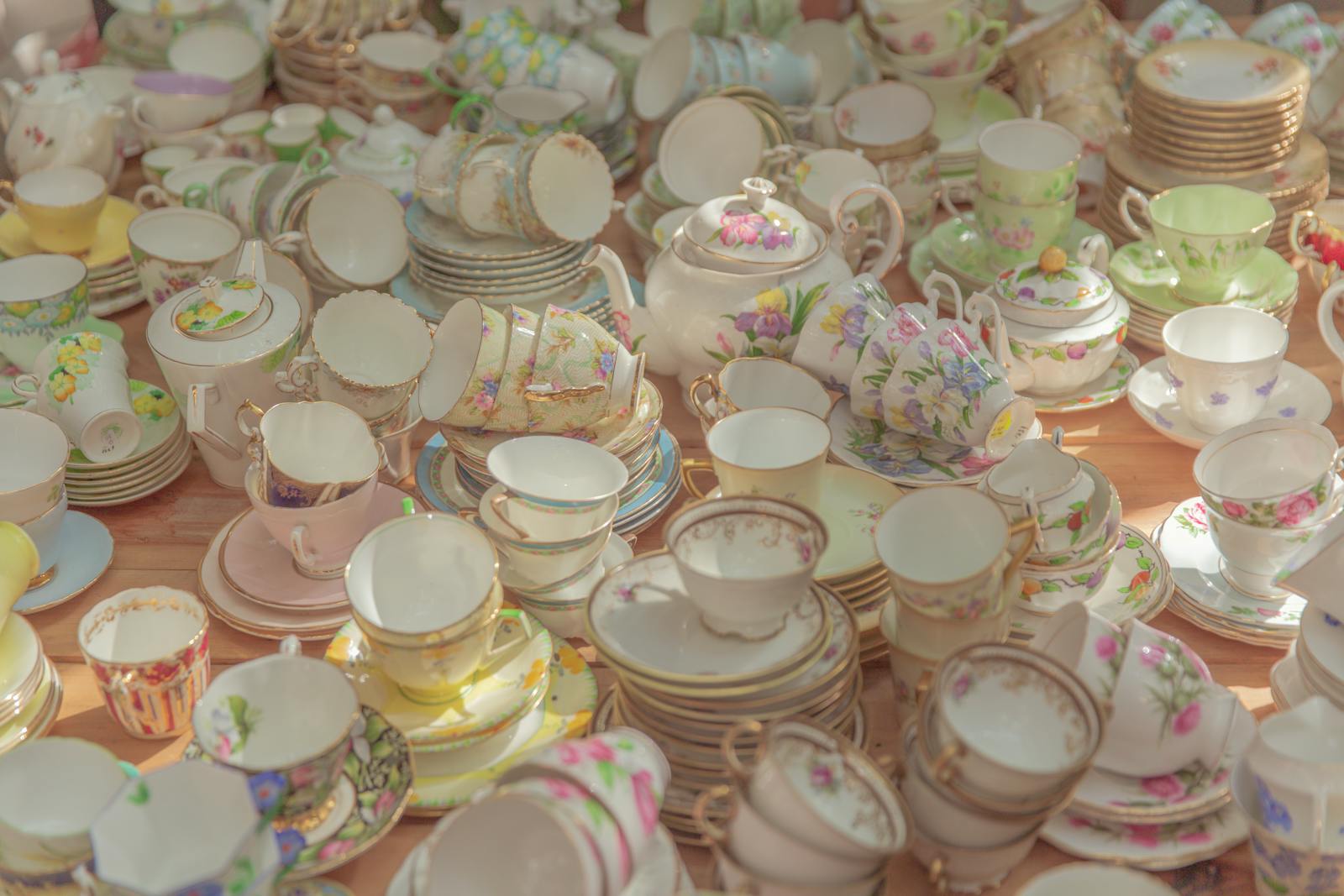
Last month I bought my own set of plates. Not robin's-egg-blue, not hand-painted, not heirloom anything. Just a stack of stoneware in a soft cream color from a place I could afford. The kind of plates you can drop one of without crying.
I used them that night for leftover pasta. Standing at the counter, fork in hand, no candle, no occasion. The pasta tasted like pasta. The plate felt heavier than my old ones, weighted in a way that made the meal feel like a meal instead of a refueling.
One of them already has a small chip in the rim from the dishwasher. I'm choosing to read that as a good sign. It means the plate is doing what plates are for. It means I'm not saving it for the version of me who finally arrives. She was never coming. I'm the one who's here, eating pasta on a Tuesday, off a plate with a chip in it, and that turns out to be the whole thing.