When the oldies station ambushes you with that one song, you're suddenly not in your car anymore — you're twenty-two and heartbroken, or thirty and dancing in the kitchen, or every age you've ever been, all at once, because those three minutes know exactly where you've hidden every version of yourself.
Researchers at the University of California, Davis have mapped what they call the "reminiscence bump" — the phenomenon in which music heard between the ages of roughly 15 and 25 embeds itself in the brain more deeply than music encountered at any other point in life. Functional MRI scans show that songs from this window activate the medial prefrontal cortex, the same region involved in self-referential thinking. In other words, the music of your late adolescence and early adulthood is neurologically filed alongside your sense of who you are.
I thought about this last week, driving home from the grocery store on an ordinary afternoon, when "Suite: Judy Blue Eyes" came on the oldies station. The opening guitar notes hit me like a physical force, and suddenly I wasn't navigating suburban traffic anymore. I was twenty-two, heartbroken, sitting on the floor of my first apartment with a glass of cheap wine, playing that Crosby, Stills & Nash album until my roommate begged for mercy. For those four minutes, I was her again. That girl who thought heartbreak was the end of the world, who didn't know yet that she'd survive much worse and much better.
I sat in my driveway long after the song ended, engine running. A handful of chords had collapsed fifty years, and I wanted to know how.
The archaeology of who we were
Do you ever wonder why certain songs from the '60s and '70s hold such power over us? It's not just nostalgia. It's something deeper. Those songs became part of our molecular structure during the years when we were forming ourselves. They soundtracked our becoming.
I was looking into this phenomenon when I came across something Dr. Shahram Heshmat, an associate professor emeritus at the University of Illinois at Springfield, wrote: "Nostalgia is a universal, innately human, and felt frequently by people of all ages."
But here's what struck me. It's not just that we feel nostalgic about these songs. It's that they seem to have preserved entire versions of ourselves, like insects in amber. When "Both Sides Now" plays in the supermarket, I'm simultaneously a young woman again (not understanding a word of what Joni Mitchell was really saying) and seventy (understanding it all too well). The girl who first heard that song, lying on her bedroom floor with her best friend, discussing whether true love existed, she's still in here. She emerges, bewildered by my reading glasses and gray hair, but absolutely certain that she knows this feeling, this melody, this moment.
Music as identity marker
Back then, your music wasn't just what you listened to. It was who you were. You were a Stones person or a Beatles person. You stood with Dylan when he went electric, or you felt betrayed. You knew every word to "American Pie" and spent hours debating what it meant.
My first husband was a Motown man. Every Sunday morning, he'd play The Temptations while making breakfast, spinning me around the kitchen to "My Girl" with our children laughing in their high chairs. We divorced when I was twenty-eight, but I still can't hear that bass line without smelling bacon and feeling the phantom weight of a baby on my hip. That woman — young, exhausted, trying to save a marriage that couldn't be saved — she lives inside that song now. When it plays, she gets to come out and dance again, knowing what I know now: that leaving was the right choice, that the children would be fine, that Sunday mornings would be sweet again someday, just different.
The time travelers in our heads
What is it about those particular decades that created such indelible musical memories? Part of it was structural. Radio was king, and you couldn't curate your experience or skip the tracks you didn't like. You sat through "Horse with No Name" to get to "Heart of Gold." You knew every song in the top 40, whether you wanted to or not. But I think it goes deeper than shared experience. Those songs arrived during the years when everything felt possible and impossible at once. When you're eighteen, twenty-five, thirty-two, every emotion registers as overwhelming. Every breakup is devastating. Every new love is forever. Every decision is life-changing. The music of that era matched that intensity: protest songs and love ballads, psychedelic experiments and soul-baring confessions. It arrived already outsized, and we were outsized to meet it. Now, when "Fire and Rain" comes on while I'm gardening, I remember listening to it during difficult times, James Taylor's voice the only thing that made sense. The song holds all of those moments, all of those griefs and hopes. They're layered inside it like tree rings, each one true, each one still present.
The unexpected gift of musical haunting
Sometimes I wonder if my grandchildren will have this same relationship with their music. They create playlists for every mood, skip songs after thirty seconds, consume music like snacks. Will any of it stick to them the way "The Sound of Silence" stuck to us?
But then my granddaughter discovered Fleetwood Mac last month and called me, breathless: "Grandma, have you heard 'Dreams'?" I laughed until my sides hurt. Have I heard "Dreams"? Honey, I WAS "Dreams." A divorced single mother, playing that album while I studied for my teaching certification, two kids asleep in the next room, thunder only happening when it's raining.
Living with our musical ghosts
There's a poignancy to carrying all these versions of yourself, accessible only through three-minute portals. Sometimes I avoid certain songs because I'm not ready for who they'll summon.
But mostly, I've learned to welcome these visitations. That girl who cried to "Both Sides Now" after her first heartbreak, she deserves her three minutes. The young mother who sang "Bridge Over Troubled Water" as a lullaby earned her moment of recognition. The middle-aged woman who played "I Will Survive" during her divorce gets to remind me of my own strength.
Final thoughts
"Suite: Judy Blue Eyes" ended a while ago. I'm still in the driveway. The groceries are almost certainly past saving at this point, and I keep meaning to turn off the engine, and I don't.
The twenty-two-year-old on that apartment floor doesn't know me. I'm not sure I know her anymore either. We share a song and a body and not much else I can name right now, sitting here in a car she couldn't have imagined, in a life she would have found unrecognizable. I thought writing this down would clarify something. It hasn't. What I have is a driveway, a silent radio, and the uneasy sense that all the selves I've been are real and present and also, somehow, strangers to each other. Maybe that's what a song does. It doesn't reconcile them. It just puts them in the same room for a minute, and then the minute ends.
If You Were a Healing Herb, Which Would You Be?
Each herb holds a unique kind of magic — soothing, awakening, grounding, or clarifying.
This 9-question quiz reveals the healing plant that mirrors your energy right now and what it says about your natural rhythm.
✨ Instant results. Deeply insightful.
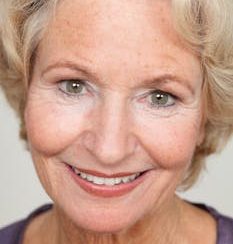
Marlene Martin
Marlene Martin is a retired high school English teacher who spent 38 years in the classroom before discovering plant-based eating in her late sixties. When her daughter first introduced her to the idea of removing animal products from her diet, Marlene was skeptical. But curiosity won out over habit, and what started as a reluctant experiment became a genuine transformation in how she thinks about food, health, and aging.
At VegOut, Marlene writes about nutrition, wellness, and the experience of embracing new ways of eating later in life. She brings a teacher’s instinct for clarity and patience to topics that can feel overwhelming, especially for readers who are just beginning to explore plant-based living. Her writing is informed by personal experience, careful research, and a belief that it is never too late to change.
Marlene lives in Portland, Oregon, where she spends her mornings reading research papers, her afternoons tending a modest vegetable garden, and her evenings knitting while listening to audiobooks. She has three adult children and two grandchildren who keep her honest about staying current.
More Articles by Marlene