The friend who always picks the restaurant isn't running the show — they learned in childhood that gatherings only happen if someone refuses to wait for permission.
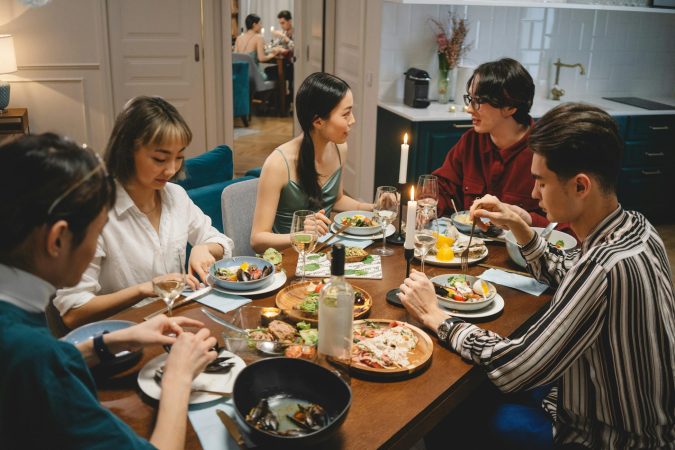
The friend who always picks the restaurant is doing emotional labor everyone else gets to enjoy without acknowledging. Watch the next group text die in real time. Six adults, three days of vague enthusiasm, and then the same person finally types the address, the time, and the polite suggestion to RSVP by Thursday. Everyone is grateful. Everyone is also relieved they didn't have to do it themselves. And nobody asks why this person, every time, is the one who steps in before the silence becomes permanent.
The lazy reading of this behavior is that they're controlling. Type A. A little bossy. The friend who needs things their way. That's the diagnosis people reach for when they don't want to look any closer.
The real story is harder, and quieter, and almost always traces back to a kid sitting somewhere in a house, learning a specific lesson about what happens when nobody takes charge. They learned that if they didn't make the plan, there was no plan. If they didn't ask the question, the question went unasked. If they didn't initiate, the room stayed silent. And by the time they were old enough to have friends of their own, the muscle was already built.
The kid who became the calendar
I taught high school English for thirty-two years, and you can spot these students by November of any given school year. They're the ones who quietly remind the group when the project is due. They're the ones who text the absent kid the homework. They're not the loudest. They're often not even the most academically gifted. What they are is hyper-attuned to the gap between what's supposed to happen and what will actually happen if no one intervenes. They've been intervening for as long as they can remember.
Most of them came from homes where a parent was distracted, depressed, working three jobs, drinking, or simply checked out. The household didn't necessarily look chaotic from the outside. Sometimes it looked beautifully composed. But somewhere inside it, a child figured out early that birthdays would be forgotten unless they remembered them, that dinner would be late unless they started the rice, that the school form would go unsigned unless they put it on top of the mail.
Researchers at Yale recently identified specific neurons that drive sociable behavior in children and teens, mapping how a young person's social wiring forms in response to their environment. What they didn't have to map, because anyone who's lived through it knows, is that the wiring sticks. The kid who learned to organize the family doesn't suddenly forget how when they turn twenty-two. They just start organizing the brunch instead.
The misread of competence
Here's what almost nobody tells the organizer: the people around them frequently mistake the behavior for personality. They think this friend simply likes planning. Likes restaurants. Likes the logistics. As if booking a six-top at 7:30 on a Saturday is its own form of recreation.
The friend rarely corrects this. Correcting it would mean admitting that the alternative — waiting to see if anyone else picks up the slack — feels physically uncomfortable. There's a tightness in the chest. A familiar low hum that says: if you don't do this, it won't happen, and if it doesn't happen, you'll be alone. That hum was installed before kindergarten. It doesn't take requests.
Psychology Today has covered the way competence becomes a survival strategy in high-functioning adults who internally feel anxious even as they appear effortlessly capable to everyone around them. Booking the table looks like ease. Inside, it's often a small, suppressed panic resolving itself into action. The panic is the engine. The reservation is the exhaust.
The cost of being the one who shows up
What makes this particular wound so easy to miss is that the person carrying it usually looks fine. Better than fine. They have a full social calendar. People are always thanking them. Their birthday is well-attended because, well, they planned it.
And yet. There's a specific exhaustion that comes from being the dependable one in every group you're part of. It's not the work itself that drains them — most of them genuinely enjoy the work. It's the slow, accumulated awareness that the work is invisible. That if they stopped, the gatherings would stop, and the friendships would quietly atrophy, and nobody would understand why except them.
I had a colleague at the school who hosted Thanksgiving for a group of teachers for nineteen years. She finally told me, in her last year before retirement, that she'd tried twice to let someone else take it over. Both times the holiday simply didn't happen. The first year, people said they'd been busy. The second year, no one mentioned it at all. She went back to hosting because the alternative was watching a tradition she loved disappear into the polite indifference of adult scheduling.
What attachment research actually shows
A large study covered in Scientific American mapped how early relationships with caregivers shape the way adults relate to peers decades later. Children who experienced unreliable or distracted caregiving don't just grow up with attachment anxiety in romantic contexts. They develop a persistent concern about connection in friendships too — a low-grade certainty that connection is conditional on their effort, and that withdrawing the effort means withdrawing the connection.
This is different from the controlling personality that armchair diagnosticians like to invoke. A truly controlling person organizes things to assert dominance over the outcome. The friend we're describing organizes things because the underlying belief is darker and more childlike: nobody will choose me unless I make it easy for them to.
Healthline's overview of prosocial behavior in early childhood notes that helpful, accommodating behavior typically develops in response to the social environment a child observes and adapts to. Some children develop it as joyful generosity. Others develop it as a tax they pay for inclusion. Both look like kindness from the outside. Only one of them feels like kindness from the inside.
The Sunday afternoon test
You can identify which version of this you're dealing with by watching what happens on a quiet Sunday. The naturally social organizer, the one whose behavior emerged from secure footing, will happily not plan anything. They'll read a book. They'll take a nap. The plan-making is something they enjoy when it's wanted and forget when it isn't.
The compensatory organizer cannot rest the same way. By Sunday afternoon, if no one has reached out, a familiar discomfort settles in. They begin scrolling through contacts. They draft a text and delete it. They draft another. By evening, they've initiated something — a coffee Tuesday, a dinner Friday — because the alternative is sitting with the suspicion, planted in childhood and never fully uprooted, that being passively included is something that happens to other people.
This is also why these are often the friends who replay old conversations at three in the morning. The same vigilance that makes them excellent planners makes them excellent ruminators. The mind that tracks who hasn't responded to the group chat is the same mind that tracks, much later, whether the dinner went well, whether anyone seemed annoyed, whether the choice of restaurant was a mistake.
What the organizer doesn't say out loud
Ask the friend who always picks the restaurant if they ever wish someone else would do it, and they'll usually say yes. Ask if they've tried letting someone else do it, and they'll often say yes again, with a shrug, and a story about how it went. The story is almost always the same. They waited. Nobody stepped up. They watched a connection they cared about start to drift. They picked the restaurant.
This is the part that gets misread as preference. From the outside, it looks like they swooped in because they wanted to. From the inside, swooping in was the only thing standing between them and a kind of loneliness they spent their whole childhood learning to outrun.
Reporting on adverse childhood experiences in outlets like MinnPost's coverage of childhood trauma has long traced how environments shape adult coping patterns in ways that look adaptive but cost the person carrying them. Organizing the gathering is one of the more socially rewarded versions of this. Nobody pathologizes the friend who books the table. They benefit from her too much.
What changes when you see it clearly
The point of naming this isn't to convince the organizer to stop organizing. Many of them genuinely love the work, even when its origins are painful. Plenty of beautiful traditions exist in the world only because somebody, somewhere, decided that waiting for spontaneous coordination was a losing game.
The point is for the people around them to stop reading the behavior as a personality quirk and start reading it as something closer to a gift. The friend who picks the restaurant isn't asserting control over your social life. They're holding the structure of it together with hands they trained, very young, to do exactly that. They're protecting the gathering from the slow gravity that pulls adult friendships apart when nobody is willing to be the one who texts first.
It's worth, occasionally, picking the restaurant yourself. Not because they're tired of doing it, though they probably are. But because the deepest thing you can offer someone who learned early that connection requires their effort is the experience of being chosen without having to organize it. A text that says: I made the reservation. Just show up.
For someone who has been the architect of their own inclusion since the age of eight, that sentence lands like weather they've never lived in. Quiet. Unfamiliar. The thing they've been building for everyone else, finally built for them.