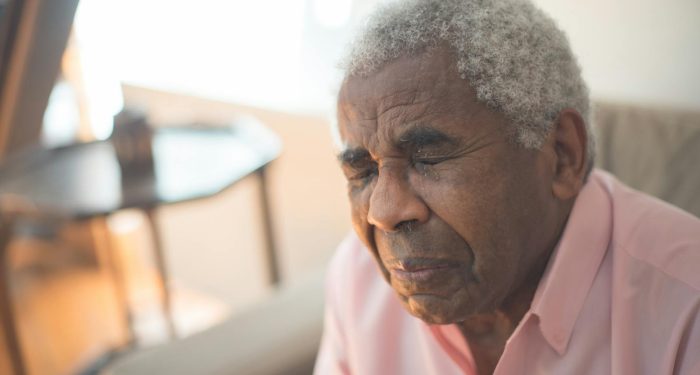
Adult friendships rarely end with an argument — they end when one person quietly tallies the ledger and realizes the math has never worked.
Relationship researchers keep arriving at the same finding about adult friendships: most of them don't end in conflict. They end in asymmetry. One person keeps initiating, the other keeps receiving, and eventually the initiator runs out of evidence that anyone is on the other end.
The conventional story about friendship breakups is that they're loud. Someone betrayed someone. Someone said something unforgivable at a wedding. A boyfriend came between them. That's the version movies like, and it's the version we tell ourselves when we're trying to explain why we don't see someone anymore, because blame is easier to narrate than erosion.
The real story is quieter. Researchers who study adult relationships describe it as a slow tilt rather than a rupture. Psychologists call this relational asymmetry, and it's one of the more underdiscussed reasons long friendships go cold. It's not that the receiving friend stopped caring. It's that caring without acting looks identical to indifference from the outside, and after enough years, the initiator starts to believe the outside view.
The ledger nobody admits they're keeping
Here's what almost nobody says out loud: every friendship has a ledger. Not a petty, tit-for-tat scoreboard. Something closer to a running sense of whether the energy moves both ways. Healthy people don't consciously track it. But the subconscious does, and it's surprisingly patient. It will absorb years of lopsidedness before it presents the data.
When it finally presents the data, it usually comes in a single moment. A birthday passes without a text. A hard week goes unnoticed. A group chat forms that doesn't include you. And the initiator stands there holding two decades of evidence they weren't aware they were collecting, and thinks: oh.
That oh is the sound an adult friendship makes when it ends.
Consider someone like Mara, who stopped texting her friend Jenna on a Thursday in March, and Jenna didn't notice until the following October. That's not a fight. That's not a falling out. When Mara finally explained it over coffee — twenty-two years of birthday reminders, wedding flights, check-ins after Jenna's miscarriage, the Google calendar alerts she kept setting for Jenna's mother's death anniversary — she didn't sound angry. She sounded like someone who had spent two decades running an experiment and had finally accepted the data.
The Forbes psychologist Mark Travers has written extensively about this pattern, describing it as the slow, asymmetrical drift that quietly dissolves more friendships than any argument ever has. What's striking in his work is how often the receiving friend is genuinely shocked when the initiator goes silent. They didn't know they were being weighed. They assumed the effort was mutual because the affection felt mutual.
And that's the trap. Affection and effort are different currencies. You can feel warmly toward someone for thirty years while never once being the person who picks up the phone.

Why receivers don't see themselves as receivers
If you asked Jenna whether she loved Mara, she would have said yes without hesitation. If you asked her who initiated their plans, she would have said — and this is the part that matters — we both did, I think. Receivers almost never identify as receivers. The role is invisible from inside it.
Part of this is cognitive. We remember what we did; we don't notice what we didn't. If Jenna sent three texts in a year, she'd recall sending texts. She wouldn't recall the forty texts Mara sent that made her three possible. The absence of her own effort is not encoded anywhere in her memory.
Part of it is structural. Adult life is engineered to reward the receiver. The person who cancels gets sympathy (she's so busy). The person who gets cancelled on gets told to be understanding. The person who remembers every birthday is considered thoughtful, which is a word we use to describe people whose emotional labor we have no intention of reciprocating. There's a specific kind of quiet resentment that builds up in the people who keep the machinery of friendship running while everyone else enjoys the ride.
And part of it, honestly, is that being the receiver feels good. Someone is thinking of you. Someone remembered. Someone made the plan. It's pleasant, and pleasant things don't trigger self-examination.
The moment the evidence tips
Initiators don't leave because of one snub. They leave because of a slow accumulation of data that finally crosses a threshold their own mind didn't know it had set. Travers calls this pattern one of the quietest but most destructive habits in adult friendship: the slow arithmetic of unreturned effort that nobody discusses because neither party wants to be the one who brings it up.
The threshold is usually something small. A shared life event the other person forgot. A group photo you weren't in. Hearing secondhand that she met up with someone else in your city and didn't call. The triggering moment is almost always disproportionate to the damage, because the damage was done years ago in a thousand tiny ways and only now became visible.
What the initiator is actually doing, in that moment, is updating their model. For years, they operated on the belief that the friendship was mutual and the evidence of mutuality was just hard to see. Then one piece of evidence arrives that can't be reframed, and the whole model collapses backward. Every unanswered text, every forgotten birthday, every one-sided plan suddenly recontextualizes. It wasn't that she was busy. It wasn't that life was hard. It was that you were doing the friendship alone and calling it a friendship because you wanted it to be one.
That's not conflict. That's grief arriving on a delay.
Why the receiver almost never sees it coming
When the initiator stops initiating, the receiver's life continues unchanged for a surprisingly long time. No texts arrive, but no texts were going to arrive from her end anyway. The absence is invisible because the receiver was never tracking the presence.
Eventually, months later, sometimes a year, the receiver notices. And the noticing usually comes in a context that makes it worse: she needs something. A favor, an ear, a place to stay, a ride to the airport. She reaches out, warmly, as if nothing has happened, because from her side nothing has.
The initiator's silence at that moment is often misread as cruelty. It isn't. It's exhaustion. The initiator spent years being the infrastructure of the friendship, and the request confirms what the silence was trying to say: you only notice me when you need something. Studies on one-sided relationships keep surfacing this pattern. The initiator doesn't leave angrily. They leave the way a battery dies. Slowly, then all at once, and then they don't come back on.
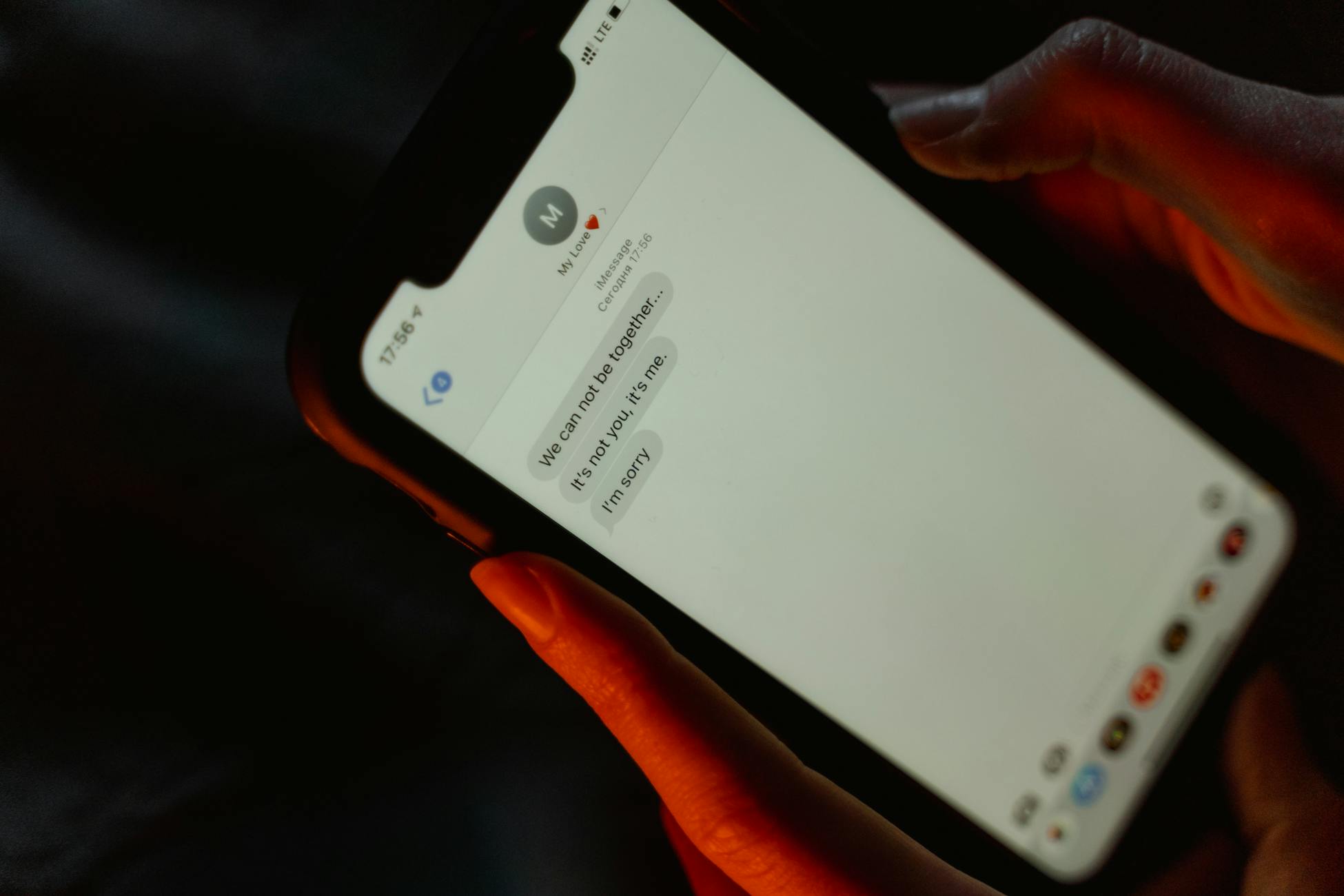
The asymmetry we mistake for personality
One of the cruelest parts of this dynamic is how often we justify it with personality traits. She's just not a texter. He's bad at keeping in touch. That's just how she is. And sometimes that's true. But it's also true that the same people who "aren't texters" text plenty of other people, and the same people who "are bad at keeping in touch" somehow maintain the relationships they actually prioritize.
The uncomfortable truth is that effort is a signal of value. Not the only one, but a reliable one. When someone consistently doesn't make effort toward you while making it toward others, your subconscious registers this correctly long before your conscious mind is willing to admit it. The delay between those two registrations is where most of the pain lives.
There's a specific loneliness to being the friend everyone calls when things fall apart, and it's the same loneliness that eventually ends the friendship. Not because the initiator stops loving the other person. Because the initiator finally accepts that love and reciprocity are not the same thing, and that love without reciprocity has a lifespan.
What ending actually looks like
Because these endings are quiet, they're also deniable. There's no conversation. No confrontation. Just a gradual reduction in texts, a slower response time, a declined invitation that doesn't get rescheduled. The friendship doesn't end so much as it thins out until there's nothing left to name.
This is why so many people in their thirties and forties find themselves unable to explain where their oldest friendships went. We just drifted, they say. But drifting is passive, and what happened wasn't passive. One person kept rowing and one person didn't, and eventually the rower got tired.
There's a quiet kind of dignity in letting a friendship end without a dramatic conversation, and that dignity is often what the initiator chooses. They don't want a confrontation. They don't want to itemize the ledger. They just want to stop bleeding energy into something that doesn't refill them. And so they pull back, quietly, and wait to see if the absence registers. Usually it doesn't. That's the final piece of data.
If you've been the initiator
You're allowed to stop. You don't owe anyone a farewell speech. You don't need to explain why the group chat went quiet from your side, or why you didn't send the birthday text this year, or why you declined the last three plans without countering. The friendship was asking for maintenance you were no longer willing to provide alone, and choosing not to provide it is not cruelty. It's accuracy.
What helps is naming what the friendship actually was. Not a mutual bond that failed, but an asymmetrical arrangement that you kept alive through sheer will. The grief of ending it is real, but it's not the grief of losing something mutual. It's the grief of finally admitting it wasn't.
If you suspect you've been the receiver
Here's the harder question, and it's the one most readers will try to skip: when was the last time you were the one who reached out first? Not responded to. Not agreed to a plan. Initiated. If you can't remember, there's a name for what you've been doing, and it isn't friendship. It's attendance.
Somewhere in your phone right now is a name that used to text you and doesn't anymore. You probably haven't thought about it, because nothing about your day changed when they stopped. That's the diagnosis. The person who built the thing you called a friendship has quietly stopped building it, and you didn't notice, because you were never the one holding the hammer.
You get one move. Not a grand gesture. A specific, unshowy admission: I've realized I haven't been holding up my end, and I don't want to keep being that person. No defense. No explanation. No list of what was happening in your life. Send it today, or accept that the silence on the other end isn't drift. It's a verdict, and it's already been entered.
If You Were a Healing Herb, Which Would You Be?
Each herb holds a unique kind of magic — soothing, awakening, grounding, or clarifying.
This 9-question quiz reveals the healing plant that mirrors your energy right now and what it says about your natural rhythm.
✨ Instant results. Deeply insightful.

Jordan Cooper
Jordan Cooper is a food and culture writer based in Venice Beach, California. Before turning to writing full-time, he spent nearly two decades working in restaurants, first as a line cook, then front of house, eventually managing small independent venues around Los Angeles. That experience gave him an understanding of food culture that goes beyond recipes and trends, into the economics, labor, and community dynamics that shape what ends up on people’s plates.
At VegOut, Jordan covers food culture, nightlife, music, and the broader cultural forces influencing how and why people eat. His writing connects the dots between what is happening in kitchens and what is happening in neighborhoods, bringing a ground-level perspective that comes from years of working in the industry rather than observing it from the outside.
When he is not writing, Jordan can be found at live music shows, exploring LA’s sprawling food scene, or cooking elaborate meals for friends. He believes the best food writing should make you understand something about people, not just about ingredients.
More Articles by Jordan