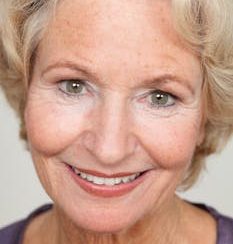
At seventy, I've discovered that the difference between feeling alive and fading into invisibility can be as simple as a twenty-five-year-old barista saying "Morning, Marlene" — and why that four-word greeting has become more essential to my survival than my morning medication.
"Morning, Marlene. The usual?" Marcus slides the cup across the counter before I've even finished unwinding my scarf. It's 6:52 on a Tuesday in March, and this thirty-second exchange is, I'm beginning to understand, the most important social interaction I'll have all day.
I've been coming here every morning for almost two years now. The ritual started, like most rituals in widowhood, by accident. Six months after my husband died, I found myself standing in my kitchen at 5:30 AM, fully dressed with nowhere to go. The house stretched around me like an accusation of emptiness. I'd already reorganized the spice cabinet twice that week, and it was only Wednesday.
So I grabbed my purse and walked out the door. The café three blocks away had its lights on — I'd passed it countless times during my teaching years, always rushing, never stopping. I pushed through the door, and the young man behind the counter looked up with genuine warmth. "Good morning! What can I get you?" When he asked for my name for the cup, something shifted. "Marlene," I said, and hearing him repeat it back felt like proof I still existed. Now Marcus greets me by name before I even reach the counter, and that simple recognition has become the invisible architecture of my days.
The weight of being unseen
Have you ever noticed how invisibility creeps up on you after seventy? One day you're a person with a full calendar and responsibilities, and the next you're a ghost haunting grocery stores at 2 PM on weekdays, when everyone else your age is either working or dead. The world reorganizes itself around younger people, and you become background noise — like elevator music nobody really hears.
After thirty-two years of teaching high school English, I was used to being needed. Students would cluster around my desk with questions about Gatsby's green light or whether their thesis statements were strong enough. My husband would call from his office to ask what we needed from the store. My days had shape and purpose, defined by bells and deadlines and other people's expectations. Now I can go three days without anyone saying my name. The grocery clerk calls me "ma'am." The librarian nods silently. Even at church, I've become "dear" or "honey" to well-meaning younger women who can't quite remember if I'm Marlene or Mary or that other lady who sits in the third pew.
This invisibility isn't dramatic. It's not like the movies where someone suddenly can't be seen. It's a gradual fading, and you still have substance, but your edges blur. People's eyes slide past you. Conversations happen around you but not with you. You become a demographic rather than a person: "senior citizen," "elderly woman," "widow."
Why small rituals become lifelines
Virginia Woolf wrote about "moments of being" — those flashes when life feels real and vivid instead of cotton-wrapped and distant. My morning café ritual has become my daily moment of being. Not because anything spectacular happens, but because something regular and human does. Marcus says my name. I exist in someone else's awareness for thirty seconds. The day gains a focal point.
I've watched other people my age construct similar rituals. There's a man who walks his ancient beagle past my house every morning at exactly 7:15. We wave. Neither of us knows the other's name, but we notice if one of us misses a day. My neighbor drives to the same grocery store every morning for a single banana and the chance to chat with the produce manager about his new grandson.
Are we lonely? Probably. Is that the whole story? I don't think so.
We're people who understand that without structure, retirement can feel like falling through endless empty space. As one of my posts about finding purpose after sixty explored, we need anchors, even small ones, to keep us tethered to the world of the living. These rituals aren't about the coffee or the banana or the beagle's need to sniff every hydrant. They're about creating points of contact with humanity, building a framework for days that would otherwise dissolve. They're about being recognized as individuals rather than invisible statistics.
The unexpected community of the early morning café
The café has its own ecosystem of regulars now. There's Margaret, who started coming after I mentioned that Marcus remembers names. She orders elaborate drinks with oat milk and extra foam, not because she likes them but because the complexity requires interaction. There's James, who brings his laptop but never opens it, preferring to watch the morning unfold through the window. There's the young mother who sometimes cries quietly into her coffee while her baby sleeps in the stroller beside her. We don't really talk to each other, but we notice. When James was gone for two weeks, we all wondered. When he returned with his arm in a sling, the relief was palpable. I remember Margaret actually putting her hand to her chest, and I remember being surprised at how much I'd been carrying without knowing it. We are strangers who have become essential to each other's routines, which is either a lovely thing or a sad commentary on modern aging, and I've stopped trying to decide which.
Marcus, barely twenty-five, has become the unexpected keeper of our small community. He knows that Margaret's husband has dementia and lives in a care facility now. He knows that James is a widower who can't stand eating breakfast in his empty house. He probably knows that I come not for the burnt coffee but for the sound of my own name. His youth makes him safe somehow — he won't judge us for needing this, won't recognize the desperation behind our punctual arrivals.
Learning to accept the kindness of ritual recognition
There's shame sometimes in admitting how much this matters. Shouldn't I be stronger, more self-sufficient? Shouldn't I have a richer life that doesn't depend on a twenty-something barista's greeting? My generation was taught to be stoic, to handle our problems privately, to never be a burden.
But here's what I think I've learned at seventy: accepting small kindnesses isn't weakness. It's survival. When Marcus remembers that I like my coffee extra hot, when he asks about the book I'm pretending to read, when he says "See you tomorrow, Marlene," he's throwing me a lifeline, whether he knows it or not.
Last month, I tried to explain this to my daughter during our weekly call. "It's just nice," I said, understating everything. "The coffee's good." She suggested I join a senior center, take a class, volunteer somewhere. All reasonable suggestions that miss the point entirely. I don't need activities. I need recognition. I need to be Marlene, not "a participant" or "a volunteer" or "a student." I need someone to expect me, specifically me, to walk through a door each morning.
Final thoughts
Tomorrow morning, I'll arrive at the café at 6:50. Marcus will look up and say, "Morning, Marlene. The usual?" And with those four words, my day will begin to solidify from mist into something with shape. Whether that's the same as meaning, I'm honestly not sure anymore.
Sometimes I wonder if I've found something essential, or if I've just built a smaller, prettier version of the empty house I was trying to leave. Marcus will graduate from something eventually, or move, or quit. The café could close. Margaret's husband will die and she may stop coming, or she may come more. I don't know if what we have is community or just convenient proximity dressed up as community. I don't know if I'm healing or simply learning to decorate the avoidance.
What I know is that tomorrow I'll go. And the next day. And I'll listen for my name, and I'll take whatever that thirty seconds is — salvation, distraction, habit, or some stubborn combination of all three — and I'll call it enough, because at seventy you learn not to ask too many questions of the things that are keeping you upright.
What’s Your Plant-Powered Archetype?
Ever wonder what your everyday habits say about your deeper purpose—and how they ripple out to impact the planet?
This 90-second quiz reveals the plant-powered role you’re here to play, and the tiny shift that makes it even more powerful.
12 fun questions. Instant results. Surprisingly accurate.