A slower era of communication forced people to develop uncertainty tolerance—a skill that smartphones have eliminated, and our mental health is paying the price.
The common story about the landline generation goes like this: they were stuck. Trapped in a slower, clunkier era where you had to be home to take a call, where long-distance cost real money, where you couldn't fact-check an argument at dinner. The smartphone, in this telling, liberated us from all that friction.
But that framing misses something. The friction wasn't just inconvenience. It was a training ground for a specific cognitive skill that most of us have now lost, and the loss is showing up in our mental health data.
The skill is uncertainty tolerance. The ability to not know yet, and to be okay with not knowing yet.
Missing someone as a skill
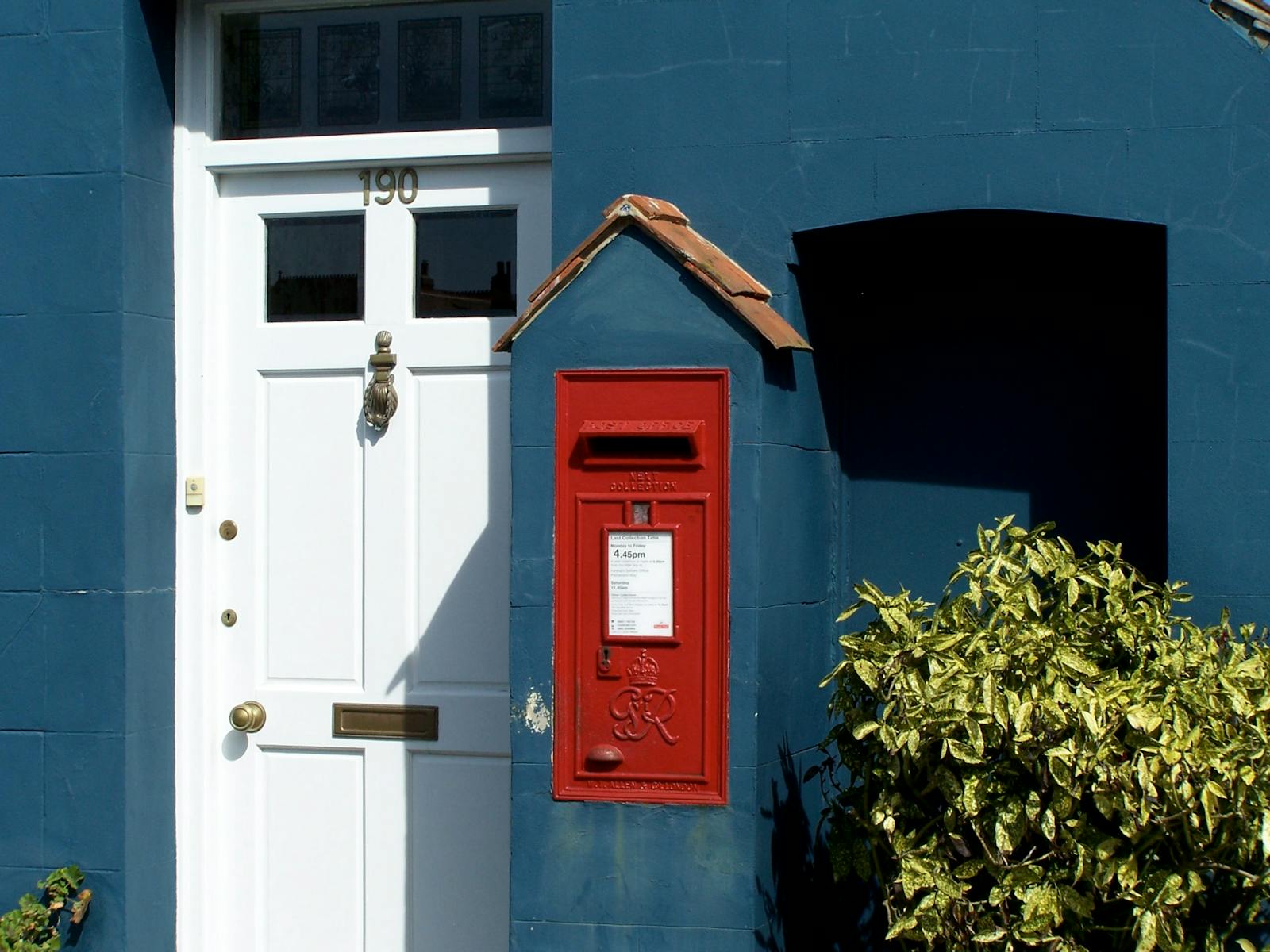
If you're old enough to remember writing a letter to someone who'd moved away, you remember a specific feeling. The letter went into a mailbox. Then nothing happened for a week. Then maybe two weeks. Then one afternoon you'd come home and there'd be an envelope with familiar handwriting on the kitchen counter.
In between, you missed them. You didn't text them. You didn't tag them in a meme. You held the missing inside you, and the missing built something.
That something has a name in psychology research. It's a kind of resilience built through what a 2025 Salon piece on uncertainty describes as the body's capacity to mount a stress response and then return to baseline. The problem with our current moment isn't that we feel stressed. It's that we never quite return to baseline because the next ping is always coming.
What the busy signal actually taught us
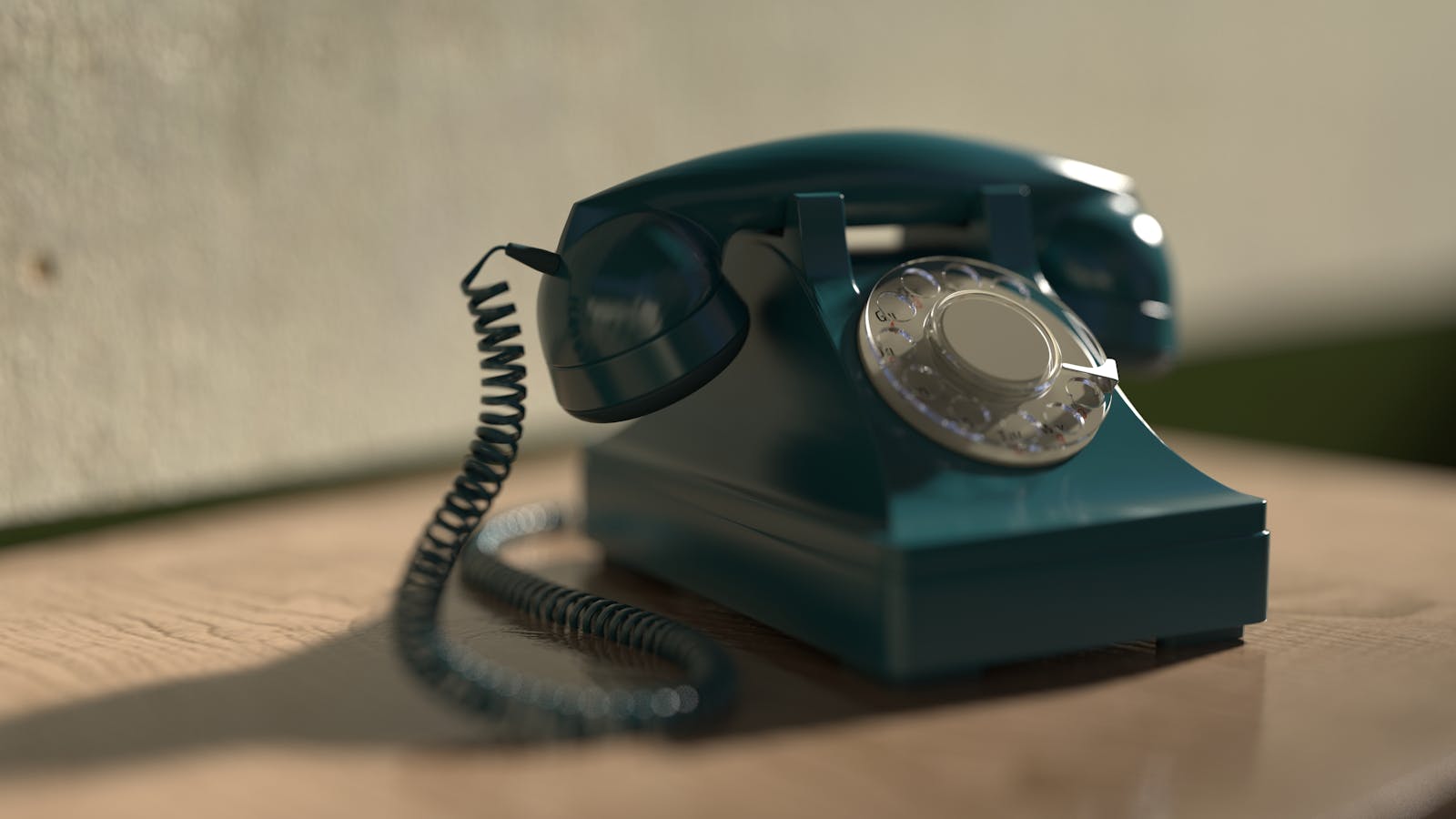
If you grew up dialing a seven-digit number on a rotary phone, you learned a series of small acceptances. The line might be busy. Nobody might pick up. The person you wanted to talk to might be at the grocery store, or asleep, or simply uninterested in being reached.
You couldn't see three dots blinking. You couldn't watch them type and stop and type again. You sent a signal into the void and the void either answered or it didn't.
That experience, repeated thousands of times, did something to the nervous system. It taught people that the gap between question and answer was a normal, livable place to spend time.
Now we treat that gap like a medical emergency.
The science of not knowing
Uncertainty intolerance may be one of the most important psychological vulnerabilities of our era. When we encounter something ambiguous, the brain mounts a stress response that broadens attention and improves working memory. As journalist Maggie Jackson told Greater Good Magazine, uncertainty is a state that can enhance learning and attention, rather than something to be avoided.
That wakefulness used to be ambient. It was just what waiting felt like.
The more we can resolve uncertainty instantly, the worse we get at handling the uncertainty we can't resolve.
The economics of impatience
Here's the part that often goes unsaid. The technology that erased our tolerance for waiting wasn't designed to make us calmer. It was designed to capture attention, and attention is most easily captured by people who feel mildly anxious all the time.
An app that lets you know immediately whether your friend got your message is more engaging than one that doesn't. A platform that tells you who viewed your story is more sticky than one that doesn't. The infrastructure of constant resolution is also the infrastructure of constant checking.
The product wasn't connection. The product was the elimination of the pause.
And the pause, it turns out, was where a lot of useful psychological work used to happen. The gap was for thinking. It was for letting an emotion finish its arc before you broadcast it. It was for changing your mind about whether you actually wanted to send that message at all.
Most of the texts I almost sent in my twenties, before I had the chance to sit with them for a few hours, would have made my life worse. Most of the conversations I almost started would have ended badly. The friction protected me from my own first drafts.
The FOMO economy
One of the strange consequences of erasing the pause is that we've created a culture where missing out feels worse than it used to, even though objectively we're missing out on less. The constant visibility of what other people are doing has made the absence of being there feel sharper, not duller.
Before this infrastructure existed, you didn't know what your friends were doing on a Saturday night unless you were doing it with them. That ignorance was, in retrospect, a kind of mercy.
Not knowing isn't always a problem. Sometimes it's a feature.
The new symptom: outsourcing the wait
The most interesting recent development in this story is what happens when people who never developed uncertainty tolerance encounter unavoidable uncertainty. They reach for a tool that can simulate an answer. A growing pattern has emerged of people consulting AI chatbots about strange body symptoms instead of waiting for a doctor's appointment.
The chatbot doesn't know what's wrong with you. But it will say something that sounds like an answer, and the saying-something resolves the unbearable feeling of not knowing.
This is what happens when a skill atrophies. We build prosthetics for it. The prosthetic for uncertainty tolerance is the always-available pseudo-answer, and the cost of the prosthetic is that the underlying skill keeps weakening.
What we can borrow back
I'm not arguing for some return to the rotary phone. That's nostalgic nonsense, and the people pushing it are usually trying to sell you a journal or a digital detox retreat.
What I'm arguing is that the cognitive habits the friction used to enforce are still available. They didn't disappear with the technology. They're just no longer enforced by the environment, which means they have to be chosen.
You can still send a message and not check whether it was read. You can still put your phone in a drawer for an evening. You can still let a question sit in your head for a few days before you Google it.
I've been doing more of this in my forties, partly because I noticed how much of my anxiety was just the inability to tolerate a few hours of not knowing. The texts I want to send while emotionally activated are almost never the texts I want to have sent. As I wrote recently, a lot of what we describe as growing up is just finally having language for what was happening underneath the noise.
The friendship application
One place this matters more than people admit is in friendship. We've created an expectation that close friends should be reachable instantly, and when they're not, we read meaning into the silence. I've written before about how the small frictions of adult relationships, the cancelled plans and the slow replies, are mostly not personal.
If you couldn't reach someone in 1990, it almost never meant they didn't love you. It meant they weren't home.
We've forgotten how to extend that grace, and the forgetting is making us lonelier, not more connected.
The quiet thesis
I spent years being the loudest person in any room about whatever I'd just learned. I was an aggressive evangelist about a lot of things, and what I found, eventually, was that pushing harder made people resist more. The shift came when I learned to wait. To say something once and let it land or not. To leave the gap open instead of filling it with more of myself.
That's the skill that used to be free, just a byproduct of how communication worked. It's not free anymore. You have to build it on purpose, against the grain of every device you own.
But it's still worth building. The willingness to wait, to miss someone, to not know yet, and to be okay with all of it isn't obsolete. It's just been priced out of the default settings.
You can still choose it. Most people don't. The ones who do tend to seem, from the outside, weirdly calm.