
A habit formed in childhood—smoothing conversations, bridging misunderstandings—doesn't disappear when you grow up. For those who translated for their families early on, the reflex remains, reshaping how they move through every relationship.
I still translate at dinner parties without realizing I'm doing it. Someone tells a joke that lands flat, and before the silence can settle I'm already softening the punchline for the person who didn't catch it, glossing the reference, building a little bridge between the table and the corner where someone is quietly drifting. I've watched myself do this for years. I notice it the way you notice a thumb that won't stop tapping. It's not generosity, exactly. It's a reflex that was installed early and never uninstalled.
The conventional reading of kids who interpreted for their parents is that we developed a useful skill. Bilingualism, cultural fluency, a leg up in adult rooms. That framing isn't wrong, but it's tidy in a way that hides what the job actually was. We weren't only converting words. We were carrying meaning between adults who couldn't hear each other, and that's a heavier cargo than vocabulary.
My parents separated when I was twelve, which means I'd already spent years moving between my father's São Paulo register and my mother's Miami one before the geography of the family officially split. Nothing about that made me a translator in some heroic sense. It made me a child who learned, very early, to track two emotional weather systems at once and report what each was doing to the other.
The job description nobody wrote down
There's a name for this dynamic: parentification, when children take on roles that were supposed to belong to the adults. Emotional caretaking, conflict mediation, holding the room together. The pattern shows up in two forms: instrumental parentification (cooking, paying bills, watching siblings) and emotional parentification (managing a parent's feelings, smoothing arguments, being the secret keeper). The second kind is the one that follows you into your thirties.
Language brokering sits inside this category in a particular way. It looks instrumental because you're literally translating sentences, but the real work is emotional. You're choosing what to soften. You're deciding whether to relay the pharmacist's impatience or invent a kinder version of it. You are, at nine years old, doing reputation management for adults who are too tired or too proud to do it for themselves.
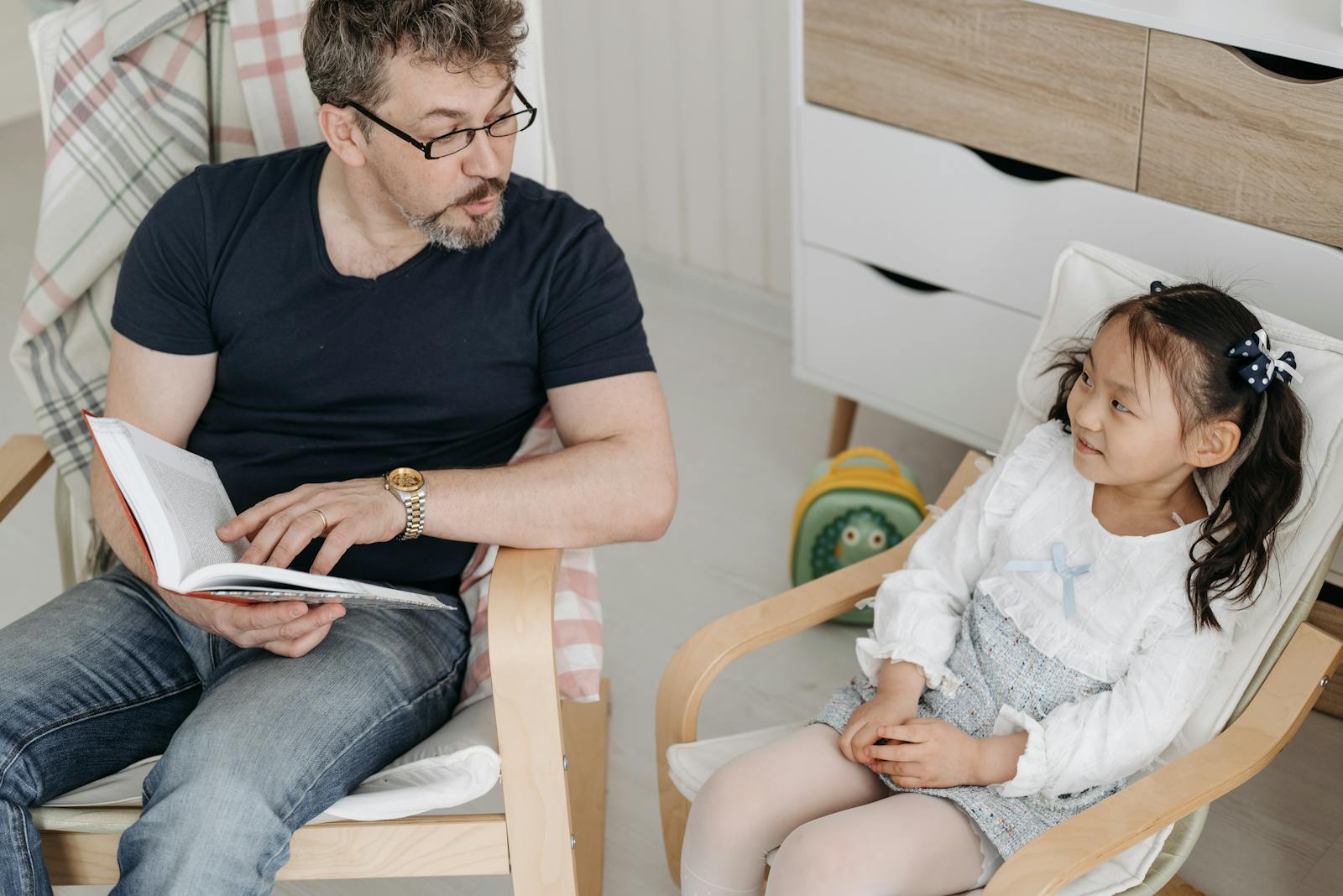
Children in immigrant families end up navigating not just two languages but two systems of legibility: a school nurse here, a benefits office there, a landlord who needs to be handled. The kids who do this aren't unusual. Millions of children in immigrant families in the U.S. are doing some version of this job before they can spell the word for it.
What it builds, and what it costs
I want to be careful here, because there's a particular ache in this story but also a particular competence, and pretending the competence isn't real would be its own kind of dishonesty. Kids who translated grew up to be people who can read a room in three seconds. We notice when someone's tone shifts before they do. We can tell, from across a restaurant, which couple is about to fight and which one already has and is now performing recovery for the friends.
That noticing is a gift. It's also a tax. Because the muscle that lets you scan a room for distress doesn't have an off switch, and you don't get to turn it off when you'd like to be the one being scanned for, instead.
This is the part that maps onto attachment patterns. Early dynamics with caregivers shape how we relate to others across our lives: friends, partners, even how we relate back to our own parents. The kids who'd had to manage their caregivers' emotions tend to grow into adults who are comfortable being depended on, but deeply uncomfortable depending on anyone else.
That's the ache. Not that we can't handle responsibility. We can handle responsibility in our sleep. The strange part is what happens when someone tries to handle something for us. A friend offers to plan the birthday. A partner says, I've got dinner, sit down. And some old wiring lights up that doesn't know what to do with the input. As one piece on parentified adults put it, the disorientation isn't about competence. It's about identity. We were the one who held things. If we're not holding things, who are we, exactly?
The translation reflex, in adulthood
Here's what the reflex looks like now, in people I know and in myself. We over-explain our partner's bad mood to our friends. We rephrase our friend's blunt comment so our other friend won't take it personally. We text the family group chat to preempt a conflict that hasn't happened yet but might. We arrive at gatherings already running diagnostics: who's tired, who's annoyed at whom, who's about to say the thing.
None of this looks like a problem from the outside. It looks like emotional intelligence. It looks like being the person everyone wants at the table. But there's a specific kind of exhaustion that comes from being the person everyone calls when something goes wrong, and it rarely gets named because competence is the perfect camouflage for depletion.
The cost shows up in odd places. We pick partners who are less emotionally fluent than we are, then resent them for it. We struggle to accept gifts, compliments, care. We feel a faint contempt for people who don't notice what we notice, then feel guilty for the contempt, then translate the guilt into another act of caretaking.

Why the role is so hard to put down
The reason the translator role doesn't dissolve when childhood ends is that it became identity, not just behavior. If you were valued, growing up, for your ability to interpret — for being the bright kid who could explain the bill, calm the argument, render dad's anger into a version mom could metabolize — then your sense of belonging got fused to that function. Stopping doesn't feel like rest. It feels like disappearing.
This is why so many of us became, in adulthood, the friend who organizes the group trip, the colleague who absorbs the tense client, the partner who tracks the in-laws' birthdays. It's not that we love logistics. It's that we know, in a wordless way, that we exist most clearly when we're being useful to a system. The alternative (sitting in a room and being loved for nothing) can feel almost unbearable. Not bad. Just unfamiliar in a way that the nervous system reads as danger.
I think this is also why so many translator-kids end up drawn to careers in design, mediation, journalism, therapy, hospitality. We're paid, finally, for the thing we used to do for free. There's a real dignity in that. There's also the quiet trap of never finding out who we'd be if no one needed us to interpret.
What softens it
The hopeful part, and there is a hopeful part, is that this wiring isn't fixed. Adults' recollections of childhood adversity actually fluctuate with the quality of their current relationships. When people experience more support from family in the present, especially from parents, their memories of early hardship soften. The past was real. It didn't change. But how it sat in the body changed depending on who was sitting near them now.
I came across a video recently from The Artful Parent that looks at Japanese parenting approaches—specifically how they build resilience in children without asking them to become little mediators, which felt like seeing the alternate timeline where kids get to just be kids instead of carrying the weight between worlds.
Research suggests that supportive present-day relationships may help people view their past experiences more positively, while strained relationships can bring painful memories to the surface. That's not magic. That's nervous-system math. Safety in the present rewrites what the past feels like to carry.
For translator-kids, this means the work isn't to excavate every old wound. The work is to build relationships in adulthood where you don't have to do the old job. Friendships where the other person notices your mood without you announcing it. Partners who can sit through a hard conversation without asking you to facilitate it. The first time someone hands you a glass of water before you ask, and you don't immediately try to figure out what they want from you, is its own small revolution.
Letting the role go without losing the skill
I don't want to pretend I've stopped translating. I haven't. I still do it at dinner parties, at airports, in family group chats that span two countries and three time zones. The reflex is too old to fully retire and, honestly, sometimes I like it. There's a real pleasure in being good at something, even something you didn't choose to learn.
What's changed, slowly, is that I've started noticing when I'm doing it for a room that isn't asking. There's a specific calm that belongs to people who stopped trying to be understood by everyone, and I've watched it settle into friends a few years older than me. It looks like ease. It looks like someone who finally trusts that if they don't bridge the gap, the gap is allowed to just be a gap.
The ache the title names is real. It's the residue of doing a job too early, with too few tools, for adults who couldn't hear each other and possibly never would. But the ache isn't a sentence. It's a tell. It's the body saying: you've been carrying this for a long time, and you're allowed to set it down for the duration of one dinner, one conversation, one Sunday afternoon, and see what happens when you do.
Probably nothing terrible. Probably someone else picks it up, badly, and the world keeps turning. Which is, in the end, the lesson the translator-kid was never given: the meaning doesn't only travel through us. It can find its own way. We were never the only bridge. We were just the youngest one in the room.