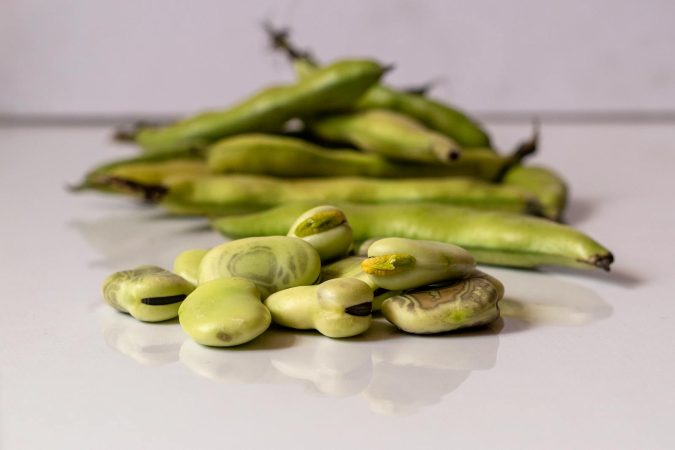
A new roadmap from The Protein Project argues that doubling Europe's fava bean production could save €42M in annual healthcare costs, cut greenhouse gas emissions by seven million tonnes, and lift farmer incomes by 20% — if the continent can rebuild a value chain it has let atrophy.
One extra fava bean per person per day across the EU could deliver €42 million in annual healthcare savings, according to a new roadmap from The Protein Project as reported by Green Queen. The catch: the bean Europe has cultivated longer than almost any other is currently being fed, overwhelmingly, to livestock.
Around 85% of Europe's fava bean supply goes to the animal feed sector. The conventional framing positions legumes as a niche health food, something for the curiously plant-curious shopper. The roadmap argues the opposite — that fava beans are an infrastructure problem masquerading as a consumer one, and that scaling them is less about converting eaters than rebuilding a value chain Europe has already let atrophy.
The headline figures, drawn from the report Towards A Legume Renaissance in Europe, project that European demand for fava beans will double by 2040, with 32% destined for human consumption and 20% for export. Green Queen notes that the food-side increase translates to roughly one fava bean per person per day across the bloc.
The environmental math attached is substantial. The full report estimates that doubling production would cut chemical fertiliser needs by 63,000 tonnes annually, reduce protein meal imports by 350,000 tonnes, lower pesticide use by more than 200 tonnes, and shave seven million tonnes off greenhouse gas emissions each year. Fava beans fix nitrogen in the soil, which is why they reduce input demand rather than add to it.
The €42M healthcare figure comes from modelled reductions in heart disease and type 2 diabetes incidence, tied to the higher fibre content of fava beans relative to the average protein source Europeans currently eat. Farmer incomes, the report projects, could rise by up to 20%.
So why hasn't this happened already? The report is blunt. According to the report, fava beans face multiple challenges including low yields, quality inconsistencies, limited processing infrastructure, and weak market demand. Locally grown favas struggle to compete on price with imports. Quality varies harvest to harvest. Processing infrastructure is thin. Regulation hasn't kept up. And on the consumer side, favas remain peripheral on supermarket shelves and restaurant menus, with VAT structures that often favour animal proteins.
The report calls for coordinated action across the entire value chain to address these challenges, laying out seven strategic outcomes spanning on-farm research, transition financing for farmers, regulatory clarity, processing infrastructure, and consumer-facing dietary guidance. The report frames the issue in geopolitical terms, arguing that developing local fava bean production would reduce Europe's dependence on imports and supply chain vulnerabilities.
What's worth sitting with here is the gap between the modesty of the behavioural ask and the scale of the systemic lift required to meet it. One bean a day is nothing. Building the seed varieties, contracts, mills, and shelf placements to make that bean cheap, consistent, and appealing is a decade of policy work. The €42M in healthcare savings is real, but it's downstream of farm subsidies, VAT rates, and procurement decisions made far from any dinner plate.
The story Europe tells itself about plant proteins tends to centre the eater. The roadmap suggests the eater is the easy part.