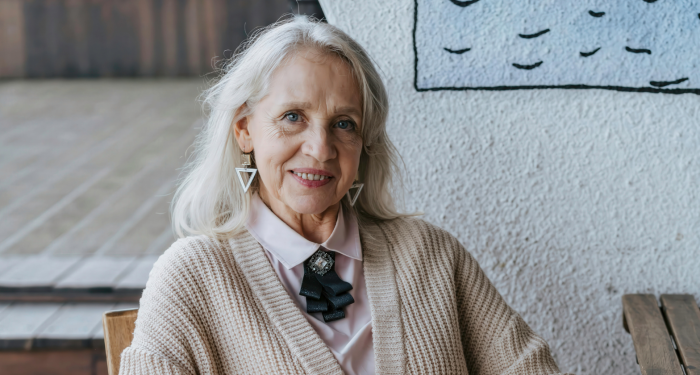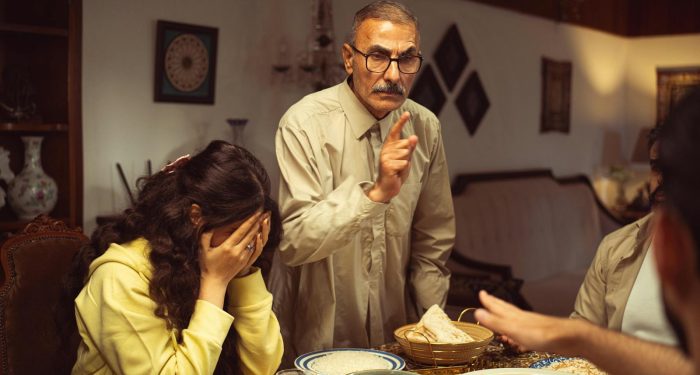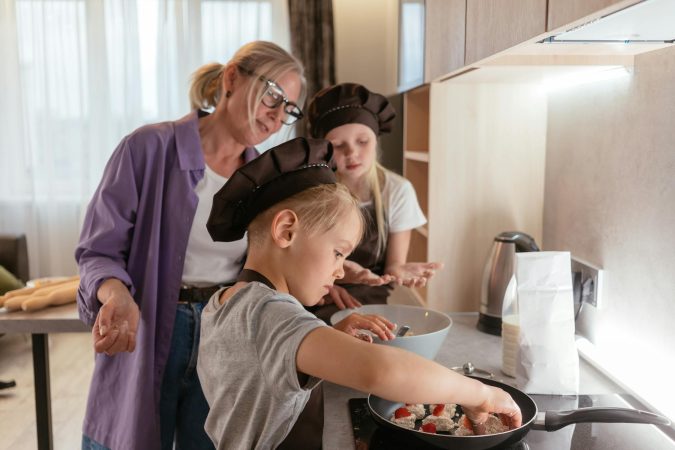
Watching her mother cry over bills while serving cereal for dinner at age six taught her something no parenting book ever could—that the most profound gift we can give our children might be letting them witness us fail, apologize, and try again.
"I learned that from you, Mom. Not the losing my temper part, but the apologizing after."
Grace's voice hung there on the phone line, steady and sure of something I'd never been sure of myself. She'd just told her teenage son she was sorry for snapping at him over a dirty dish, and somehow this had become a moment about me. I pressed the phone harder against my ear. All I could think about were the dozens of times I'd stood in a hallway or a kitchen doorway, swallowing my pride, turning back to say the words to my children that my own parents never said to me. I got it wrong. I'm sorry. Let me try again.
What I didn't know, during all those years of trying to construct the childhood my kids deserved, was that they weren't watching the construction. They were watching the builder — messy, uncertain, constantly revising the plans.
The gift of imperfect parenting
My son Daniel was six and my daughter Grace barely three when their father left. I stood in that empty apartment, boxes half-packed, and made promises to the universe. I would be enough. I would be both parents. I would never let them see me fall apart. That last promise lasted approximately three days, until I found myself crying over a stack of bills while they ate cereal for dinner. Daniel climbed into my lap with his bowl and said, "It's okay, Mommy. Cheerios are my favorite anyway."
Learning in front of an audience
Have you ever tried to study for a college exam while your children do their homework at the same kitchen table? There's something profoundly humbling about struggling through statistics while your fourth-grader breezes through long division. They watched me erase and start over, slam books shut in frustration, fall asleep over my notes. They also watched me get up the next morning and try again.
Years later, when I was teaching high school English, I brought home stacks of papers to grade every night. My children would find me at that same kitchen table, this time on the other side of the red pen, agonizing over how to help a struggling student without lowering my standards. They heard me practice difficult conversations with parents, watched me rewrite lesson plans that weren't working, saw me doubt myself every Sunday night.
"Why do you keep changing things?" Grace asked once, watching me tear up a perfectly good lesson plan. "Because I'm still learning how to teach," I told her. It had been ten years. I'm still learning now, even in retirement, through the adult literacy students I tutor at the community center.
The courage to be uncertain
When I started dating again, fifteen years after the divorce, I felt like a teenager sneaking around. For three years, I kept my relationship with my second husband secret from my children, terrified of disrupting their lives again, of choosing wrong, of giving them hope that might shatter. When I finally introduced them, Daniel, seventeen and protective, asked if I was sure about this man. The honest answer? I wasn't sure about anything except that waiting for certainty meant waiting forever.
They watched our careful courtship, our cautious marriage, our gradual learning to trust happiness. They saw me forget our first anniversary because joy still felt so foreign it didn't register on my calendar. They observed us build something solid from two people who'd been broken in different ways, who brought our scars and fears and still chose to try.
Twenty-five years later, they watched me lose him to Parkinson's piece by piece, watched me learn caregiving at sixty-five, watched me hold on and eventually let go. They saw me join a widow's support group where I was simultaneously the youngest and oldest member, depending on how you counted experience versus years.
Mistakes as inheritance
Virginia Woolf wrote, "Growing up is losing some illusions, in order to acquire others." My children lost the illusion of parental perfection early. They gained something else: the knowledge that mistakes aren't endings.
I leaned too hard on Daniel after the divorce, made him the man of the house when he was still losing baby teeth. It took me twenty years to find the words to apologize properly, to acknowledge what I'd taken from his childhood. When I finally said it, we both cried in his living room while his own children played nearby, and something shifted between us, some old weight lifted.
Grace watched me fumble through her postpartum depression, having no map for that particular darkness. I showed up with casseroles and no advice, just presence and my own uncertainty worn openly. She told me later that my not knowing what to do, but showing up anyway, taught her more than any wisdom I might have offered.
Still becoming
At seventy, I wake at 5:30 and spend an hour with my journal, still sorting through who I am. Is there an age when we're supposed to have ourselves figured out? Because I'm still waiting for that clarity, still discovering new parts of myself in the morning light.
My children have watched me start Italian lessons at sixty-six, take up piano at sixty-seven, begin writing because a friend insisted my stories mattered. They've seen me navigate technology with the grace of a elephant on ice skates, but also persist through computer classes at the senior center because I refuse to be left behind. They've observed me adapt to bilateral knee replacements, to arthritis that changed how I hold a pen, to giving up my beloved high heels with what I hope looked like dignity.
What does it mean to give your children a parent who's still growing? In a previous post about finding purpose after retirement, I wrote about how teaching never really ends, even when you leave the classroom. What I understand now is that my children have been my most constant students, not through my lectures or lessons, but through witnessing my living.
Final thoughts
Daniel tells me now that watching me figure things out as I went taught him that perfection wasn't the goal. Grace says my willingness to admit uncertainty gave her permission to be human with her own children. They both learned resilience not from my strength but from watching me rebuild on shifting ground.
I gave them everything I could: stability after chaos, education despite poverty, a stepfather who showed love through quiet acts. But the most important gift, the one I'm most proud of and most uncertain about, was transparency. The sight of a parent still making mistakes at forty, fifty, sixty, seventy. Still willing to say "I don't know" and then figure it out anyway.
From the inside, it felt like being lost. It still does, most mornings, when I sit with my journal and realize I am seventy years old and no closer to certainty than I was at thirty. My children tell me what they saw looked like courage, and I want to believe them. But I was there. I remember the shaking hands, the second-guessing, the nights I lay awake convinced I was ruining them. I don't know how to reconcile their version with mine. Maybe I'm not supposed to. Maybe the fact that they turned out generous and honest and willing to apologize to their own children means something, or maybe they managed that despite me rather than because of me. I keep walking. I keep putting one uncertain foot in front of the other. Whether that's courage or just not knowing how to stop — I honestly couldn't tell you.
If You Were a Healing Herb, Which Would You Be?
Each herb holds a unique kind of magic — soothing, awakening, grounding, or clarifying.
This 9-question quiz reveals the healing plant that mirrors your energy right now and what it says about your natural rhythm.
✨ Instant results. Deeply insightful.
Marlene Martin
Marlene Martin is a retired high school English teacher who spent 38 years in the classroom before discovering plant-based eating in her late sixties. When her daughter first introduced her to the idea of removing animal products from her diet, Marlene was skeptical. But curiosity won out over habit, and what started as a reluctant experiment became a genuine transformation in how she thinks about food, health, and aging.
At VegOut, Marlene writes about nutrition, wellness, and the experience of embracing new ways of eating later in life. She brings a teacher’s instinct for clarity and patience to topics that can feel overwhelming, especially for readers who are just beginning to explore plant-based living. Her writing is informed by personal experience, careful research, and a belief that it is never too late to change.
Marlene lives in Portland, Oregon, where she spends her mornings reading research papers, her afternoons tending a modest vegetable garden, and her evenings knitting while listening to audiobooks. She has three adult children and two grandchildren who keep her honest about staying current.
More Articles by Marlene