The face I'd spent decades trying not to inherit became the only place I could find her again, alive in the mirror's truth that we are never as alone as we think we are.
There's a moment, somewhere in your sixties, when you stop fighting your own face. It doesn't happen all at once. It happens by accident, usually, in the middle of something else — brushing your teeth, fishing your keys out of a bag, walking past a storefront window. You glance up and there's your mother, wearing your clothes.
I'm 70 now, and I thought I'd made peace with the geography of aging. The skin does what it does. The hair thins where it thins. I teach myself not to flinch at the yearbook photos my former students post online, the ones that remind me how long ago thirty years actually was. But the recognition I'm talking about is different from acceptance. It happened to me last week, and it wasn't gradual.
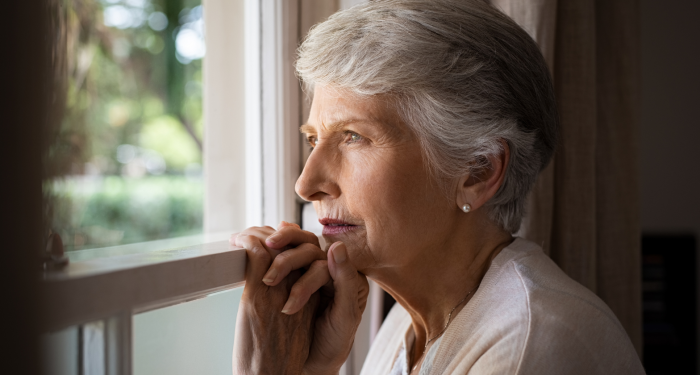
I was shuffling past the hallway mirror in my terry cloth robe, coffee mug in hand, when I caught a glimpse that stopped me cold. There she was, my mother, looking back at me with that particular tilt of her head, the way her left eyebrow naturally arched higher than the right, the slight downturn at the corners of her mouth that I'd spent decades trying to smile away. For three seconds, maybe four, I forgot I was looking at myself.
It had been twelve years since I'd seen her face anywhere but in photographs. Twelve years since Alzheimer's took first her memories, then her words, then finally her breath. And here she was, somehow, living in the geography of my own face.
I set down my coffee and stepped closer to the mirror. There were the deep parentheses around my mouth, the same ones she'd earned from years of holding back words that needed saying. The slight puffiness under the eyes that no amount of cucumber slices could cure. The way the skin at my neck had begun its slow surrender to gravity, creating that soft pouch she used to powder carefully before church. Even my hands, wrapped around the ceramic mug, had become hers: knuckles swollen with arthritis, a roadmap of veins beneath tissue-paper skin.
I'd fought against these inheritances my whole life. In my thirties, I tried every cream that promised to prevent "expression lines," as if the solution was to stop expressing. In my forties, I considered having "just a little work done" on my neck. In my fifties, when people started saying I looked like her, I'd smile tightly and change the subject, as if resembling the woman who gave me life was something shameful.
But standing there that morning, seeing her face emerge from mine, something cracked open in my chest. Not fresh grief. Something quieter than that.
My mother had been beautiful in the way women of her generation were taught to be beautiful: through discipline and denial. She rose at 5 AM to set her hair in rollers. She wore lipstick to the grocery store. She never left the house without "putting on her face," as she called it, as if her actual face wasn't quite enough for public consumption. I rebelled against all of it. As a young teacher, I wore my hair long and straight, refused makeup except for special occasions, and prided myself on being "natural." I see now that this was its own kind of armor.
The first time someone told me I looked like her, I was 35 and standing in the teacher's lounge, exhausted from grading papers until 2 AM. An older colleague studied me over her coffee cup and said, "You know, you have your mother's bone structure." I rushed to the bathroom mirror afterward, searching my face for evidence of this inherited architecture, finding only the familiar disappointment of dark circles and stress.
By the time I turned 50, the comparisons came regularly. At the grocery store. At parent conferences. At Sunday service. "You're her daughter, aren't you? You have her exact eyes." And I did: the same hazel that shifted from green to brown depending on the light, the same tendency to water at the slightest emotion, the same creases at the corners from years of squinting at small print and bright days.
When my mother first started forgetting things, I told myself it was normal aging. But then came the day she called me by her sister's name, and I knew we were entering a different country, one with no maps and no way back. The next several years taught me about loss that happens in increments, like watching someone walk backward into fog. In her last year, when I'd visit the memory care unit, she'd smile at me politely, the way you do with pleasant strangers. But sometimes, not often, but sometimes, something would flicker in her eyes, and she'd reach for my hand with sudden urgency. "I know you," she'd whisper, though she couldn't say how or why. In those moments, I wondered if recognition lived deeper than memory, if love carves grooves in us that even disease can't entirely smooth away.
After thirty-two years of teaching high school English, I thought I understood transformation. I'd watched thousands of teenagers become themselves, semester by semester. But watching my mother disappear taught me that transformation can run in reverse, that we can lose ourselves piece by piece. What I didn't understand until that morning with the mirror was that transformation can also mean return.
The morning of the mirror encounter, after the shock settled, I did something I hadn't done in years. I sat down at my vanity — the one that had been hers, with the triple mirror and the small drawer that still smelled faintly of her face powder — and I actually looked. Not the quick, critical scan I usually do, checking for toothpaste on my chin or sleep in my eyes. I looked the way you'd study a map of somewhere you're trying to remember.
My eyes had developed her same network of lines, not just from squinting at student papers for decades, but from crying at every graduation, from worry during my children's struggles, from the way joy makes you scrunch your whole face when it's real. I touched the soft skin of my neck, the same texture as hers that last good year, before the confusion set in.
There's a strange comfort in becoming your mother after she's gone. Every morning now, when I catch my reflection, I see the continuation of her story — not the ending I'd witnessed in that sterile memory care room, but the middle chapters, when she was fully herself. I see her at my age, wrestling with her own aging parents while trying to maintain her dignity and her sanity. I see her looking in her own mirror, perhaps seeing her mother's face emerging, feeling this same mix of resistance and recognition.
Last week, my daughter called while I was gardening. Through the video call, she laughed and said, "Mom, you look just like Grandma in that sun hat." Once, this would have made me self-conscious, would have sent me searching for ways to look younger, different, like myself alone. But I just smiled. "I know," I told her. "Isn't it wonderful?"
I've started wearing lipstick again. Not every day, and not with the careful application my mother practiced, but sometimes, when I'm meeting friends or heading to the library board meeting, I'll stand at her vanity and choose a color. Something coral, usually. It was her favorite, and it turns out it's mine too.
The women's shelter where I volunteer has terrible fluorescent lighting that makes everyone look exhausted. Last month, while teaching a resume workshop, I caught my reflection in the window and saw my mother again — not the carefully composed version from old photographs, but the real her. The one who stayed up sick with worry when I didn't come home on time. The one who knew that strength sometimes looks like exhaustion, that beauty sometimes looks like survival.
One of the women in the workshop studied me during the break. "You remind me of someone," she said, then smiled. "My grandmother. She had that same way of listening with her whole face." I thought about my mother's face, how it would transform when you talked to her, becoming a mirror that reflected back your best self. I do the same thing, apparently. Not consciously. Some inheritances are deeper than DNA.
Yesterday morning, I woke before dawn and sat with tea and my journal, watching the eastern light pink the sky. I caught my reflection in the window: translucent, ghostly, superimposed on the dormant garden beyond. For a moment, I saw all of us there — my mother, myself, my daughter — a long line of women stretching backward and forward through time, each face a variation on a theme.
I think about my granddaughters, how they'll someday stand before their own mirrors and see my face emerging from theirs. Maybe they'll resist at first, the way I did. I hope they arrive sooner at this place than I did.
The truth I've come to understand is this: we spend our young years trying to create ourselves from scratch, as if we could be the authors of our own faces. We spend our middle years fighting against the encroachment of inheritance, trying to hold the line against becoming our mothers. But if we're lucky, we reach a place where we understand that becoming our mothers isn't a defeat. It's a completion.
My mother is gone. The house where she lived is sold. But she's here in my morning ritual of tea and silence. She's in my garden, where I grow the same tomatoes she taught me to stake and prune. She's in my voice when I read to my grandchildren. And she's in this face that greets me each morning.
I've been thinking about that word, relief, that I felt that morning when I saw her in my reflection. Relief from what? From the exhausting effort of resistance, maybe. From the loneliness of being utterly singular. From the fear that death means disappearance. There's relief in understanding that our faces are conversations between past and future, that our bodies are libraries of everyone who loved us into being.
Final Thoughts
This morning, winter light makes everything precise. I stand before the bathroom mirror longer than I used to. The features I spent my whole life trying to avoid inheriting were never the enemy. They were the last place she still lives, and for now, that's enough.
If You Were a Healing Herb, Which Would You Be?
Each herb holds a unique kind of magic — soothing, awakening, grounding, or clarifying.
This 9-question quiz reveals the healing plant that mirrors your energy right now and what it says about your natural rhythm.
✨ Instant results. Deeply insightful.
Marlene Martin
Marlene Martin is a retired high school English teacher who spent 38 years in the classroom before discovering plant-based eating in her late sixties. When her daughter first introduced her to the idea of removing animal products from her diet, Marlene was skeptical. But curiosity won out over habit, and what started as a reluctant experiment became a genuine transformation in how she thinks about food, health, and aging.
At VegOut, Marlene writes about nutrition, wellness, and the experience of embracing new ways of eating later in life. She brings a teacher’s instinct for clarity and patience to topics that can feel overwhelming, especially for readers who are just beginning to explore plant-based living. Her writing is informed by personal experience, careful research, and a belief that it is never too late to change.
Marlene lives in Portland, Oregon, where she spends her mornings reading research papers, her afternoons tending a modest vegetable garden, and her evenings knitting while listening to audiobooks. She has three adult children and two grandchildren who keep her honest about staying current.
More Articles by Marlene