Grief arrives quietly when necessary changes distance you from who you used to be, even as your wiser self knows the transformation was right.
The shallots were thin and even, and my hands didn't hurt. That's what I noticed first. A few months ago, standing at my own counter on a Tuesday night, I looked down and saw hands that were softer than they used to be, less scarred, the knuckles no longer swollen from the day's abuse. Someone else's hands, almost.
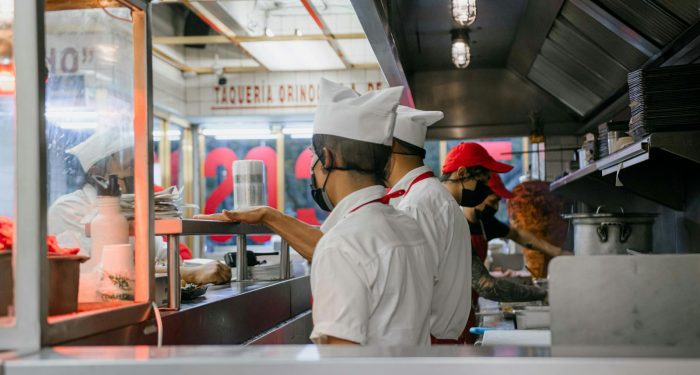
I left professional kitchens at 32. I'm 35 now, and I write about food for a living. The decision was correct — my knees were finished, my right wrist was a small ongoing emergency, I could no longer stand for fourteen hours without the next morning feeling like punishment. I'd make the call again tomorrow. That's not the part I keep circling back to.
The part I keep circling back to is a piece of research on counterfactual thinking, which suggests that people who habitually construct "what if" scenarios about their past experience higher rates of long-term emotional distress. The brain, when given permission, will spend hours rebuilding lives you didn't live. It's not nostalgia. It's a kind of haunting. And I spent about two years doing exactly that.
The cost of a necessary decision
The conventional wisdom about life transitions is that if you made the right choice, you shouldn't feel bad about it. Regret becomes evidence of a mistake. Grief becomes evidence you should have stayed.
That framework is garbage, and research on life transitions suggests it's wrong. Studies indicate that even positive, chosen transitions (marriage, a promotion, a long-awaited move) trigger real psychological disruption because they require you to dismantle the self-concept that organized your previous life. The disruption is the point. It's not a sign you made the wrong call.
The standard cultural script says change is growth. You level up. You glow up. You become a better, truer version of yourself, and anyone still attached to the old version just hasn't caught up yet. It's a clean story, and it's mostly marketing.
What nobody tells you is that even chosen change has a body count. The person you used to be doesn't just dissolve politely into the new one. They stick around. They watch.
Who the younger version was counting on
Here's the part that doesn't make it into the triumphant career-pivot essay. The 22-year-old who enrolled at culinary school had a very specific life in mind. He was going to work the line for thirty years. He was going to have a restaurant by 40. His hands were going to look like his grandmother's hands: scarred, capable, a record of labor.
When I tell people I'm a food writer now, they nod approvingly. Writing is a respectable second act. It sounds like a graceful pivot. It was not, at the time, graceful. It felt like defeat.
And here's the thing about that feeling: it wasn't rational, and rationality didn't help. You can know intellectually that leaving a profession that was destroying your body is the adult move. You can know your writing reaches more people than your plating ever did. You can know all of this and still wake up at 3 a.m. mourning a kitchen you're never going back to.
Regret as information, not indictment
Some frameworks reframe regret as a signal rather than a verdict. Parul Somani's Path of Least Regret framework, developed after a cancer diagnosis forced a full reorganization of her life, argues that the goal isn't to minimize regret in some unknowable future but to maximize peace of mind in the present while staying anchored to your values.
Stanford psychiatrist Nina Vasan has characterized the approach as a way to transform difficult emotions into tools for growth.
That reframe matters because most of us were taught to treat grief about chosen change as a glitch. If I chose this, I shouldn't be sad. If I'm sad, I must have chosen wrong. The logic is tidy and completely false.
The grief is information. It's telling you that something real was given up. Not that the trade was wrong, just that it was, in fact, a trade.
The quiet habits of unprocessed regret
There's a difference between acknowledging grief and letting it metastasize into something harder. Observations about unresolved regret suggest certain patterns in how it manifests in practice, and reading through them was uncomfortably familiar for the first year of my transition.
People carrying unprocessed regret tend to downplay their current achievements, because internalizing the new success would require letting go of the old identity. They speak in rhetorical "if only" loops. They fixate on a specific golden period of the past. For me, it was a six-month stretch at a Michelin-starred restaurant in San Francisco that I'd already half-mythologized before I'd finished leaving.
Research on regret also notes a pattern psychologists call learned helplessness: the belief that forward motion is no longer available. People often tell themselves that the ship has sailed or that it's too late, phrases that serve as emotional shortcuts that let you avoid the harder work of building something in the new life instead of continuing to tend the altar of the old one.
I said versions of all of this. Out loud. To my partner, who has the patience of three saints and eventually, gently, stopped nodding.
What the younger self actually wanted
At some point in year two, I started asking a different question. Not "what would my 22-year-old self think of me now?" but "what did my 22-year-old self actually want, underneath the specific plan?"
Because the specific plan (restaurant by 40, hands like my grandmother's) wasn't really the goal. It was a proxy. The goal was to be useful with food. To make something that mattered to someone. To not waste the decade of training and the thousands of hours of repetition.
Recipe development does that. Food journalism does that. A well-tested recipe that lands in someone's Tuesday-night kitchen and actually works is, measurably, reaching more people than a tasting menu ever would. That isn't a consolation prize. It's the actual job, just wearing different clothes.
The difference between grief and regret
This is the distinction I wish someone had handed me at 32. Grief acknowledges a loss. Regret relitigates a decision.
Grief says: something real ended, and I'm going to feel that. Regret says: the ending was a mistake, and I'm going to keep poking at it to see if the verdict changes. It never does. That's the trap.
Clinical perspectives on life transition work capture something useful here: the experience of looking like you're coping while something underneath stays unresolved. The gap between the external competence and the internal disarray is itself the thing that needs attention. Not the original decision. The unfinished processing of it.
Grief you can metabolize. Regret, left alone, just keeps compounding.
The small evidence of becoming
There's a distinction we've written about before between feeling abandoned by yourself and feeling accompanied by yourself. The same split exists in how people carry their own past.
You can treat your younger self as someone you betrayed. Or you can treat them as someone you're still responsible to, but in a different way than originally agreed. The second version is the one worth practicing. The first breeds the self-deprecation, the decisional paralysis, the midlife regret that shows up when people feel they've drifted from some essential plan without negotiating the terms.
Research on regret-producing choices suggests that the decisions people regret most in hindsight tend to be the ones made out of avoidance rather than intention. Staying too long in things that weren't working. Not making the call that every honest part of you knew needed to be made.
By that measure, leaving the kitchen when I did was the opposite of a regretted choice. It was the intentional one. Which doesn't mean it didn't cost something.
Letting the old version rest
There's also a question we've raised elsewhere about whether you interpret your suffering as something that was done to you or something that moved through you. The same applies to chosen change. You can treat the old self as someone who was killed off by necessity, or as someone who handed the work to the next version and stepped back.
The hands are different now. Softer than they used to be, less scarred. I noticed this a few months ago, slicing shallots at home, and felt something I still don't have a clean name for. Not grief, exactly. Not acceptance, either. Somewhere between the two, and not particularly interested in being resolved.
The version who earned the calluses is gone. The version who doesn't need them is here, slicing shallots on a Tuesday, writing about it on a Wednesday. I don't know that one is a replacement for the other. I don't know that anything about this is finished. The knife is still in someone's hand. That will have to be enough for now, and some nights it isn't.
What’s Your Plant-Powered Archetype?
Ever wonder what your everyday habits say about your deeper purpose—and how they ripple out to impact the planet?
This 90-second quiz reveals the plant-powered role you’re here to play, and the tiny shift that makes it even more powerful.
12 fun questions. Instant results. Surprisingly accurate.