
While younger people regret their mistakes, those over 65 face a crueler revelation: decades of carefully filed dreams marked "someday," conversations saved for perfect moments that never came, and whole versions of themselves kept in storage like clothes with tags still on, waiting for an occasion that was always just one responsibility away.
Psychologists who study regret in later life have identified a pattern that tends to surface after 65: a grief not for the choices we made badly, but for the selves we never let out of the waiting room. It's quieter than the sharp regrets of youth, and harder to name. The losses aren't dramatic — no betrayals, no catastrophes — just a slow accumulation of moments we filed under "later" until later stopped arriving.
What makes this regret particular to the post-65 years is the collapse of the runway. For decades, postponement feels like prudence. Then, somewhere past 65, the arithmetic changes. The adventures rescheduled, the conversations saved for the right moment, the versions of ourselves we kept in storage — we start to see them not as delayed but as decided. The postponement was the decision. We just didn't know we were making it.
Last month, at my book club meeting, a woman named Dorothy put this into words better than any researcher I've read. "I keep having this dream," she said, "where I'm packing for a trip but I can't find my suitcase. When I finally find it, it's full of unworn clothes with the tags still on." She paused, then added, "I'm 73, and I just realized those clothes are all the versions of me I never wore." The room fell silent because we all recognized ourselves in that dream — the selves we kept in storage, waiting for the perfect occasion that never arrived.
The museum of postponed selves
Three years ago, clearing out my basement, I found a box labeled "When I Have Time." Inside were Italian language tapes from 2018, a half-finished manuscript from 1993, and a journal where I'd written the same New Year's resolution for fifteen consecutive years: "This year, take the art class."
Eva M. Krockow Ph.D., a psychologist who studies regret, notes that "Regret is a self-focused negative emotion about something that has happened or been done by us." But what strikes me now, at 70, is how much of my regret centers on things that haven't happened, things undone not through active choice but through endless deferral.
When my children were young, I told myself I'd travel once they left for college. When they left for college, I told myself I'd travel once I retired. When I retired, I told myself I'd travel once my husband's health improved. By the time I finally booked that trip to Italy, I was learning phrases like "Do you have rooms on the ground floor?" and "Is there an elevator?" instead of "Where do the locals dance?"
The postponement felt responsible at the time. Good mothers, I believed, didn't abandon their children for selfish adventures. Good teachers didn't take sabbaticals. Good wives didn't pursue dreams that might inconvenience their husbands. I scheduled my authentic self like a dental appointment that could always be pushed back another six months.
Conversations with ghosts
Research on regret in older adults found that we often experience our deepest regret over inactions, particularly missed relationships and unpursued opportunities. We develop coping strategies like reappraisal and rationalization, but the weight remains.
I think about this when I visit my mother's grave. She died holding stories I never asked her to tell. For years, I'd noticed the way her hands would pause when certain songs came on the radio, how she'd get a faraway look when she smelled lavender, how she kept one photograph turned backward in her jewelry box. "Someday," I told myself, "we'll have a long afternoon with tea, and she'll tell me everything."
That afternoon never came. She died on a Wednesday morning while I was teaching sophomore English, explaining the irony in "The Story of an Hour." The irony wasn't lost on me: I'd spent years teaching literature about the urgency of living while treating my own life like something that could be indefinitely postponed.
The mythology of the perfect moment
What no one tells you about this kind of regret is how logical the postponement seemed at the time. You're not actively rejecting opportunities; you're carefully filing them under "Soon" or "After This Crisis" or "When Things Settle Down."
My colleague Sarah invited me to join her hiking group for five years. Every invitation felt like it came at the wrong time: parent-teacher conferences, my son's baseball season, my husband's work stress, the perpetual grading that seemed to expand to fill every available weekend. "Next month," I'd say. "After the semester ends." "Once summer comes."
Sarah moved to Oregon eventually. Last year, she sent me photos from the Pacific Crest Trail. She was 69, hiking with poles but hiking nonetheless. In her note, she wrote, "Remember when we were going to do this together?" I wanted to write back, "We were never going to do it together. I was always going to be too busy, and you were always going to go anyway." But that seemed too much like a confession.
The compound interest of deferred dreams
At 45, I started a novel about a woman who leaves everything behind to become a lighthouse keeper. I wrote seventeen pages, then stopped. The excuse was legitimate: my daughter needed help with algebra, my mother was beginning to show signs of dementia, the kitchen needed repainting. Each individual choice to stop writing made sense, but collectively they added up to a manuscript that lived in my drawer for twenty-five years, growing more impossible to return to with each passing month.
When I finally opened that drawer last year, the pages had yellowed. The ink had faded. But more importantly, I had changed. The woman who would write that novel now wouldn't write about escaping to a lighthouse; she'd write about learning to find solitude in a crowded life. The story I postponed is a story I can never write, because the person who would have written it has been replaced by someone else entirely.
Versions of love we never offered
Perhaps the sharpest edge of this regret is recognizing how our postponements affected others. My son recently told me he never knew I'd wanted to be a writer until he found my essays after retirement. "Why didn't you tell me?" he asked. "I thought you only cared about teaching."
How could I explain that I'd postponed showing him my whole self because I thought good mothers were supposed to be selfless? That I'd hidden my dreams because I didn't want him to feel guilty about taking time away from them? I'd tried so hard to be the perfect mother that I'd forgotten to be a complete person, and in doing so, I'd modeled for him that adults don't have dreams, only duties.
My daughter learned the same lesson differently. She calls me every week with a list of accomplishments, never mentioning struggles or doubts. She learned from my example that life is about managing responsibilities perfectly, not about pursuing joy messily. The conversations we might have had about balance, about choosing ourselves sometimes, about the importance of being whole people rather than perfect role-players—those conversations lived in the "someday" file until our patterns were too established to easily change.
The body as timekeeper
Mary C. Lamia Ph.D. observes that "Regret is reflective and backward-looking." But our bodies force us to be forward-looking too. They keep score in ways our minds try to ignore.
I postponed dancing because I thought I was too heavy, too clumsy, too old. "When I lose fifteen pounds," I promised myself. "When my knees don't hurt." "When I feel more confident." Now, with two knee replacements and hands that struggle with buttons, I understand that my body was never waiting for permission to age. While I was postponing dancing, my cartilage was quietly wearing away, my bones were thinning, my balance was incrementally declining.
Last week, at my granddaughter's wedding, I danced anyway. Carefully, slowly, with a chair nearby for support. But I danced. And I thought about all the weddings where I sat at tables, watching others spin and sway, telling myself I'd dance at the next one. The next one, and the next one, and the next one, until suddenly there might not be many next ones left.
Final thoughts
At 70, I've stopped believing in perfect moments. I write essays with arthritic hands, travel with a pharmacy in my purse, and have those difficult conversations with my children even though we're all set in our ways. The versions of myself I postponed haven't vanished—they've aged alongside me, showing up now with reading glasses and sensible shoes but showing up nonetheless.
If you're reading this at 40, 50, or 60, know this: the right moment is a myth we tell ourselves to avoid the discomfort of choosing. Every postponement is a decision, whether we acknowledge it or not. The conversation you're saving for the perfect time, the trip you'll take when things calm down, the person you'll become when you're ready—they're all waiting in this imperfect, inconvenient moment, asking only that you stop treating your life like a dress rehearsal.
The specific regret that lands after 65 isn't really about age. It's about finally understanding that we spent decades as our own understudies, waiting in the wings for someone to call us onto the stage. The cruel revelation is that we were always supposed to be both the director and the star, writing the script as we performed it, brave enough to improvise when we forgot our lines.
If You Were a Healing Herb, Which Would You Be?
Each herb holds a unique kind of magic — soothing, awakening, grounding, or clarifying.
This 9-question quiz reveals the healing plant that mirrors your energy right now and what it says about your natural rhythm.
✨ Instant results. Deeply insightful.
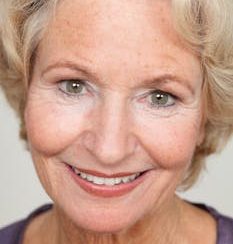
Marlene Martin
Marlene Martin is a retired high school English teacher who spent 38 years in the classroom before discovering plant-based eating in her late sixties. When her daughter first introduced her to the idea of removing animal products from her diet, Marlene was skeptical. But curiosity won out over habit, and what started as a reluctant experiment became a genuine transformation in how she thinks about food, health, and aging.
At VegOut, Marlene writes about nutrition, wellness, and the experience of embracing new ways of eating later in life. She brings a teacher’s instinct for clarity and patience to topics that can feel overwhelming, especially for readers who are just beginning to explore plant-based living. Her writing is informed by personal experience, careful research, and a belief that it is never too late to change.
Marlene lives in Portland, Oregon, where she spends her mornings reading research papers, her afternoons tending a modest vegetable garden, and her evenings knitting while listening to audiobooks. She has three adult children and two grandchildren who keep her honest about staying current.
More Articles by Marlene