The money habits formed in childhood persist through life, shaping how we spend long after our circumstances change—whether we're stretching budgets like our parents did or unconsciously spending like abundance was always guaranteed.
Money habits are mostly inherited, not chosen. You can earn your way into a new tax bracket and still shop like the kid whose family ran a tight register. You can be handed a trust fund and still flinch at a $14 cocktail because your grandmother did. The early patterns stick. They just get better dressed as you age.
That framing runs counter to the tidy narrative that financial behavior is rational, responsive to income, and basically a math problem. It isn't. It's a behavioral loop formed before most of us could read a bank statement.
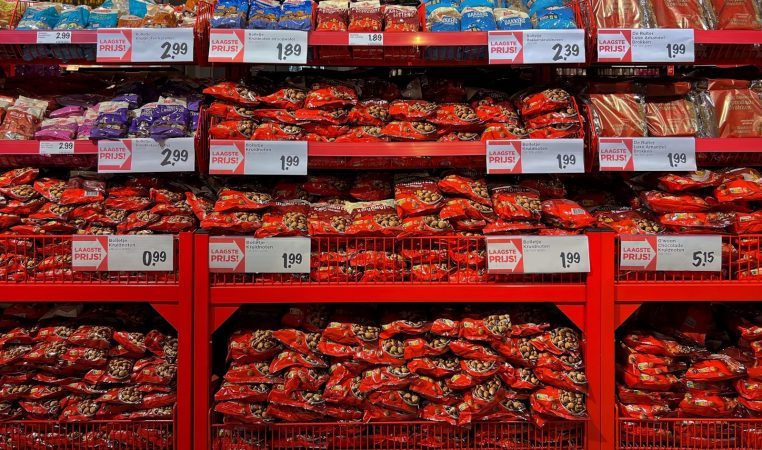
My parents ran a small grocery store in southeast Portland for three decades. They sold it last year. I spent my childhood watching how people bought a can of beans, and you could tell within about ten seconds which category of adulthood they'd come from. Not by what they wore. By what they did with the shelf price.
Here are five of those tells. Not virtues, not failings, just patterns shaped by environments most of us didn't choose.
1. They read the unit price, not the sticker
People who grew up with less look at the little tag underneath the tag. Price per ounce. Price per sheet. Price per load. It's automatic. Their eyes scan down, not across.
People who grew up with financial cushion often grab the brand they recognize and keep moving. Not because they're reckless. Because the cognitive tax of comparison-shopping never got installed in childhood.
This isn't a moral ranking. It's a bandwidth story. Behavioral economists have argued that scarcity itself captures attention and reshapes cognition. Research suggests that the mind of a person short on money notices pricing cues the way a hungry person notices the word "cake," as Psychology Today's review of their work puts it. Scarcity trains a form of financial peripheral vision. You don't unlearn it when your income goes up. You just start using it on olive oil instead of store-brand pasta.
The irony: the habit that looked like thrift in childhood becomes the habit that quietly builds wealth in adulthood.
2. They treat unexpected money like it's already gone
Tax refund. Unexpected bonus. A birthday check from an aunt. Ask someone who grew up with less what they'd do with a surprise $800, and the answer comes fast: pay something down, stash it, fix the thing they've been ignoring.
Ask someone who grew up assuming money would always be there, and the answer is often a trip, a dinner, a new jacket. Not because they're frivolous, but because money has always behaved like a renewable resource in their life. Another one's coming.
This maps onto what researchers call precautionary saving: the tendency to build buffers against income uncertainty. Research on risk aversion and decision-making under uncertainty notes that people with histories of economic volatility tend to save more aggressively against shocks, even when current income would suggest they could loosen up.
You see this in friends. You see it in yourself. I left restaurant work at 32 because my body gave out, and the first thing I did with every freelance check for the next two years was pretend it wasn't there. That's not discipline. That's a nervous system that remembers my mom tracking the store's weekly receipts at the kitchen table.
Here's where the story gets uncomfortable. The same caution that builds a savings buffer tends to underperform in markets. People who grew up with less are measurably more risk-averse with long-term capital. They keep too much in cash. They pull out during downturns. They treat the stock market like a casino their parents warned them about.
There's a related concept in behavioral economics: the preference for known risks over unknown ones, even when the unknown offers better odds. Research on ambiguity aversion in financial markets shows it leads to systematically conservative portfolios and lower long-run returns. If you grew up watching your parents get burned by a landlord, a medical bill, a laid-off spouse, the unknown has a specific face in your head. You don't want any more of it than you have to carry.
People who grew up with money tend to tolerate market volatility better. Partly because they have more margin. Partly because they were raised to see market dips as seasonal weather, not structural collapse.
3. They calculate in hours, not dollars
This one's subtle but revealing. Hand someone who grew up with less a $60 restaurant check, and you can almost see the mental math: that's most of a shift. That's four hours at the old job. That's a week of groceries.
It's not that they won't spend the $60. They often will. But the exchange rate between money and labor stays loud in their head forever. When I worked the line, I knew exactly how many covers paid for my rent. I still calculate dinners in recipe tests. Old wiring.
People who grew up assuming money would always be there tend to think in categories instead: dinner budget, travel budget, fun money. The number is abstracted from the work that produced it, because for much of their life, the work-to-money link was mediated by parents, trusts, or simply the assumption that there would always be more.
This shows up in how they negotiate, too. People raised in scarcity often undercharge for their labor, because they're anchoring to survival numbers. People raised in abundance often overcharge, because they're anchoring to lifestyle numbers. Both distortions compound over decades, but the undercharging one is harder to correct, because the anchor is fused to a sense of what you're worth rather than what the market will bear.
4. They feel physically uncomfortable spending on themselves
Not metaphorically. Actually uncomfortable. A little nauseous at checkout. A wave of guilt after buying something non-essential. A nagging voice that suggests the purchase wasn't necessary about a $40 shirt they can clearly afford.
This is where the pattern diverges from the caution described above. Habit two is about what people do with money: stash it, protect it, refuse to invest it. This one is about what money does to the body. It's somatic, not strategic. People who grew up watching their parents argue about money often become adults who feel physically uncomfortable spending on themselves, even when the math says they're fine. The body learned that spending was where fights came from. The body did not get the memo when the bank account changed.
Research on scarcity and the brain describes how the brain's threat response stays calibrated to the environment it developed in, not the one you're currently standing in.
People who grew up assuming money would always be there don't have this response. They buy the shirt. They feel fine. They would, honestly, find it strange that anyone feels otherwise.
If I'm being honest, this is the one habit I don't think fully unwinds. You can dial it down. You can spend on purpose instead of by reflex. But the small flinch at the register tends to outlive the circumstances that installed it, and I've stopped treating that as a bug. The nervous system learned something true about money once, and that signal is part of why the savings reflex exists at all. You can't selectively keep the useful half.
5. They confuse cheap with responsible
This is the habit I've had to unlearn most carefully. And it's worth distinguishing from the discomfort in habit four: that one is about guilt. This one is about logic, a specific miscalibration in how you define "good with money."
When you grow up with less, buying the cheapest option feels virtuous. It feels like you're doing the right thing, even when the cheapest option is worse value over time. The $12 pan that warps. The $4 produce that spoils. The discount flight with three layovers and a day of lost work.
Running my parents' store taught me this in reverse. We sold plenty of cheap things, but my dad would quietly tell repeat customers when the slightly more expensive version was actually the better buy. He understood that "cheap" and "frugal" are not the same word.
People who grew up with money often default to the opposite mistake: buying the most expensive option as a proxy for quality. The $90 olive oil. The premium everything. They confuse price with value just as reliably, in the other direction.
The quiet skill, and the thing that separates people who get good with money in midlife from people who don't, is learning to evaluate actual value. Cost per use. Durability. Time saved. Whether the thing will still matter in a year.
The part nobody wants to say out loud
These habits are mostly not about willpower. They're about the environment that shaped the nervous system.
A 2025 study published in PLOS One tracking over 6,000 men from age 12 to age 50 found that educational attainment and early-life intelligence explained more than half the variance in midlife socioeconomic status, and that parental education and father's occupational class exerted strong indirect effects, mostly mediated through what children were exposed to growing up. Translation: a lot of what looks like individual financial skill is actually accumulated childhood context.
That doesn't mean people are trapped. It means the work of changing financial habits is less about budgeting apps and more about noticing which of your reactions are actually yours and which are heirlooms.
Consumer spending data from late 2025 showed resilience despite broad economic uncertainty, with people continuing to spend in ways that don't always track their stated anxiety about the economy. Some of that is the gap between what we feel and what we do. A lot of it is habit, the automatic programs running underneath the conscious choices.
What to do with any of this
If you grew up with less, here are three concrete moves worth making this year:
- Automate an investment you don't touch. Your savings reflex is an asset. Your investing reflex probably isn't. Set up an automatic monthly transfer into a low-cost index fund, even $50, and commit to not checking it more than once a quarter. The goal is to train your nervous system that money can leave your hands and still be working for you.
- Pick one category where you buy for value, not price. Cookware. Shoes. Whatever you replace most often. Calculate the actual cost per use of the cheap version versus the mid-range version, then buy the one with the better number. This is how you start breaking the cheap-equals-responsible loop without blowing up your budget.
- Practice one guilt-free purchase a month. Not a splurge. A deliberate, planned, non-essential purchase that you decide in advance to feel fine about. Coffee you like. A book. A meal out. The spending guilt isn't a moral compass. It's a smoke alarm that's been going off for decades in a house that isn't on fire. You retrain it with repetition, not willpower.
If you grew up assuming money would always be there, here are three worth trying:
- Track your spending in hours for one month. Take your effective hourly rate and mentally convert every purchase. The $200 dinner. The $60 subscription you forgot about. This isn't to make you feel guilty. It's to install the labor-to-money link that your upbringing abstracted away. It changes what feels "worth it" faster than any budget spreadsheet.
- Learn the unit price on your five most-purchased grocery items. Not because it matters for any single trip, but because the muscle of comparison is how people build durable value over time. It takes about two weeks to become automatic.
- Ask yourself, before any purchase over $100, whether you're buying quality or buying reassurance. The $90 olive oil and the $12 pan are the same mistake wearing different clothes. Price is not a proxy for value in either direction.
The useful move for everyone, as we've written about before in habits of people who handle money quietly, is to stop performing either scarcity or abundance and start asking what the actual decision requires. What does this cost per use? What am I protecting myself from? Is this reaction mine, or is it inherited?
Most financial advice is written as if everyone started from the same place. They didn't. The habits you inherited are information, not identity. Name them, test them against your actual life, and keep the ones that still work. Release the ones that are just old weather in a body that moved to a different climate a long time ago. That's the only part that's actually yours.
If You Were a Healing Herb, Which Would You Be?
Each herb holds a unique kind of magic — soothing, awakening, grounding, or clarifying.
This 9-question quiz reveals the healing plant that mirrors your energy right now and what it says about your natural rhythm.
✨ Instant results. Deeply insightful.

Oliver Park
He/Him
Oliver Park writes about food with the precision of someone who spent a decade behind the line. A former professional chef turned food journalist, he covers plant-based cuisine, food science, and the culture of eating well. His recipes are tested, honest, and built to work on the first try. Based in Portland, Oregon.
More Articles by Oliver