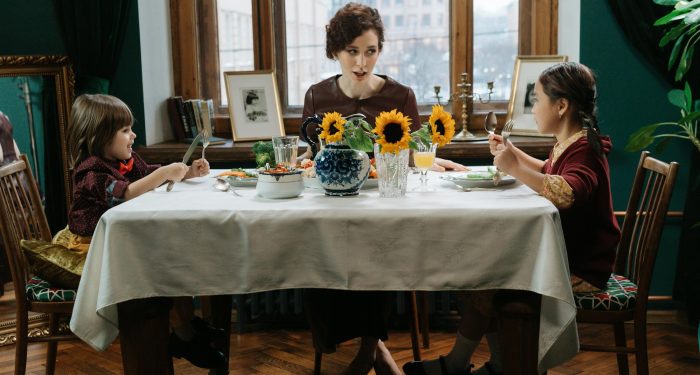
They're the ones who eat cake at birthdays without guilt, prep vegetables because it's convenient (not because they're following a meal plan), and somehow maintain better health than those of us who've tried every diet trend since 2015.
Ever notice how some people manage to eat well without turning their entire Instagram feed into smoothie bowls and meal prep containers?
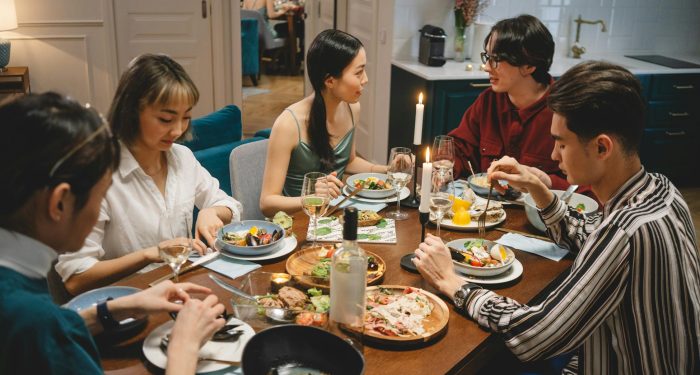
They're the ones who show up to dinner parties relaxed, not anxious about whether there's quinoa on the menu. They eat cake at birthdays without a twenty-minute internal debate. And somehow, they're healthier than the rest of us who've tried every diet trend since 2015.
What's their secret? It's not what they add to their routines - it's what they keep simple.
The power of the plate swap
You know that friend who always seems satisfied after meals but never talks about portions or calories? They might be onto something that Healthline discovered: "Eating from a smaller plate was associated with increased feelings of satiety and reduced energy intake among participants with a moderate body weight."
It's brilliant, really. No counting, no measuring, no apps. Just grab the salad plate instead of the dinner plate and let your brain do what it naturally does - perceive a full plate as a satisfying meal.
I stumbled onto this accidentally when I moved into my Venice Beach apartment and realized I'd only unpacked my smaller plates. Three weeks later, I noticed I wasn't reaching for seconds anymore. The visual trick works even when you know it's a trick.
Starting backwards
Here's what caught my attention at a recent dinner party: my healthiest friends always attacked the vegetable dishes first, before touching the pasta or bread. Turns out they're practicing what Healthline reports: "Eating vegetables before a carb-rich meal has been shown to have beneficial effects on blood sugar levels."
But they're not doing it because they read a study. They just noticed they feel better when they eat this way.
The beauty of this habit? Zero willpower required. You're not restricting anything - you're just rearranging. Everything still ends up on your plate, but the order changes everything. Your body gets the nutrients first, your blood sugar stays stable, and you naturally eat less of the heavy stuff because you're already partially satisfied.
The minimalist's advantage
When I look at the kitchens of people who eat well without obsessing, they're surprisingly sparse. Not Instagram-minimalist sparse, but functionally simple. Five good knives instead of twenty mediocre ones. One excellent pan instead of a tower of non-stick nightmares.
Research from An evidence-based conceptual framework of healthy cooking backs this up - minimalist cooking practices, such as reducing the use of added sugars, animal fats, processed foods, and red meat, are associated with healthier eating habits and improved health outcomes.
Less stuff means fewer decisions. Fewer decisions means more mental energy for actually cooking instead of hunting through cluttered drawers for that one specific tool you used once.
Breaking the perfection trap
My partner loves pepperoni pizza with ranch. I've been vegan for eight years. You'd think our kitchen would be a battlefield, but it's actually taught me something crucial about sustainable healthy eating.
Aubrey Redd, MS, puts it perfectly: "Don't treat any food as off-limits. All foods can fit into a healthy lifestyle within moderation. Consider using the language of 'always' foods and 'sometimes foods. Fruits and vegetables are always a great option for snacks, but you only have birthday cake sometimes when it's someone's birthday."
The people who eat healthy without the drama? They've mastered this distinction. They don't have "cheat days" because they never put themselves in food jail to begin with.
The anti-obsession principle
There's a dark side to making healthy eating your personality. Research on orthorexia nervosa found that an unhealthy obsession with healthy eating can lead to significant impairment and stress, highlighting the importance of balanced dietary habits.
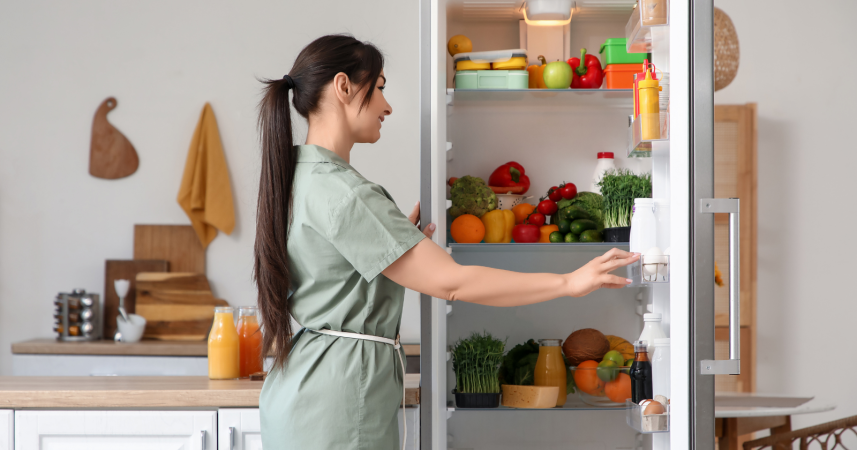
Balance beats perfection every time. The healthiest people I know can eat a salad for lunch and pizza for dinner without having an existential crisis. They prep vegetables on Sunday not because they're following a rigid meal plan, but because chopped carrots are easier to snack on than chips when you're working from home.
The hunger reality check
Want to know the simplest habit that separates intuitive healthy eaters from the rest of us? They ask themselves if they're actually hungry before they eat.
Revolutionary, right? But most of us eat because it's noon, or we're stressed, or we're watching Netflix. As research shows, "Eating a healthy diet comprising regular meals, nutritious and filling snacks, and appropriate portion sizes may be more satisfying and thus make it less tempting to eat when you're feeling bored."
This doesn't mean skipping meals. It means checking in with your body before automatically reaching for food. Sometimes you're hungry. Sometimes you're thirsty. Sometimes you just need to walk around the block.
The liberation of letting go
Kronberg nails a crucial point: "Dieting, cutting back on calories, and/or depriving yourself sets you up for a cycle of bingeing."
The people who maintain healthy eating habits without the obsession? They've opted out of this cycle entirely. They don't diet. They just eat. They choose vegetables because they want energy for their afternoon, not because they're punishing themselves for last night's dessert.
Studies show that adopting a minimalist lifestyle can lead to healthier food consumption patterns by reducing the preference for unhealthy foods and promoting healthier choices. But here's the key - it happens naturally when you stop making food the center of your universe.
The simplicity secret
Healthline states it simply: "Healthy eating simply means fueling your body with mostly nutritious foods."
Mostly. Not always. Not perfectly. Mostly.
The people who get this right keep their kitchen habits boring and their food interesting. They buy the same vegetables every week but cook them differently. They have three go-to breakfast options instead of thirty. They know which restaurants near their office serve food that makes them feel good, and they don't apologize for ordering the same thing repeatedly.
Wrapping up
Healthline reminds us: "Healthy eating does not have to be complicated. You can nourish your body while still enjoying the foods you love."
The tiny habits that matter aren't the ones you photograph. They're the ones you barely notice. The smaller plate. The vegetables first. The single question - am I actually hungry? The permission to be imperfect.
These people aren't healthy because they've mastered some complex system. They're healthy because they've rejected the idea that eating well requires a system at all.
Your kitchen doesn't need a makeover. Your mindset might. Start with one small shift - pick whichever one seemed easiest while reading this. Give it a week. Don't announce it. Don't document it. Just do it.
Because the best healthy eating habit? Making it so routine that you forget it's even a habit.