The terror of losing your mind hits hardest in people who built a life on never losing track of anything.
Margaret was 68 when she called me, panicked, because she'd walked into the kitchen and forgotten why. She'd been a hospital administrator for thirty-one years. Ran a department of forty-two people. Knew every staff member's spouse's name, every birthday, every allergy. Now she was standing in front of her own refrigerator, holding a coffee mug, convinced this was the beginning of the end. I asked her how often she used to walk into rooms in her thirties and forget what she was doing there. She paused. Then she laughed, that hollow laugh of someone who has just caught themselves in their own trap. All the time, she said. I just didn't think it meant anything then.
Margaret isn't an outlier. In thirty-two years of teaching, and now seven more years of writing about why people do what they do, I've watched a particular kind of person walk straight into late middle age braced for the worst kind of loss. They are the organizers. The rememberers. The ones whose calendars held everyone else's appointments. They built something durable on top of being mentally reliable, and now they are watching that foundation for cracks the way a homeowner stares at a ceiling stain, waiting for it to spread.
Most of the public conversation about dementia anxiety treats it as a rational response to genuine medical risk. The numbers are sobering. So of course people worry. But that framing misses what's actually happening in the people who worry the most. Their fear isn't proportional to their risk. It's proportional to how much of their selfhood they outsourced to one cognitive function.
The architecture of being the sharp one
There's a specific developmental story behind this kind of person. Often they were the child who figured out, around age seven or eight, that being competent earned them something the other kids weren't getting. Maybe it was praise. Maybe it was relief from a parent who had too much on their plate. Maybe it was the simple, intoxicating experience of being trusted by adults. Whatever the reward, the lesson encoded itself: I am safe when I am useful, and I am useful when I remember things other people forget.
That child grows into the colleague who never needs the meeting recapped. The friend who texts to confirm your dentist appointment. The parent who keeps the entire family's medical history in their head. By fifty, the role has fused with the self. There is no longer a clean line between what I do and who I am. Strip out the competence and the person standing there feels stripped of identity itself.
Building on the concept of self-complexity, this exact vulnerability becomes clear. People whose sense of self rests on a small number of high-stakes attributes — being smart, being responsible, being the one who never drops the ball — are catastrophically exposed when any one of those attributes is threatened. People with more diversified self-concepts absorb the same blow with less psychological damage. The sharp one isn't more likely to develop dementia than anyone else. They are more likely to experience the prospect of cognitive decline as identity annihilation.
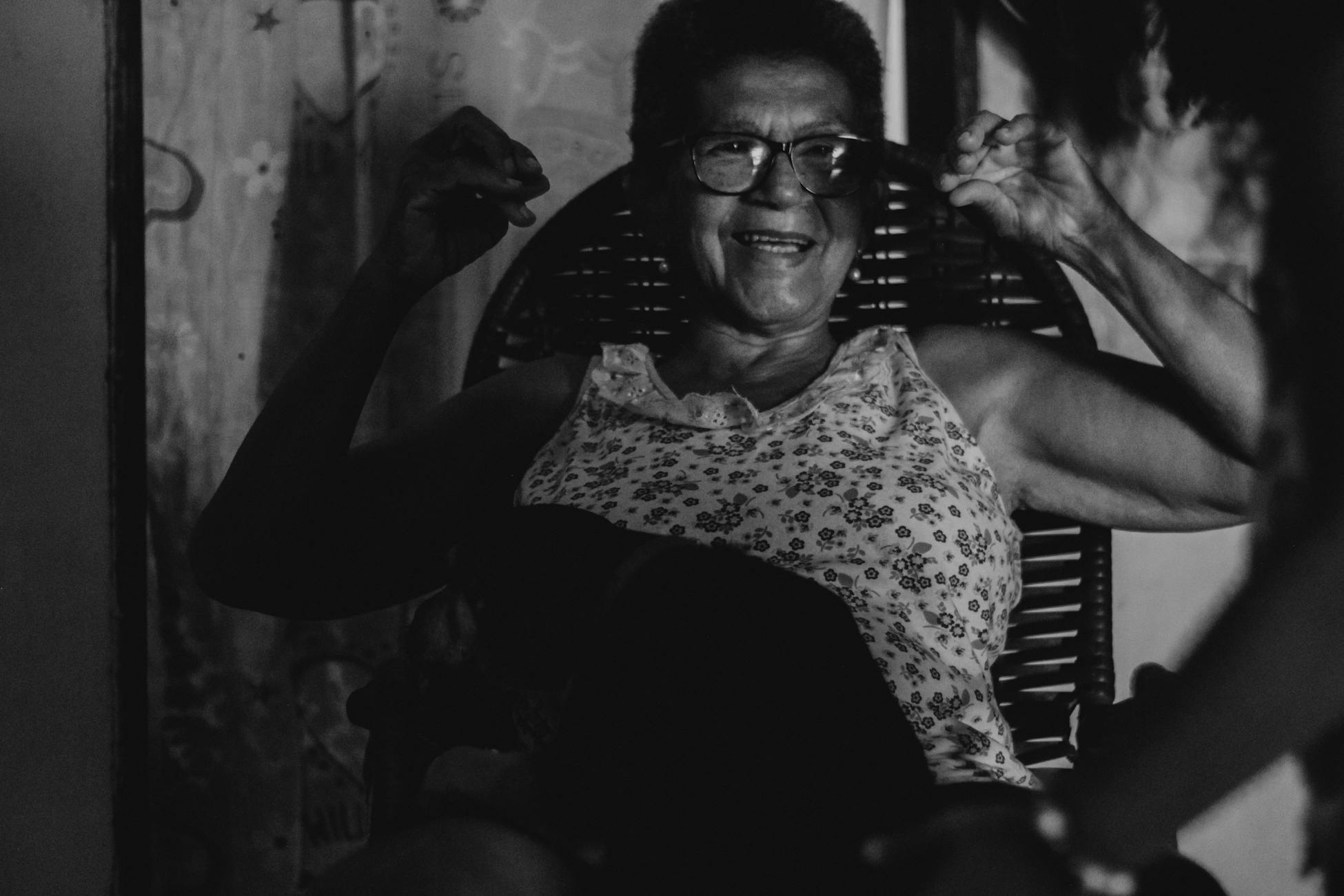
Why the worried ones are usually fine
Here is one of the cruel ironies of how this plays out. The people most haunted by the possibility of dementia are typically the ones with the most cognitive reserve to lose, which means they are also the ones whose decline, when and if it comes, will be slower and later than average. The people who genuinely should be worried often aren't worried at all, because they never built an identity around mental performance in the first place.
The forgetting that terrifies the sharp ones is, in the overwhelming majority of cases, ordinary. Walking into a room and losing the thread. Reaching for a name that lives just behind the next thought. Rereading a paragraph because the first pass didn't take. These are features of a brain that has been processing information for sixty or seventy years, not signs of pathology. Cognitive changes occur as a normal part of the aging process, and most of them are not on the road to anywhere serious.
The trouble is that people who built their lives on cognitive sharpness notice these moments differently. A retired contractor forgets a name and shrugs. A retired litigator forgets a name and feels the floor tilt. Same forgetting. Different meaning. The neurological event is identical; the psychological event is not.
This is the same dynamic at work in chronic worry about forgetting names and dates. The worry isn't tracking real cognitive change. It's tracking the threat to a self-concept that was always, secretly, more fragile than it appeared.
The garden, the workshop, and the second self
My father is an engineer. He's 68. He had a heart attack two years ago, and one of the things that happened during his recovery is that he couldn't be in his workshop the way he used to be. The workshop wasn't a hobby. The workshop was where he kept the part of himself that knew how to fix things, that had answers, that built a life by being smarter and more capable than circumstance. Watching him sit on the porch reading a book, unable to lift anything heavier than a coffee cup, I understood for the first time that the dementia fear in our family isn't really about dementia. It's about him imagining a version of himself who can't problem-solve his way out of the next problem. To him, that's not aging. That's erasure.
I've come to believe that the antidote — if there is one — is something like building a second self before you need it. The people I know who have weathered cognitive change with the most grace are not the ones who stayed the sharpest longest. They are the ones who developed, somewhere in their fifties or sixties, a version of themselves that didn't depend on being right or remembering everything. A gardener self. A walker self. A grandparent self. A self whose worth was rooted in presence rather than performance.
This is harder than it sounds for people who spent forty years being rewarded for performance. The muscle for being valued without producing anything has often gone slack from disuse. You have to rebuild it deliberately, like learning a language late. I tried to take up Italian at 66 and quit because I felt stupid being bad at something. That feeling — the shame of incompetence — is exactly the feeling that makes the sharp one terrified of dementia. It's the feeling they spent their whole life arranging their life to avoid.

What the SuperAgers actually have in common
Over the last decade, researchers have studied a population they call SuperAgers — older adults whose cognitive function in their eighties remains remarkably sharp. The pop-science version of this research focuses on the brain itself, on the unusual density of certain neurons, on the apparent resistance to the proteins that drive Alzheimer's pathology. The biological story is real and it's genuinely interesting.
What gets less attention is the behavioral pattern these people share. They tend to maintain dense social networks. They tend to push themselves into uncomfortable new learning even when there's no external reward for doing so. They tend to have, by the testimony of the people who study them, a relationship to challenge that does not collapse into shame the moment they fail at something. They are not, in other words, people whose identity hinges on already knowing.
That last piece is the one the sharp ones struggle with. To stay cognitively engaged in your seventies, you have to be willing to be a beginner again, repeatedly, in front of people who will watch you fumble. The very disposition that protected you for fifty years — being the one who already had the answer — becomes the disposition that, in late life, narrows your world.
Hearing, hiding, and the slow withdrawal
One of the more striking findings in recent cognitive aging research has nothing to do with memory at all. It has to do with hearing. Studies have repeatedly linked hearing loss to faster cognitive decline, and the leading theory isn't that the ears and the brain are connected in some mysterious way. It's that people who can't follow conversation start avoiding conversation. They withdraw. They smile and nod. They stop calling friends. The brain, deprived of the social and linguistic stimulation it needs, declines faster than it would have otherwise.
I bring this up because the sharp ones are particularly prone to this withdrawal. They will not be the person at the dinner table asking What did you say? three times. They will not let themselves look uncertain or behind. So they go quiet. They stop hosting. They claim to be tired. The withdrawal looks like personality change, but it's actually identity protection — and it accelerates the very decline they fear.
This is also why letting things go in late life — including the need to perform competence — turns out to be quietly protective. The people who can tolerate not knowing, not following, not having the answer, stay engaged in the rooms where engagement is what keeps the brain alive.
The harder work of being someone else
I taught high school English for thirty-two years. I watched bright kids who had built their entire sense of worth on being the smart one start crumbling the first time they got a B. I watched their parents do the same thing, just with bigger stakes. The pattern doesn't end at graduation. It runs the whole length of a life and shows up, in the end, as terror about an aging brain.
What I would say to Margaret, and to my father, and to the version of myself that lies awake some nights running through the names of my grandchildren just to confirm they're all there — is that the fear is not really about dementia. The fear is the bill coming due for an identity that was always too narrow. The brain will do what brains do. Some of us will get unlucky, most of us won't, and none of us will get out of this with the same mind we had at forty.
The people who handle this best are not the ones who stayed sharp. They are the ones who, somewhere along the way, got brave enough to be more than sharp. To be slow sometimes. To ask twice. To not know, in front of someone they love, and let it be fine. That's the version of yourself worth building before you need it. Not because it will save you from decline, but because it's the only self that decline can't take.