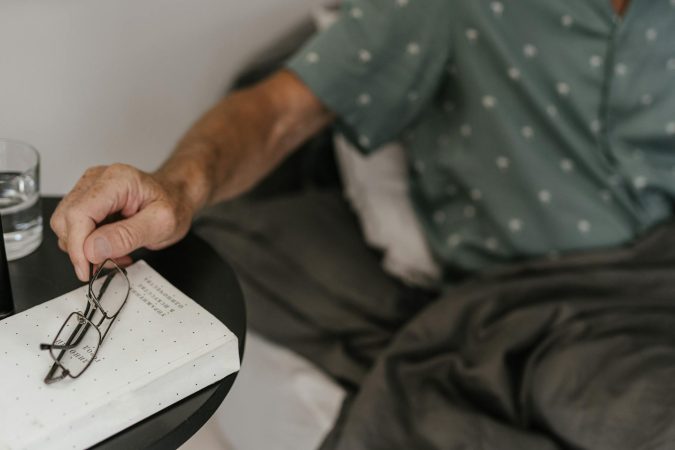
The cardboard boxes lined up in the hallway aren't surrender — they're authorship, the kind of editorial pass over a life that the previous generation never thought to make.
The cardboard boxes lined up in the hallway of a house someone has lived in for forty years are not, despite what the adult children whisper to each other in the kitchen, evidence of decline. They are evidence of authorship. The 1950s generation, watching their own parents die surrounded by attics nobody had the heart to enter and basements that became archaeological sites for strangers, is doing something quietly radical: editing the record before the record gets edited for them.
Most families read late-life downsizing as a sad concession. The parent is shrinking. The parent is letting go. The parent is preparing for the end. There's a script around it that involves gentle voices and the phrase are you sure said too many times at the dining table.
That reading misses almost everything that's happening.
What's actually happening is a generation deciding that the chaos they inherited is not going to be the chaos they leave behind. They are not retreating from their lives. They are curating them.
The Inheritance That Wasn't an Inheritance
Ask anyone who came of age in the 1950s about what happened when their parents died and you will hear, with eerie consistency, a version of the same story. A weekend. A dumpster in the driveway. Siblings standing in a garage trying to decide what to do with a box of letters nobody knew existed. Photographs of strangers who turned out to be relatives. A wedding ring in a sock drawer. The good china that nobody actually wanted but felt criminal to throw away.
Whatever those parents had meant to pass on — whatever stories were attached to the figurines, whatever significance lived in the Christmas ornaments — got lost somewhere between the funeral and the realtor. The objects survived. The meaning didn't.
This is the original wound. And it is the one their children, now in their late sixties and seventies, are quietly determined not to inflict.
The psychology here runs deeper than tidiness. Life review — the natural process by which older adults revisit, reorganize, and assign meaning to their accumulated experiences — represents a central developmental task of late life: the work of making sense of what you've lived. The work of deciding what it added up to.
Downsizing is life review with a dolly and a label maker.

Why the House Itself Was the Problem
The 1950s generation was, by historical standards, the first to accumulate at scale. Their parents had grown up in the Depression, kept things because things were scarce, and died with houses full of objects whose value was largely defensive. Their children — the people now downsizing — grew up in postwar abundance and were sold the idea that the house itself was the achievement. Bigger kitchens. Finished basements. A formal dining room nobody used. Storage as virtue.
Then they watched the house become a kind of slow-motion betrayal. The basement filled with their kids' old textbooks. The attic absorbed three decades of holiday decorations. The garage, originally meant for cars, ended up housing a workbench, a treadmill, and several boxes labeled misc.
By the time the grandchildren arrived, the house had become a museum nobody had curated. The objects had stopped serving the people. The people were serving the objects.
The decision to downsize, when it finally arrives, often gets framed by the family as practical — too many stairs, too much yard, the heating bill. But underneath the practical reasoning is something the practical reasoning is too modest to name. The house has become a kind of debt. And the person living in it has decided, finally, to pay it off rather than pass it on.
The Quiet Authority of Choosing
There is a particular kind of power in deciding which forty things, out of forty thousand, deserve to make the trip. Autonomy in later life — the felt sense of directing one's own circumstances rather than being directed by them — appears to be a significant predictor of well-being in older adulthood, with some research suggesting it can matter as much as or more than income or physical health, particularly in wealthier countries where the question of what to do with all the stuff is, in itself, a privilege that comes with its own psychological weight.
The adult children, watching their parent decide that the dining table goes to the niece and the watercolor goes to the grandson and the rest goes to a charity shop, often experience this as loss. Their parent is giving things away. The parent is, from the children's perspective, disappearing in pieces.
The parent, meanwhile, is having one of the most concentrated experiences of agency in the second half of their life. Each object held up to the light is a tiny verdict. This stays. This goes. This was a mistake I bought in 1987. This was the only thing my mother ever gave me that meant anything. This is for her. This is for the dump. This is mine to decide.
The decisions are not casual. They are votes cast against the version of dying their own parents endured.
The Stories Travel With the Objects, or They Don't
One of the most unsettling discoveries that comes with sorting through a parent's house after death is the realization that you don't know what most of it means. The brass figurine. The photograph of the man in uniform. The recipe card in handwriting nobody recognizes. The objects survived but the metadata didn't. There's a particular grief attached to being the last person alive who knew why something mattered, and watching that meaning evaporate at the exact moment you do.
The downsizers, having been on the receiving end of that evaporation, are doing something their parents never thought to do. They are telling people, while still alive, what the things mean. The granddaughter is told that the necklace was bought on a trip to Lisbon in 1974 and that the trip was the first time her grandmother had ever traveled alone. The son is told why the chipped mug stayed in the cabinet for thirty years. The friend is given the book with the inscription explained.
This is reminiscence work in its most active form. Clinical reminiscence interventions have been shown to reduce depressive symptoms and increase life satisfaction in older adults. The downsizing parent, sitting on the floor of the den telling the grown daughter the story behind a teacup, is not aware they're doing therapy. They are aware they are doing something that needs to happen before it can't.
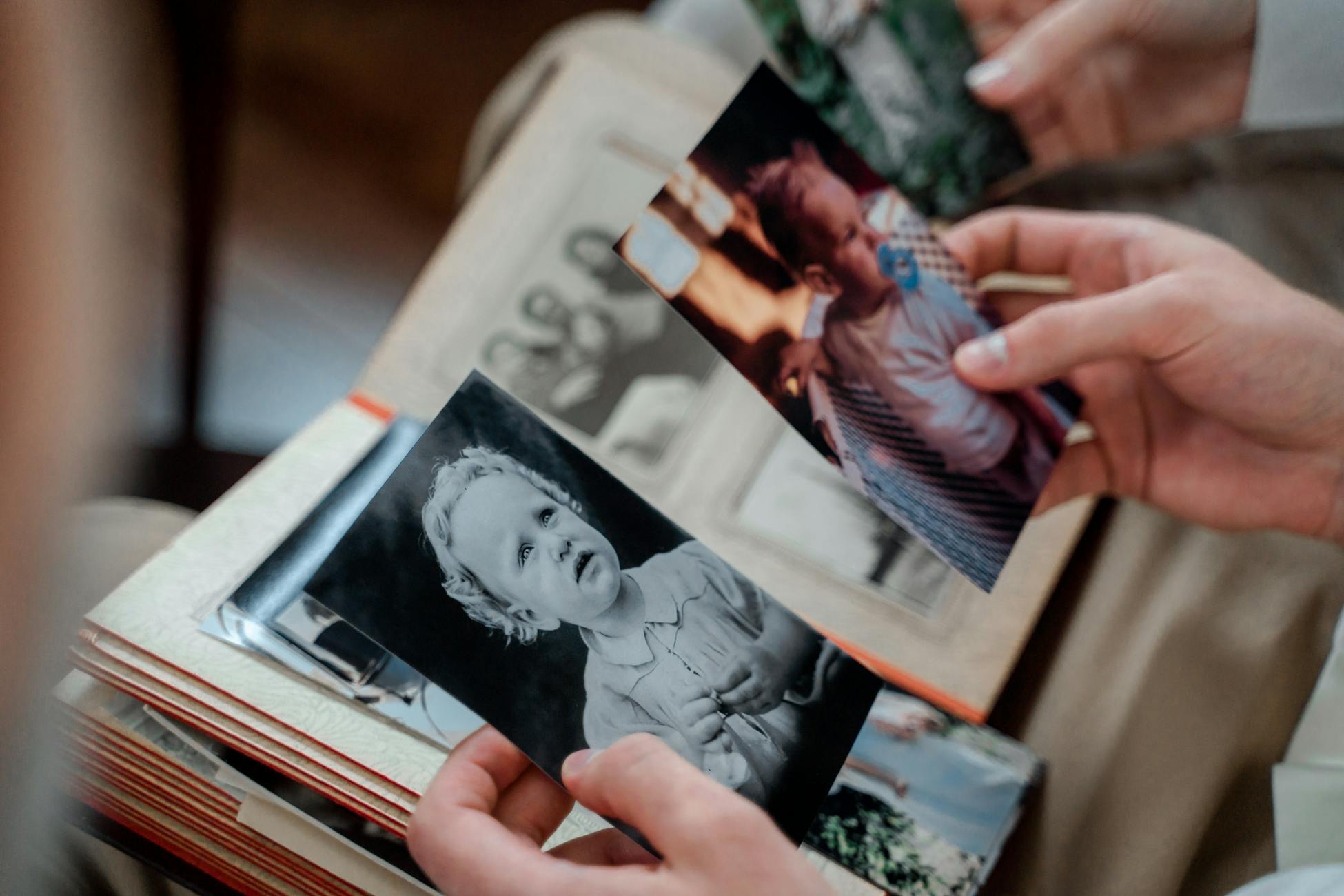
What the Adult Children Get Wrong
The children often resist. They show up for the weekend with anxious energy and try to talk the parent out of it. You don't have to do this. You're not in any rush. The house is fine. What they're actually saying, underneath the practical objections, is: I'm not ready for you to be doing this. I'm not ready for what this means.
The parent, more often than not, is ready. The parent has been thinking about this for years. The parent has, in many cases, been mentally rehearsing the sorting process during long evenings while the children assumed they were watching television.
This is the dialectic that researchers studying adult-child caregiving have identified as one of the central tensions of late life: the child wants the parent to be safe, and the parent wants to be in charge. The child reads downsizing as a step toward fragility. The parent reads it as the last large act of competence.
Both can be true. But the parent's reading is the one that matters, because it's the parent's life.
The Generation That Refused to Be Excavated
What's quietly remarkable about this cohort — the people born in the 1950s who are now methodically going through their own attics — is that they're doing it without a cultural script. Their parents didn't model this. Their churches didn't teach it. Their financial advisors talk about estate planning in terms of taxes, not stories. The cognitive benefits of structured reminiscence have been documented, but nobody has ever told these particular adults that the boxing-up itself is a form of cognitive and emotional integration.
They figured it out on their own. They figured it out from the negative example of standing in their own parents' empty kitchens forty years ago, holding a serving spoon and not knowing whether it was significant or just a serving spoon.
So the dining table goes to the niece, with a story. The watercolor goes to the grandson, with a story. The dress that was worn to a sister's wedding in 1968 gets photographed, then donated, with the photograph kept and labeled. The objects that don't get a story don't get carried forward, and that's fine, because the parent has decided that the absence of a story is itself a kind of decision.
The house empties slowly. The labels go on. The grown children, watching, eventually stop saying are you sure. They start asking, instead, tell me about this one. And the parent, who has been waiting for that question for what may be decades, finally gets to answer it.
That is not giving up. That is a generation refusing to be excavated, choosing instead to be read.