South African biotech Immobazyme has scaled up production of FGF-2, one of cultivated meat's costliest ingredients, in a 50-litre bioreactor — a first for the country and a meaningful crack at the industry's economics problem.
South Africa just made cultivated meat cheaper to produce, and the breakthrough came from an unlikely partnership between a Stellenbosch startup and a government research lab. Biotech firm Immobazyme has successfully scaled up production of fibroblast growth factor 2 (FGF-2) — one of the most expensive ingredients in cultivated meat — in a 50-litre bioreactor, a first for the country.
The conventional wisdom on cultivated meat goes like this: the science works, but the economics don't. Growth factors, the proteins that tell animal cells to multiply, have long been the line item that breaks the spreadsheet. They account for the bulk of culture media costs, which in turn account for most of the cost of growing meat outside an animal. Crack that, and the rest of the math starts to move.
That's what Immobazyme appears to have done, working with the Council for Scientific and Industrial Research (CSIR). The startup brought in a genetically modified E. coli strain engineered to produce FGF-2, and CSIR's Biomanufacturing Industry Development Centre handled the scale-up.
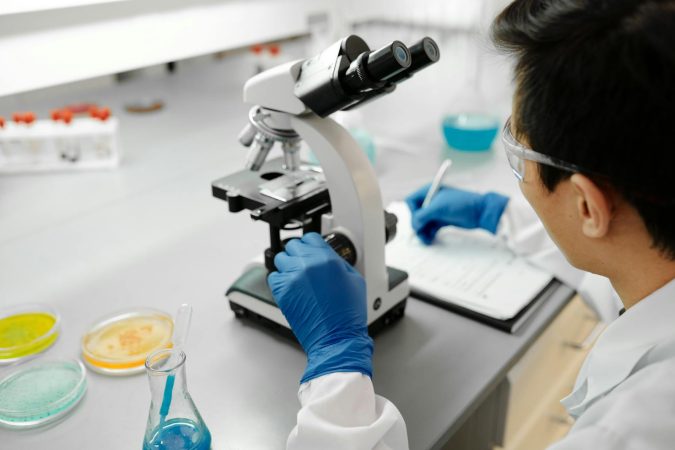
The process is unglamorous in the best way. Bacteria grow in a petri dish, move to a flask, then to a bioreactor with tightly controlled temperature and nutrient levels. After harvest, the cells are mechanically broken open, spun down in a centrifuge, and the FGF-2 protein is purified out. The end product is a powder ready to feed cow, chicken, or fish cells in someone else's lab.
Immobazyme credited the collaboration itself, not just the equipment. The scale-up was supported by government funding through the Department of Science, Technology and Innovation and the Technology Innovation Agency.
This connects to something we've been investigating on our YouTube channel—precision fermentation's potential extends beyond growth factors into entirely new protein structures, like the mycoprotein we examined in our recent video on fungal biomass that builds muscle more efficiently than conventional meat production.
The geography matters here. Cultivated meat is still a small field in South Africa, with only a handful of startups in the space. But Africa's population is expected to nearly double to 2.5 billion by 2050, and demand for meat is climbing alongside it. Producing growth factors locally, rather than importing them from suppliers in the US or Europe, changes who controls the cost curve.
It also fits a broader pattern in the sector: chip away at the most expensive input, and the whole stack gets cheaper. VegOut has covered similar moves, including Ajinomoto's swap of cultivated meat's costliest ingredient for a cypress tree compound. Different approach, same target. The race in cultivated meat right now isn't about taste or texture. It's about getting the bill of materials down to something a supermarket shopper would actually pay.
Immobazyme says it plans to keep scaling FGF-2 and expand into other proteins in its pipeline using CSIR's facilities. Whether South Africa becomes a cultivated meat hub or a quiet supplier of inputs to companies elsewhere, the underlying point is the same: the cost problem is being solved in pieces, in places that don't always make the Silicon Valley headlines. Which is probably how it was always going to go.