In an era when women weren't allowed to have boundaries, one woman discovered that forty-five minutes with an iron and unnecessary wrinkles could create an invisible force field that even the neediest family members somehow knew not to cross.
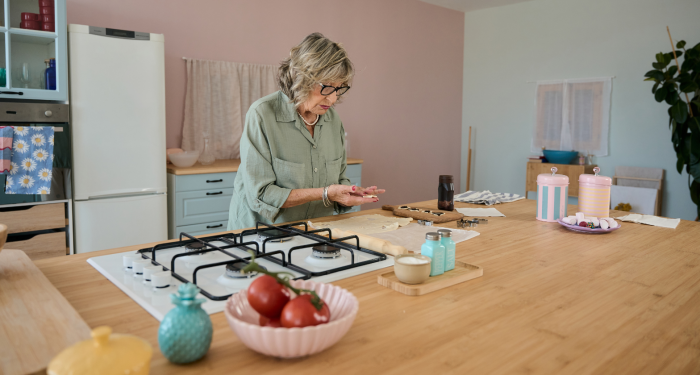
My grandmother stood at the ironing board in her housecoat, the one with the faded blue flowers, pressing the same white shirt she'd pressed the Sunday before. The iron moved in long, deliberate strokes. Steam rose and disappeared. She didn't look up when my grandfather passed through the kitchen, didn't respond when my cousin called from the living room asking about lunch. Her mouth was a straight line, her shoulders square, and something about the way she held that iron said what she never would: not now.
I didn't understand it then. I was maybe ten, sitting on the linoleum floor eating an orange, watching her work through a pile of clothes that didn't need working through. My grandfather's shirts were already clean. The pillowcases were fine. But every Sunday at 3 PM she set up that board and for forty-five minutes she was somewhere else, even though she never left the room.
It took me decades to realize what she was doing. She was setting the only boundary the decade she grew up in allowed her to set. And she was doing it with starch.
The invisible labor that never ends
Have you ever noticed how a woman's work expands to fill every available moment? There's always another load of laundry, another meal to plan, another appointment to schedule, another emotional crisis to navigate. Sarah Reid, a health coach who studies caregiving patterns, puts it perfectly: "Women have long been the cornerstone of caregiving. In every aspect of society, women have shouldered the responsibilities of caring for others within their families and communities, even as their paid workload has increased."
Growing up, I watched my mother work as a seamstress while managing our household. She'd work on alterations at the kitchen table while stirring soup, fold laundry during phone calls with her sister, plan her sewing projects while waiting in the school pickup line. Every moment was doubled up, maximized, squeezed for productivity. The only time I remember her being truly unavailable was during her Wednesday night book club, and even then, she'd leave detailed instructions for warming up dinner.
We never questioned this arrangement. Not once. Women multitasked. Women managed. Women made themselves endlessly available because that's what good mothers, wives, and daughters did. The idea of claiming time for yourself wasn't selfish exactly, but it wasn't encouraged either. It was something you snuck in, like chocolate eaten standing over the sink after the kids went to bed.
Finding boundaries in unexpected places
The genius of the Sunday ironing ritual was its perfect disguise. Here was a woman doing housework, being productive, caring for her family's appearance. No one could fault her for that. But those forty-five minutes were never about the clothes.
They were about creating a socially acceptable way to be alone with her thoughts.
I discovered my own version of this after my divorce. Every Thursday evening, I'd announce I was reorganizing the garage. My teenage son would roll his eyes, my daughter would disappear to her room, and I'd spend an hour moving the same boxes from one shelf to another. The garage never got more organized. But I got something I desperately needed: space to think without interruption, to process the grief and fear and strange liberation of starting over at 28. The repetitive physical work did something to quiet the constant chatter in my head. Should I have tried harder to save the marriage? Was I damaging my children? Could I really manage the mortgage alone? While my hands sorted through old paint cans and rusty tools, my mind sorted through bigger questions. And because I was "being productive," no one questioned my need for this time. That's the part that still bothers me — the need for a cover story.
The cost of constant availability
Women of my mother's generation and before had even fewer options for claiming personal space. They couldn't simply announce they needed alone time or book a yoga class or schedule regular therapy appointments. These concepts didn't exist in their vocabulary of self-care. Instead, they found creative ways to build boundaries into acceptable activities.
I remember visiting my grandmother in her final years, watching her work in her garden every morning from 6 to 7 AM. She'd been tending that same patch of earth for fifty years, long after her knees made kneeling painful, long after her children suggested hiring someone to help. But that hour in the garden wasn't about the tomatoes or roses. It was about the only time in her entire day when no one would approach her with a question, a complaint, or a need.
What does it do to a person to never have permission to be unavailable? To always be on call, always ready to drop everything for someone else's emergency? We know the answer. We see it in the exhaustion that settles into women's bones, in the resentment that builds like pressure in a pot, in the way we sometimes snap at the people we love most because we've given away every piece of ourselves until there's nothing left. Let's not dress that up as noble sacrifice. It's erosion.
Teaching ourselves to claim space
The ironing board became a teacher, showing that boundaries could be both gentle and firm. The woman standing there wasn't storming out of the house or demanding dramatic changes. She was simply ironing, creating perfect creases in clothes that would hang unworn, transforming a mundane chore into a meditation on self-preservation.
A 1992 study examining the historical sociology of housework found that women's domestic labor has long been shaped by patriarchal structures that limited opportunities for setting personal boundaries within the household. The brilliant workaround was to claim space within the work itself, to find moments of solitude inside the endless duties.
I think about this often when I hear younger women struggling with the same issues, despite all our supposed progress. Yes, we can have careers now, own property, make our own choices. But we still carry the weight of being the default parent, the emotional manager, the keeper of everyone's schedules and preferences and needs. We still feel guilty for taking time for ourselves, still apologize for having boundaries, still struggle to say no without elaborate justification.
My daughter, now 42 with children, recently told me she hides in the bathroom sometimes just to get five minutes alone. "Is that terrible?" she asked, and I could hear the guilt in her voice. I told her about her grandmother's baths, her great-grandmother's garden, and yes, about the woman who ironed on Sundays. "We all find our ways," I said. "The important thing is that you find yours."
The ritual that saves us
There's something powerful about ritual, about claiming the same time and space week after week until it becomes sacred through repetition. The Sunday ironing wasn't a one-time escape but a sustained practice of self-preservation. It was a weekly reminder that even in a life full of obligations, there could be forty-five minutes that belonged to no one else.
After my mother died, I found myself drawn to learning piano at 67, an instrument I'd never played. Every evening at 7 PM, I sit at that bench and fumble through scales and simple melodies. My playing is terrible, will probably always be terrible, but that's not the point. The point is that for thirty minutes, I am unavailable for anything except the relationship between my fingers and those keys.
People learned quickly not to interrupt this time. My adult children know not to call. Even the cat seems to understand that this is my sacred half-hour. And in that space, something happens. The stress of the day loosens its grip. The running list of tasks quiets down. I become, for just a moment, a person rather than a role.
Final thoughts
She ironed on Sundays because she understood something we're still learning: that self-preservation isn't selfish, it's necessary. That boundaries aren't walls meant to shut people out but foundations that allow us to show up fully for the people we love.
But I keep coming back to this: she shouldn't have needed the ironing board. None of them should have needed a disguise. My grandmother shouldn't have had to kneel in dirt at seventy-eight to justify an hour alone. I shouldn't have had to pretend the garage needed reorganizing. My daughter shouldn't be hiding in her own bathroom.
We call these small rebellions, and we admire them, and maybe we should. But I wonder sometimes whether admiring the workaround lets us avoid confronting the thing that made it necessary. Three generations of women in my family found their forty-five minutes. I don't know if that's a story about resilience or about something we still haven't fixed.