Most people try to be the memorable one by talking more. The truly unforgettable ones do the opposite—they listen in a way that makes you feel genuinely seen, and it changes everything about how others experience time with them.
For most of my twenties and half my thirties, I walked into rooms with a mental setlist. A few good stories ready to deploy. A couple of opinions sharp enough to feel distinctive. A way of talking about food that signaled I had been somewhere, eaten something, knew a thing. I thought this was how you became memorable. What I was actually doing was performing, and it was exhausting in a way I couldn't name until I stopped.
The shift didn't happen all at once, but a lot of it crystallized around the table. When I went plant-based, I expected the biggest change to be what I was eating. What I didn't expect was how it altered the way I showed up socially. Choosing to eat differently forces you to slow down, to ask questions, to pay attention to what's actually in front of you — on the plate and across the table. The same mindfulness that makes you read an ingredients label twice turns out to rewire how you listen to people. And the community I found through plant-based living, people who had already made one countercultural choice about how to live, turned out to be a community that valued presence over performance in ways I'd never experienced.
That's the thing I want to write about. Because the conventional wisdom of social life in America says you need to be interesting to be valued. More charm, more stories, more presence. What I've come to believe, and what the research actually supports, is that attention is the scarcer commodity now. And scarcity is where value lives. The same instinct that draws many of us toward plant-based living — a rejection of mindless consumption in favor of something more intentional — applies just as powerfully to how we consume each other's time and words.
The interesting-person trap
There's a reason so many of us default to performing in conversation. It feels safer. If you're the one doing the entertaining, you control the frame. You don't have to be vulnerable or quiet or, god forbid, genuinely curious about someone whose life you can't immediately categorize.
But performance has a cost. Studies suggest that people who dominate airtime with self-focused content are often remembered less favorably, not more. Research on attraction and conversation has found that the topics we choose, and how much space we take up with them, shape whether a new acquaintance walks away interested or quietly drained.
The interesting-person strategy also burns out faster than it admits. You have to keep generating material. You have to keep calibrating whether your stories are landing. You're basically running a one-person variety show, and the audience is deciding in real time whether to renew you for another season.
What attention actually is
Attention, in the sense I mean, isn't politeness. It isn't waiting for your turn to talk with your face arranged in mild interest. It's something more deliberate than that, and more rare.
Psychologists call it active empathetic listening — a layered process involving sensing, processing, and responding to what the other person is actually communicating, including what they're not saying out loud. Research in Psychology Today makes the point I find most useful: active listening isn't a personality trait. It's a skill. Which means you can get better at it, and most people don't, which is why the people who do stand out.
There's also research on social gaze and interaction dynamics showing how eye contact and subtle facial cues govern the way signals get sent and received in conversation. Dual eye-tracking studies during live dialogue have found measurable individual patterns — whether people fixate on eyes or mouths — and those patterns correlate with how well the conversation actually works. Attention has a signature. Other people can feel it, even if they can't name it.
Why it's gotten rarer
Digital communication has disrupted natural gaze behavior in ways we're only starting to measure. Video calls reduce the reciprocity of social cues. Phones fragment attention during in-person conversation. And you don't need a researcher to tell you that the person across the table checking notifications is not fully in the room with you.
So the baseline has shifted. A generation ago, being moderately attentive in conversation was the floor. Now it's closer to the ceiling. Which means the social value of simply paying full attention has quietly gone up, even as most of us have gotten worse at it.
This is the part nobody tells you when they're coaching you to be more charismatic. You don't need charisma. You need to close the laptop, put the phone face-down in another room, and actually look at the person who is talking to you. That alone will put you in a percentile most people can't reach anymore.
Slow meals, slow conversations
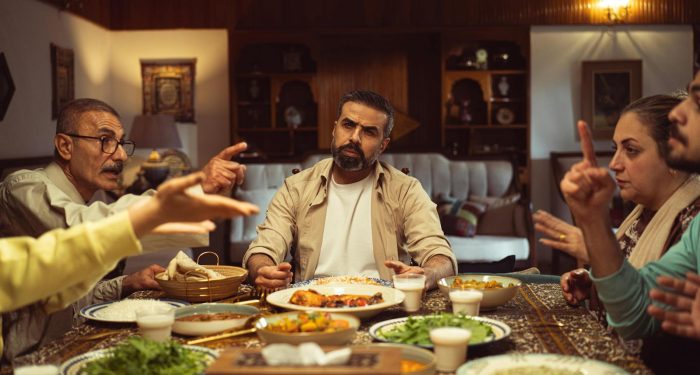
If you've ever sat at a long plant-based dinner — the kind where someone made three dishes from scratch and wants you to actually taste the miso glaze — you know that the pace of the meal changes the pace of the conversation. There is no rushing through a table full of food someone built with that kind of intention. And in the not-rushing, something opens up. People ask a question and then wait. Not because they're being polite. Because they actually want the answer, and the answer usually takes longer than the first thing that comes out of your mouth.
I found this unbearable at first. Silence felt like failure. I'd rush to fill it. Over time I understood that the silence was the conversation. The waiting was the question being taken seriously. That's a shape of attention I had to learn, and it reorganized a lot of what I thought relationships were for. I've found it most consistently at tables where the food was made with care and eaten slowly — which, not coincidentally, tends to be how plant-based people eat.
Remembering names, and the rest of it
One practice I've kept up: I try to remember names and small personal details. Not as a networking tactic. As a basic courtesy that signals I was actually there when you told me. Someone's daughter's name. The surgery they mentioned last time. The project they were nervous about.
This is unreasonably powerful. People notice, and they stay longer in your life because of it. Not because you've charmed them, but because you've done the boring work of treating them as continuous human beings rather than new audiences for your material every time.
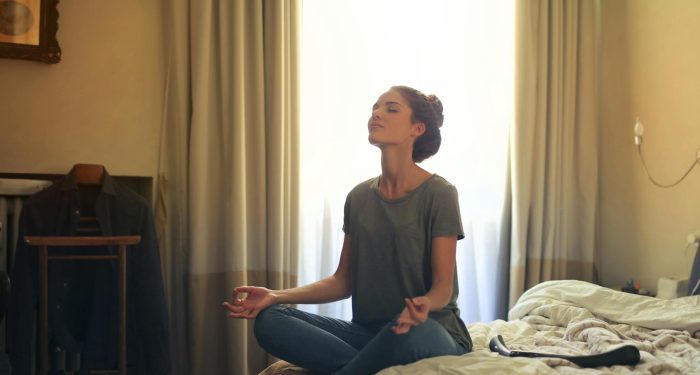
I wrote recently about a meditator whose daughter noticed he had stopped trying to seem fine, and I think this belongs to the same family of shifts. You stop performing a version of yourself, and people can finally find you.
The authenticity piece
There's a growing body of work on authenticity in relationships that makes an argument I'd have rolled my eyes at ten years ago. The short version: the energy we spend on impression management is energy we're not spending on actually being present with the person in front of us. And the person in front of us can usually tell.
Being the attentive one isn't about self-erasure. It's about not needing the room to validate a character you're playing. You can have strong opinions and still lead with questions. You can have interesting stories and still hold them until someone actually wants to hear one. What you're giving up isn't your personality. It's the compulsion to prove it.
This tracks with something I've noticed in plant-based communities specifically. People who've already bucked a major social norm around food tend to be less invested in performing normalcy everywhere else. There's a freedom in having already made the weird choice. You stop needing every room to confirm you're interesting, because you've already decided you'd rather be honest.
The counterargument worth taking seriously
Here's the objection I run into when I talk about this. Doesn't being the attentive one just mean you're the one who never gets to talk? Isn't that its own kind of self-erasure, dressed up as virtue?
Fair. And I think the answer is that attention isn't silence. It's the ability to actually hear what someone said and respond to that specific thing, instead of pivoting to a rehearsed monologue loosely connected to their last sentence. When you listen well, your eventual contributions land harder because they're in dialogue with the actual conversation, not parallel to it. You talk less, and what you say matters more. That's not martyrdom. That's leverage of a healthier kind.
The other objection is generational. Older people, by and large, have already figured this out. Research on aging and social priorities notes that people past a certain age tend to prune their social networks aggressively and spend their attention only on relationships that actually feed them. They've stopped performing because they've figured out nobody was grading the performance except them. I'm 36, and I'd like to get there sooner rather than later.
What changes when you stop
A few things I've noticed, offered without the promise that they'll be true for you.
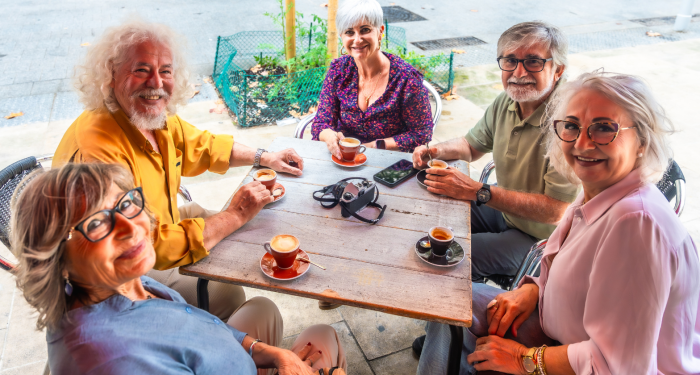
Conversations get longer. Not in a painful way. In the way that you suddenly find yourself still at the table two hours in, and nobody checked their phone, and the candle has burned down to the holder.
People tell you things they haven't told their closer friends. This is not because you are special. It's because you created a texture of attention they didn't realize they'd been starving for, and once they noticed it, the disclosures followed.
You get invited back. Not to networking events. To small dinners, to living rooms, to the kind of evenings where the guest list is curated and brief. Attentive people get invited because they don't cost anything to host. They don't require managing.
You stop dreading social life. Because you're no longer auditioning. You're just showing up, and the criteria for success has become whether I actually saw the people I was with rather than whether I got enough laughs.
The practice, such as it is
I don't have a protocol for this. I have a few things I try to do, inconsistently, and they add up over time.
Leave the phone in another room when I'm with someone. Ask a second question before telling my own story, and then a third before telling it, and sometimes by the third question I realize my story wasn't that relevant anyway. Remember one specific thing from the last conversation and bring it up. Sit with silences for two beats longer than feels natural.
None of this is charismatic. None of it would get me on a podcast about how to work a room. What it does, slowly, is build the kind of relationships where people stay. Where you're not constantly recruiting new audiences because the old ones got bored.
That turns out to be what I actually wanted, underneath all the performing. Not to be the most interesting person in the room. To be the one somebody is glad to see again. Those are different projects, and I spent too long confusing them.
Enough is my favorite word these days. Being attentive, it turns out, is enough. More than enough. It's the rarer thing, and the one that makes people stay.
What’s Your Plant-Powered Archetype?
Ever wonder what your everyday habits say about your deeper purpose—and how they ripple out to impact the planet?
This 90-second quiz reveals the plant-powered role you’re here to play, and the tiny shift that makes it even more powerful.
12 fun questions. Instant results. Surprisingly accurate.