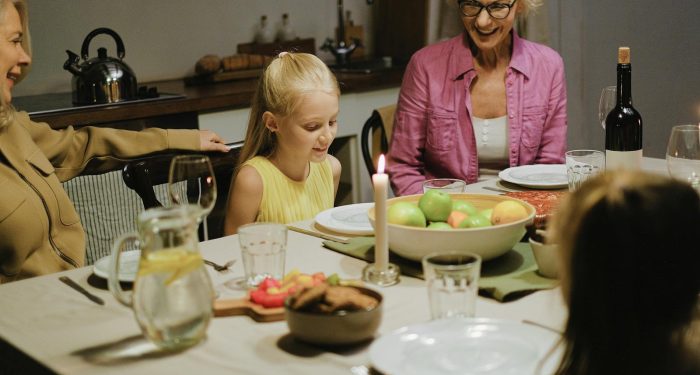
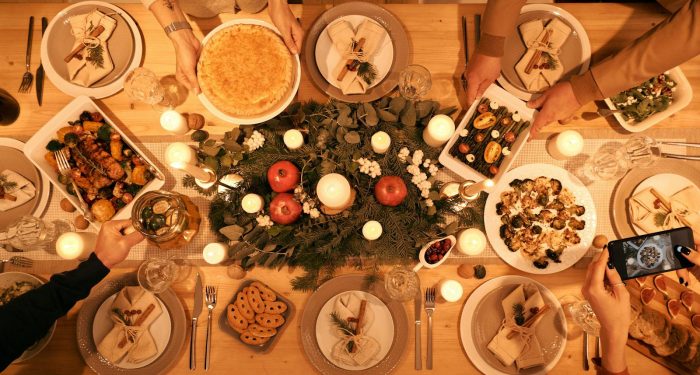
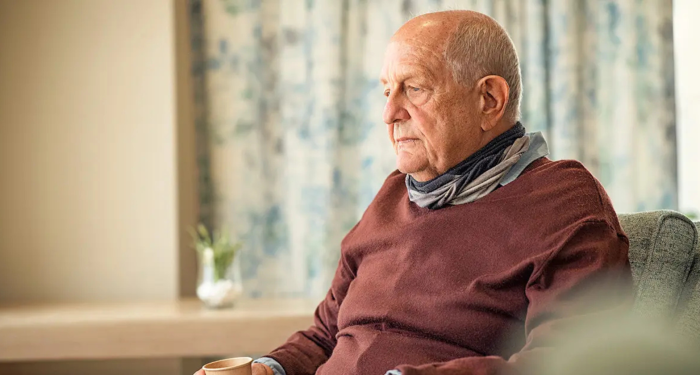
When family gatherings become emotionally draining rather than nourishing, some people quietly choose absence over obligation, discovering that missing one event costs far less than the exhaustion of attending.
The hawker centre near my flat in Singapore has a specific Sunday hum, plastic stools scraping concrete, the hiss of a wok two stalls over, someone's auntie laughing too loud at a joke nobody else heard. I was eating laksa alone last weekend when I watched a woman in her forties take a phone call, listen for about twenty seconds, say something briefly, and then sit very still with her spoon halfway to her mouth. She wasn't crying. She wasn't angry. She just looked tired in a way that felt familiar.
I've been thinking about her ever since.
Because there's a particular kind of person who stops going to family gatherings, and they don't fit the usual story. They're not estranged. They haven't cut anyone off. There's no dramatic falling-out, no group chat blowup, no therapist's office breakthrough where they finally said the unsayable thing. They just, quietly, started saying no.
The conventional wisdom is that anyone who skips family events is either selfish, immature, or harbouring some unprocessed grievance. Adult children who don't show up at Christmas are framed as the problem to be solved. What gets lost in that framing is something simpler and harder to talk about: some people have just done the math.
The math nobody admits to doing
Cost-benefit analysis sounds clinical when you apply it to family. We don't like to think we run the numbers on the people we love. But we do, all of us, all the time. The framework economists use to evaluate trade-offs isn't actually that different from what your nervous system is doing on the drive home from your parents' place, when you're staring at the road and quietly cataloguing what the day cost you.
The cost is rarely the four hours of physical presence. It's the three days before, when you're already bracing, rehearsing answers to questions you know are coming, half-dreading the moment your name gets called into a conversation you didn't want to be in. It's the week after, when you're recovering from a comment your aunt made about your job, replaying it on the bus, drafting the response you'll never send. It's the slow erosion of feeling like yourself. It's the way you sleep badly the night before and worse the night of. It's the money spent on the flight, the gift, the outfit you bought because you didn't want to look like you were doing badly. It's the version of you that has to be wheeled out, dusted off, and made to perform, while the actual you waits in some back room until it's safe to come out again. That's the cost. Not the hours. The hollowing.
People who stop showing up have usually been showing up for a long time.
That's the part most people miss. They didn't quit early. They quit late.
What the body keeps track of
There's a body of research on what's called emotional labour, the work of managing your face and tone to meet someone else's expectations. Most of the studies focus on workplaces, but the mechanism is the same in any setting where you're performing a version of yourself you don't actually feel.
Family gatherings, for some people, are unpaid emotional labour shifts. You're the one who keeps the conversation moving. You're the one who deflects when your cousin starts in on politics. You're the one who hugs the relative who once said something cruel and pretends it never happened, because the alternative is a scene nobody wants.
That's a job. And like any job, you can burn out.
The myth of the estranged adult child
Estrangement is a real thing, and it's painful, and it deserves the careful attention researchers have given it. But the people I'm describing aren't estranged. Psychology Today's coverage of family estrangement describes the bewilderment, anger, and grief that follow when someone voluntarily walks away from family ties entirely.
That's not what's happening here.
The people I'm describing still call on birthdays. They still send the Mother's Day flowers. They still drive their dad to the doctor when his back goes out. They've just decided that the four-hour gathering with twenty-three people, half of whom they don't actually like, is no longer a load-bearing wall in their relationship with their family.
It's selective participation, not exit. And the difference matters because the cultural script doesn't really have a category for it yet. We have "close family." We have "estranged family." We don't have a clean way to express loving people while choosing the version of contact that doesn't deplete us.
Why "no" feels so loud
Saying no to a family gathering activates something old in most people. Not because the boundary is wrong, but because the body interprets it as a threat to belonging. Therapists who write about boundary-setting often describe this as a nervous system response, the fear surge that comes from imagining rejection, even when no rejection is actually coming.
The script in your head when you decline an invitation is usually louder than any reaction your family will actually have. I've ruined it. I should have just gone. They'll never forgive me. Most of those thoughts turn out to be wrong. The relationships don't collapse. People adjust. The world keeps spinning.
But the first few times you decline, your body doesn't know that yet.
The early relationships that set the template
Why some people can attend family gatherings without much cost, while others find them depleting, has a lot to do with what happened in the room before you could speak.
Longitudinal research on attachment suggests that early relationships with primary caregivers can influence adult relationship patterns across all relationships, not just romantic ones. If your early experience of family was secure, the gathering is just a gathering. If your early experience was full of conflict, criticism, or having to manage someone else's emotions to feel safe, the gathering is a re-entry into a system your nervous system already learned to brace against.
You're not being dramatic. You're not being ungrateful. You're being accurate about what the room costs you.
And attachment patterns can shift in adulthood through new, healthier relationships. Which means the friend who feels like home, the partner who doesn't require you to perform, the chosen family you eat dim sum with on Sundays, those relationships are doing real repair work. They're not consolation prizes for a difficult family. They're part of how people actually heal.
The gathering isn't the relationship
One of the things people who stop attending gatherings figure out, often after years of guilt, is that the gathering and the relationship are not the same thing.
You can love your mother and not want to spend Lunar New Year being interrogated about why you haven't given her grandchildren. You can love your brother and not want to share a dinner table with his wife, who has made you feel small for fifteen years. You can love your father and call him every Sunday and still decide that the annual three-day visit is more than you can metabolise.
The gathering is a format. The relationship is a relationship. They can be separated.
This is the realisation that, in a piece I wrote recently about friendships, I tried to articulate in a different context. The question isn't whether you love someone. The question is what configuration of contact actually lets the love survive.
What people are usually opting into instead
Here's what I notice about the people who've made this choice. They're not sitting at home alone, feeling self-righteous. They're usually doing something else with the day. A long walk with a partner. A meal with friends. The kind of chosen solitude that feels different from lonely solitude in ways that are hard to explain to people who've never tried it.
They've replaced the obligation calendar with an intention calendar.
That's not selfish. That's not a failure of family values. That's a person who has decided their finite emotional resources are going to go where they actually produce something, for them and for the people on the other end.
The quiet adjustment
Families adjust. That's the part nobody warns you about, in a good way. The first year you don't show up, there's static. The second year, less. By the third year, the family system has reorganised itself around your selective participation, and what you find is that the relationships you've kept are often deeper than the ones you used to maintain through obligation.
The cousin you actually like now gets a real lunch with you twice a year, not a fifteen-second hello at a crowded table. Your mum gets your full attention for a Tuesday afternoon, not your half-attention for a hectic Sunday. Your siblings start to know you as a person, not as a role.
The math, it turns out, was right. Showing up was costing more than missing.
And missing, sometimes, is what allowed you to come back present.
What this isn't
This isn't a permission slip to ghost your family. It isn't a manifesto for cutting people off. It isn't a celebration of disconnection.
It's just an acknowledgement that for some people, in some families, the standard format of togetherness has become a thing they survive rather than a thing they enjoy. And the choice to participate differently, less often, more deliberately, on terms that don't require them to spend three days recovering, is not a moral failure.
So here's the question worth sitting with. If a gathering only works because one person in the room keeps absorbing the cost of it, whose obligation is that, really? Family is supposed to be the place where you don't have to perform to be loved. The minute it becomes a stage, the contract has already been broken, and not by the person who finally stopped showing up.
Ask yourself who in your family has been quietly paying the bill for everyone else's comfort. Then ask yourself what you'd actually owe them, if you were honest about it. Because obligation that only flows in one direction isn't family. It's a tax. And anyone who finally refuses to pay it isn't the one who broke something. They're the one who stopped pretending it wasn't already broken.