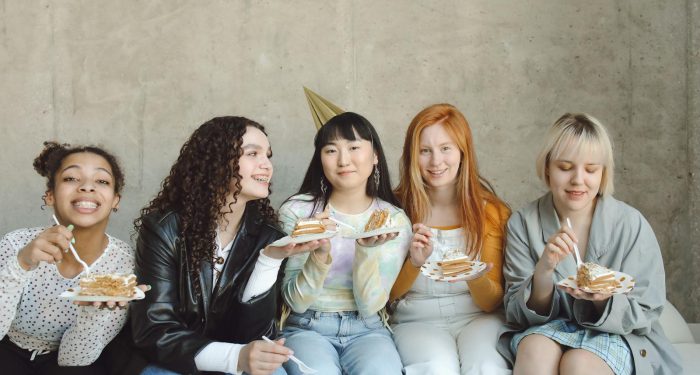
For decades, childfree adults have quietly endured a unique form of grief—not from their choice to skip parenthood, but from the exhausting reality of having their happiness constantly questioned by a culture that refuses to believe what research has proven for years.
I am ashamed to say that I used to be the person who assumed most people wanted kids eventually. Not maliciously. Just by default. It was baked into how I saw the world, the questions I asked at dinner parties, the assumptions I carried about what a "full" life looked like.
Then I started actually reading the research. And then I started actually listening.
The science on childfree adults has been pretty consistent for years now. People who choose not to have children are not lonelier, sadder, or less fulfilled than parents. The data keeps saying this. The cultural script keeps ignoring it.
And a lot of childfree adults are quietly carrying the weight of being told their life is lacking something they never wanted in the first place.
That gap between what the evidence shows and what society insists is worth sitting with.
What the research actually says
In a 2021 study, researchers noted "After controlling for demographic characteristics, we found no differences in life satisfaction between childfree individuals and parents, not-yet-parents, or childless individuals. This finding mirrors some past research comparing the life satisfaction of parents and childfree individuals." In this case, "childfree" means it was a choice and "childless" means an unmet desire.
A 2016 study found that in the United States, parents reported lower levels of happiness than non-parents, one of the largest "happiness gaps" in the developed world. This could be due to weak social support structures around childcare, not to parenthood itself being miserable. But the point stands: the idea that having children automatically makes people happier is not a finding. It's a story we keep telling.
And it's a story with real costs for the people it excludes.
The weight of a script nobody wrote for you
I've mentioned this before, but so much of the research I find most useful isn't about the topic directly. It's about how social norms function like invisible pressure systems. When a behavior is seen as the default, deviating from it requires constant justification. You don't just live your life. You explain your life.
I think Childfree adults get this constantly. The unsolicited concern. The "you'll change your mind." The assumption that the choice reflects damage, selfishness, or failure. And get this: researchers of the 2021 study I mentioned previously also found that:
"Although childfree individuals and couples are numerous in the population, and although they are similar in most respects to individuals with other parental statuses, our results suggest that they may still be viewed by others as an outgroup."
Let that land. Perhaps, the choice to not have children isn't the source of pain for most childfree adults. The reaction to that choice often is.
I think about my own experience as a vegan. The choice itself never made me miserable. The relentless need to defend it to people who hadn't asked for a conversation about my diet? That was exhausting. I eventually learned to stop leading with justifications and to stop expecting everyone to understand.
But the parallel is real: when your life falls outside the default, you carry an invisible tax that people living inside the norm never have to pay.
Choosing on purpose
There is something genuinely underrated about a person who knows what they want from their own life and builds toward it without needing it to make sense to anyone else.
Not stubbornness. Not indifference. Something quieter. The kind of self-knowledge that doesn't require an audience.
The childfree adults I've come to know and listen to over the years have, almost universally, done something most of us struggle with. They've looked at the script, considered it, and said: not for me. That takes more self-awareness than most people credit.
What's striking is how wide the gap is between what society presumes about their lives and what those lives actually look like. The presumption is loneliness, regret, a quiet desperation that will eventually surface. The reality, more often than not, is people who are engaged, purposeful, and clear about what they want. The story society tells about the childfree life and the life itself are barely recognizable as the same thing.
Living consciously means accepting that your choices will be misread anyway. That people will project their own fears onto your life. That you'll occasionally be made to feel like the outlier in a room where everyone else is playing along with a game you opted out of. The cost of a deliberate life is that you have to keep choosing it, even when the culture around you keeps insisting you've made a mistake.
But what I've seen just from paying attention: the people who build their lives from the inside out tend to age well. Not in some vague spiritual sense. Practically. Their relationships are chosen with more intention. Their time reflects their actual values. They're less likely to arrive somewhere in their fifties and realize they were living someone else's idea of a good life.
That applies to every major choice, not just this one. Whether you have children, whether you go plant-based, whether you take the unexpected career turn, whether you stay in a city that doesn't quite fit or move somewhere that does. The scaffolding is the same: figure out what you actually want, build toward it honestly, and be prepared for the fact that it won't always look like what people expect from you.
That's not a manifesto. It's just what choosing on purpose costs, and what it returns.