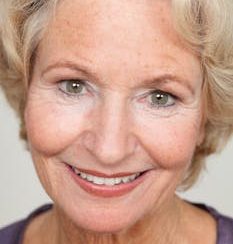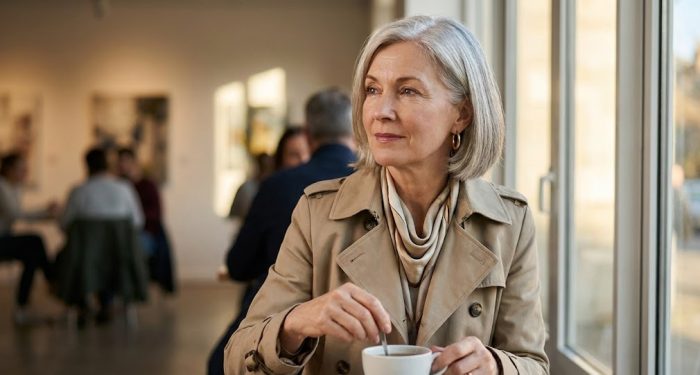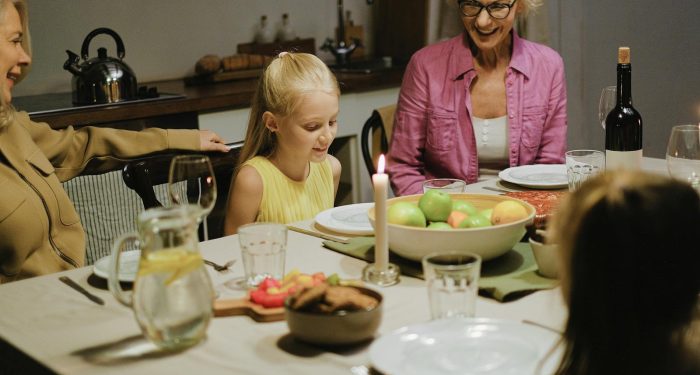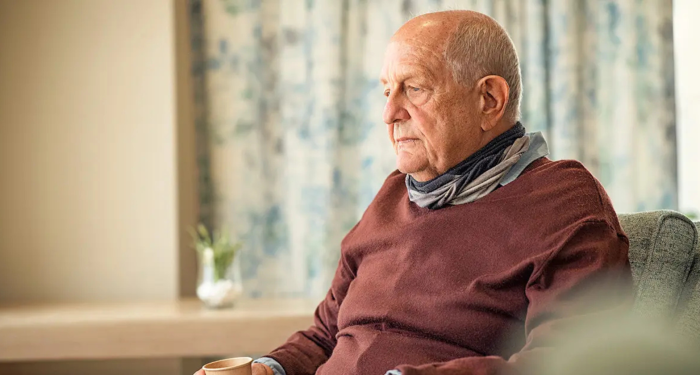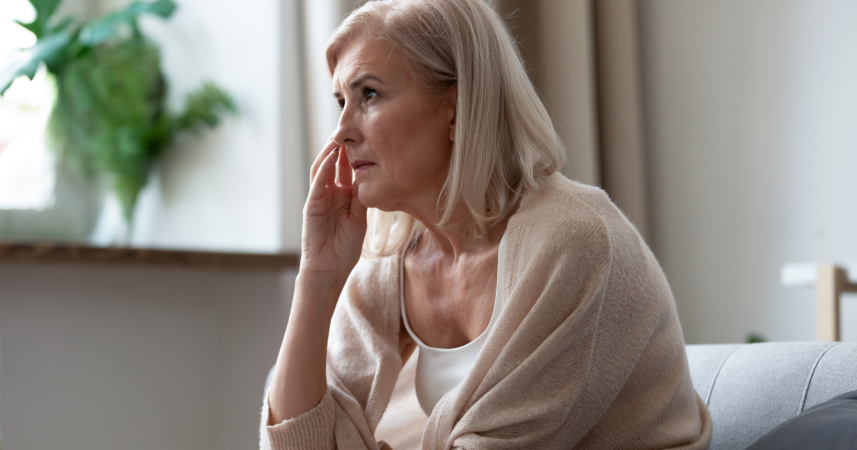
At 70, I've finally stopped apologizing for who I am—preferring solitude to book clubs, wearing purple because I like it, speaking truths others aren't ready to hear—just as the world decides I've become too old to be worth listening to.
Last Tuesday at the pharmacy counter, the cashier looked past me to ask my thirty-something son if I had any allergies to the new prescription. I was standing right there. I'm the one who takes the medication. I'm the one who scheduled the appointment, drove to the pharmacy, and handed her my insurance card. But she addressed him, in that bright voice people reserve for children and the elderly, as if I had become invisible somewhere between the parking lot and the register.
I didn't correct her. I used to correct people. Now I just watched my son's face redden as he gestured toward me and said, "You can ask her."
There's a particular cruelty to finally understanding yourself completely just when the world decides you're no longer worth understanding. I spent five decades figuring out that I hate small talk at parties, prefer hiking alone, and would rather read poetry than watch television. I've learned that I'm an introvert who taught herself to be social, a morning person who married two night owls, a woman who needs solitude like others need caffeine.
Do you know how long it takes to stop apologizing for these preferences? To stop pretending you enjoy book clubs when you'd rather read in blessed silence? To admit you find most social obligations exhausting?
For me, it took until my late sixties. And now that I've finally given myself permission to decline invitations without elaborate excuses, people assume I'm declining because I'm old and tired, not because I'm finally honest.
The irony burns sometimes. All those years of therapy in my fifties, learning to set boundaries, to speak up in meetings, to stop letting others define my worth. All that work to find my voice, only to discover that once you reach a certain age, people stop listening anyway. They hear your age before they hear your words.
When wisdom becomes invisible
Virginia Woolf wrote about the peculiar freedom of being invisible. She wasn't wrong about the invisibility, though I wonder if she lived long enough to fully experience it.
There's a difference between choosing to observe and being relegated to the margins.
I noticed it first in professional settings. Those final years of teaching, how younger colleagues would talk over me in meetings, forgetting I'd navigated five different principals, three major curriculum overhauls, and countless educational trends that came and went like seasons. They'd propose "innovative" ideas I'd tried in 1995, and when I mentioned this, they'd smile indulgently as if I couldn't possibly understand their modern vision.
Now, in retirement, the invisibility has spread everywhere. At restaurants, servers address my younger dining companions. At medical appointments, nurses explain things slowly, repeatedly, as if my gray hair has affected my comprehension. The assumption that age equals decline is so deeply embedded that people don't even realize they're doing it.
The unexpected gift of not caring
But here's what surprised me: there's power in this invisibility if you choose to claim it. When people stop seeing you as competition, as a sexual being, as someone whose opinion carries weight in conventional terms, you're suddenly free to be exactly who you are without consequence.
I wear purple now, not because of that poem everyone quotes, but because I actually like purple and no longer care if it's "flattering." I've stopped dyeing my hair, not as a statement but as a liberation from monthly appointments and chemical smells. I speak my mind in conversations because what are they going to do, think less of me? That ship has sailed.
Remember how exhausting it was to manage other people's perceptions? The careful calculations of how to dress for respect but not intimidation, how to be assertive without being labeled difficult, how to age without seeming to age? I spent decades on that tightrope. Now I walk on solid ground, even if others can't see it.
The loneliness of earned wisdom
The hardest part isn't being dismissed; it's having so much to offer and finding so few takers.
After seven decades, I've accumulated practical wisdom about everything from removing wine stains to navigating grief, from stretching a grocery budget to recognizing which battles your teenagers need to fight themselves. I know which silences in a marriage are comfortable and which are dangerous. I know how to write a thank you note that actually means something, how to make peace with an estranged sibling, how to sit with someone who's dying without filling the space with nervous chatter.
This knowledge feels like a library nobody visits. Younger friends struggle with problems I've solved, but they don't ask. They assume my experience is outdated, that raising children in the 1990s couldn't possibly provide insight into parenting today. As if human nature has fundamentally changed. As if love and loss and fear and hope operate on different frequencies now.
Sometimes I want to shake them gently and say: Your mother-in-law isn't actually trying to undermine you. Your teenager's silence doesn't mean what you think it means. That job you're killing yourself for won't remember your name five years after you leave. But unsolicited advice from older women ranks just above unsolicited advice from strangers on the internet, so I keep quiet and watch them learn the hard way, just as I did.
Finding your tribe in unexpected places
The antidote to this isolation isn't found where I expected. It's not in trying to prove my relevance to those who've already dismissed me. It's in finding others who see through the cultural blindness to the person still becoming.
My writing group, all women over 65, meets monthly in each other's living rooms. We critique each other's work with the honesty that comes from having nothing left to prove. We write about sex and death, about children who disappointed us and dreams we've deferred so long they've fossilized. Nobody talks to us like we're cute for having opinions.
In my volunteer work at the women's shelter, I've discovered that those who need help rarely care about the age of the helper. The woman fleeing domestic violence doesn't see my wrinkles; she sees someone who understands starting over with nothing. The literacy student struggling with English doesn't notice my slower gait; he notices that I remember his name and celebrate his small victories.
Final thoughts
The cruelest irony of turning 70 remains true: you finally know exactly who you are at precisely the moment the world stops caring. I've made some kind of fragile peace with this — the writing group, the shelter, the purple shirts, the refusal to dye my hair. Small rooms where I am still seen as a person rather than a category.
But I won't pretend the equation balances. Most days, the math is uneven. I walk out of the pharmacy or the doctor's office or the dinner with my son's friends, and I feel the familiar dissonance — knowing exactly who I am, and knowing that almost no one in the room registered it. The freedom is real. So is the cost. I haven't figured out how to hold both without one occasionally crowding out the other.
Maybe that's the work of this last stretch, whatever it turns out to be. Not resolution. Not the tidy reconciliation I keep waiting for. Just the daily practice of staying visible to myself when no one else is looking, and trying not to mind too much that this is what it has come to.