When she told me her most cherished memories were of me falling asleep on the couch with a book on my chest, not the elaborate birthday parties I'd exhausted myself planning, I realized I'd spent decades performing motherhood for an audience that only wanted to see me as I actually was.
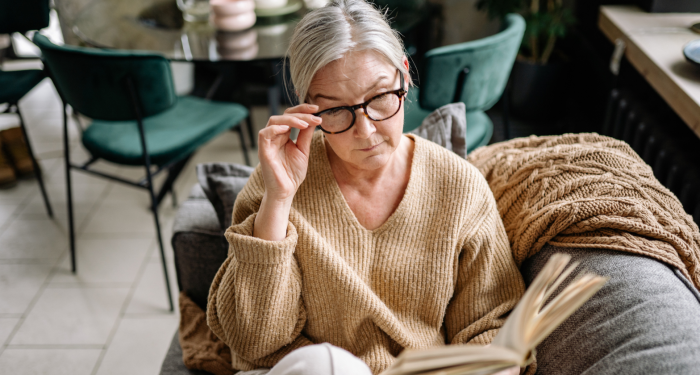
Last year, my daughter and I were sitting in my kitchen, the late afternoon sun making patterns on the table between our coffee cups. She was telling me about her own teenagers, and somehow we got to talking about her childhood. "You know what I remember most?" she said, stirring sugar into her cup. "Those afternoons when you'd fall asleep on the couch with a book on your chest. Or when you'd let me eat cereal in your bed on Saturday mornings while you dozed a little longer." She smiled. "The time you cried at my middle school concert from exhaustion and I held your hand."
I sat there, stunned. All those years I'd spent orchestrating perfect birthday parties, saving for college tours, trying to be the mother from parenting magazines—and what she remembered were the moments when I was too tired to perform motherhood at all.
The exhausted years that shaped everything
For 32 years, I taught high school English while raising two children. First as a single mother after my husband left when they were toddlers, then later with my second husband who came into our lives when I'd almost given up on partnership. Those early years blur together now—standing on aching legs teaching Shakespeare, coming home to homework help and dinner prep, grading papers until midnight while my children slept.
I accepted food stamps for two years and learned that pride tastes bitter but children need to eat. The morning routine never varied: up at 5:30 for a few minutes of silence with tea, then the chaos of getting everyone ready. I'd grade papers while they ate breakfast, help with homework while cooking dinner, fall asleep reading bedtime stories. My daughter remembers those accidental naps fondly. I remember them as failures—another day I couldn't stay awake for the ending.
What strikes me now, at 70, is how much energy I spent trying to hide my exhaustion. I thought good mothers weren't supposed to be tired. Good teachers came to class energized and inspiring. Good women managed it all without letting anyone see the cost. So I performed wellness while my body kept score—the arthritis from standing all day, the chronic exhaustion that became my baseline normal.
When survival mode becomes your parenting style
Looking back, I see that my children learned their most important lessons not from my carefully planned teaching moments but from watching me navigate difficulty. When their father left, I told my son he was "the man of the house" because I thought it would make him feel important. Decades later, I finally learned to apologize to my adult children for all the ways survival mode made me less than they deserved.
But here's what my daughter tells me now: she learned resilience from watching me get up every morning despite everything. She learned that asking for help isn't weakness—it's wisdom. She learned that love shows up tired, imperfect, and honest.
I taught both my children to cook, clean, and manage money because self-sufficiency felt like the only protection I could guarantee them. What I didn't realize was that I was also teaching them something else: that being human means doing your best with what you have, and that sometimes your best looks like cereal for dinner and falling asleep during story time.
The mythology of perfect presence
We tell mothers they need to be present, but what does presence really mean? Is it the carefully curated family game night? The Pinterest-worthy craft project? Or is it something quieter, more honest—being too tired to put on a show, sitting together in comfortable silence, letting your children see you as you actually are?
My second husband understood this intuitively. When he came into my life, after I'd accidentally outbid him on a weekend getaway at a school fundraiser, he showed love through quiet acts. Fixing the leaky faucet. Bringing me tea without being asked. Sitting beside me while I graded papers, not talking, just being there. I kept waiting for grand declarations until I realized I'd been loved thoroughly all along.
When Parkinson's took him after seven years of slow decline, I learned that grief doesn't shrink—you grow larger around it. But I also learned that all those ordinary moments, the ones where we were just tired humans sharing space, those were the ones that sustained me through loss.
What our children actually remember
Last week, while sorting through old papers, I found a note my daughter wrote in second grade: "My mom is tired but she loves me." At the time, I would have seen this as failure. Now I see it as the truest thing ever written about motherhood.
Our children aren't keeping the same score we are. While we're tallying our failures—the missed school plays, the frozen dinners, the times we lost our temper—they're absorbing something entirely different. They're learning how adults handle exhaustion, disappointment, and imperfection. They're watching us be human.
My daughter doesn't remember the elaborate Halloween costumes I stayed up making. She remembers the year I forgot about Halloween entirely and we made ghost costumes out of old sheets ten minutes before trick-or-treating. She remembers laughing about it, the two of us running through the dark with our sheets flapping behind us.
Permission to be the parent you actually are
Now I'm a grandmother to four, and a great-grandmother to one. Every other Saturday, we go to the library—the same library where I once brought my children, desperate for free entertainment. But now I'm not checking my watch, worried about groceries. I'm present in a different way—not performing grandmother-hood, just being with them.
I volunteer at the women's shelter now, teaching resume writing to women who remind me of my younger self—exhausted, determined, apologizing for existing. I tell them what I wish someone had told me: that showing up tired is still showing up. That your children will remember who you actually were, not who you were trying to be.
In a previous post, I wrote about learning to forgive ourselves for the parents we couldn't be. But this is different—this is about celebrating the parents we actually were, exhaustion and all. Because our unguarded moments, our human moments, those are the ones that teach our children how to be human themselves.
Final thoughts
My daughter's revelation changed how I understand my entire history as a mother. All those years spent trying to be extraordinary when what my children needed was ordinary. Real. Tired but present. Human but trying.
The truth is, our children are already watching, already learning, already remembering. Not the performance, but the person underneath. And that person—exhausted, imperfect, doing their best—is exactly who they need us to be.