Dining alone without distraction reveals something deeper than loneliness or enlightenment—it signals a hard-won comfort with yourself that most people haven't earned yet.
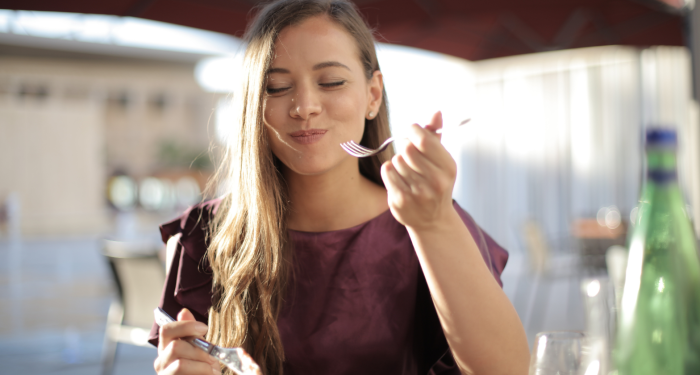
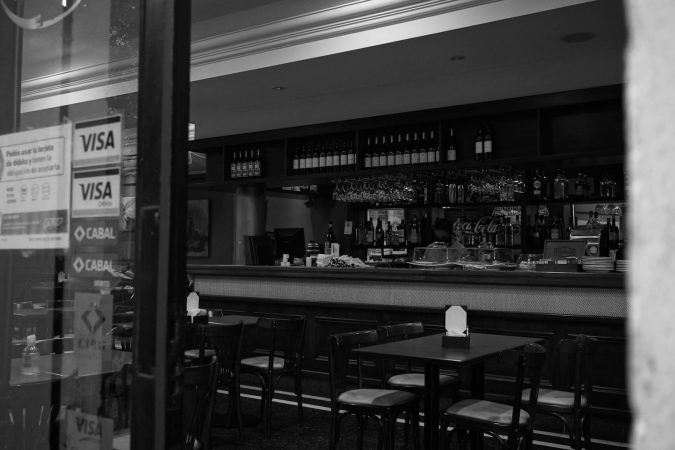
The man at the corner table at Gjelina last Thursday had a glass of natural wine, a half-eaten bowl of squash, and absolutely nothing else. No phone face-up next to his fork. No paperback splayed open. No notebook, no AirPods, no menu he was pretending to still need. He was just chewing, looking out at Abbot Kinney, occasionally watching the bartender shake something. He stayed about ninety minutes. He did not perform being okay. He just was.
I noticed because almost nobody eats like that anymore.
The conventional read on solo diners is that they are either deeply lonely or deeply enlightened, and both takes miss what is actually going on. Most people eating alone in public are doing something more interesting: they are managing a small, low-grade social anxiety with whatever tools their pocket provides. The phone is the most common tool. The book is the most respectable. The laptop is the most professional. They all do the same job.
They give you something to be doing other than existing.
The shield in your pocket
There is a clinical term for this in anxiety research, and it is unflattering. It is called accommodation. Anxiety researchers at Baylor College of Medicine describe accommodation as the small adjustments we make to help ourselves or someone we love avoid feeling anxious in the moment. Most of the literature focuses on parents accommodating anxious kids. But adults do it to themselves constantly. The phone at dinner is a self-accommodation. So is the book. So is the work email you suddenly need to answer the second the waiter walks away.
The thing about accommodations is that they work, which is what makes them sticky. Avoidance behaviors get woven so deeply into daily life that the people doing them often cannot see them anymore. You do not feel like you are hiding — you feel like you are catching up on email. Pull out a phone in any restaurant in America right now and watch how the body relaxes. Shoulders drop. Breath deepens. The unbearable question of what they're supposed to be doing with their hands and face disappears, because now you have a job. You are reading. You are scrolling. You are, crucially, occupied.
The man at Gjelina did not need to be occupied.
What gets earned, not chosen
Here is where the title of this piece gets its weight. The capacity to sit alone in public without armor is almost never a personality trait. It is almost always an aftermath.
People who can do it usually have a story. Sometimes it is a divorce. Sometimes it is a year of grief that taught them silence is survivable. Sometimes it is a stretch of unemployment, or a stretch of caregiving, or a stretch of recovery from something they do not bring up at parties. Sometimes it is just turning fifty and realizing nobody is watching as closely as you thought they were.
Whatever the door was, they walked through it, and on the other side they discovered something the rest of us suspect but have not tested: that being alone with yourself in a room full of strangers is not actually dangerous. It is just unfamiliar.
Solitude becomes most generative when people stop running from it. Resilience isn't just about bouncing back — it is about growing wiser and more compassionate as we move through losses and changes. The space where that growth happens is, almost always, time alone.
Most of us never give ourselves that space on purpose. Life hands it to us.
Why the phone makes it worse
There is a weird feedback loop here that has started to emerge. The more we use phones to manage social discomfort, the worse the social discomfort gets when we do not have them. Problematic smartphone dependence is significantly linked to social anxiety, especially in younger women. The phone does not just respond to the anxiety. Over time, it amplifies it.
Constant interruption and the desire to be entertained twenty-four hours a day rewires our baseline tolerance for stillness. Boredom becomes intolerable. Silence becomes loud. The act of just sitting becomes something the nervous system reads as a threat instead of a rest.
Which means the man at Gjelina was not just doing something rare. He was doing something his nervous system had been specifically trained, by years of life experience, not to flinch from.
Loneliness vs. solitude
The difference between the two is the entire ballgame. The shift from loneliness to solitude is something that has to be confronted rather than escaped. It is the moment when someone stops trying to outrun their loneliness and starts sitting with it instead. What they find on the other side is not the absence of being alone. It is a changed relationship to it.
This is what the solo diner without a phone is demonstrating. Not that they are above company. Not that they prefer their own thoughts to other people's. Just that the experience of being alone has stopped registering as an emergency.
There is a difference between people who genuinely enjoy their own company and people who have just gotten used to being alone, and the comments section turned into a fascinating split between readers who recognized themselves in one camp and readers who got defensive about the distinction. The defensiveness, I think, was the giveaway. The people who actually enjoy their own company do not have to argue for it.
The performance problem
Here is what I find quietly funny about the whole thing. The book and the phone and the laptop are not really about the diner. They are about the imagined audience.
The fear is not that they will be bored. The fear is that they will look pathetic. There is a phantom observer at the next table judging whether you have somewhere to be, somebody who texts you, a life that justifies your presence at this restaurant alone.
The phantom observer does not exist. Or rather, the phantom observer is also looking at their phone, worrying about their own phantom observer.
The whole dining room is a hall of mirrors of people performing okay-ness for an audience that is not watching.
The person without armor has, somewhere along the way, stopped believing in the audience. That is the through-line. Not confidence. Not introversion. Not even self-love, exactly. Just the dropped belief that anyone is keeping score.
Why this matters beyond restaurants
The reason I keep thinking about this is that the restaurant is just the visible version of something happening everywhere. The capacity to be alone with yourself, without a tool to mediate the experience, is a load-bearing skill for almost everything good in adult life.
It is the skill that lets you sit with a hard feeling instead of numbing it. It is the skill that lets you be in a relationship without needing the other person to constantly entertain you. It is the skill that lets you make decisions that are actually yours, rather than decisions assembled from other people's voices in your head.
It is also, weirdly, the skill that makes you better at being with other people. The friends I find most restful are the ones who do not need me to fill silences. They can sit. They can let a conversation pause without rushing to patch it. They are not auditioning, and so I do not have to audition either. Meal sharing with people like that becomes a different thing. It becomes ritual. Connection. The food is almost incidental.
The man at Gjelina probably did not start there. Almost nobody does. He probably started by being forced into his own company by something he did not choose, and slowly, over time, learned that the room he was so afraid of being trapped in turned out to be livable.
That is what I read on him from across the restaurant. Not serenity. Not enlightenment. Just the quiet posture of someone who had already met the worst version of being alone, and had found out it was survivable, and had come out the other side able to enjoy a bowl of squash without needing to prove anything to anyone, including himself.
Which, if you think about it, might be the most underrated form of freedom there is.