After decades of being everyone's emergency contact and go-to helper, she discovered that her phone only rang when people needed something—until the day she buried her husband and the silence taught her the difference between being useful and being loved.
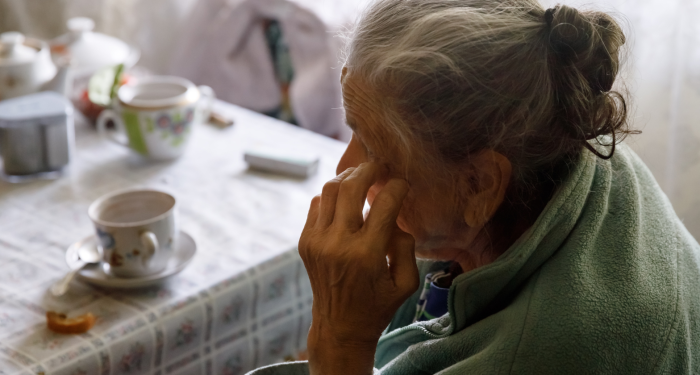
Last weekend at the library, I overheard two younger women discussing an elderly patron who always sits alone. "How sad," one whispered, "to have no friends at her age. She must be difficult to be around." I wanted to tell them what I've learned after decades of teaching, loving, and losing: that small circle isn't a character flaw. It's often the badge of someone who finally stopped bleeding themselves dry for people who only showed up when they needed something.
When giving becomes a one-way street
I think about my teaching years often. For 32 years, I was everyone's emergency contact, the teacher who never said no. Parent needs a last-minute conference? I'll skip lunch. Colleague needs coverage? I'll sacrifice my prep period. Drama club needs a sponsor? I'll give up my Saturdays. I convinced myself this was love, this constant availability. What I didn't realize was that I was teaching people how to use me, not how to love me.
Emotional neglect can make closeness feel unsafe, even when you deeply want connection. For years, I didn't understand why genuine intimacy felt so threatening. I was comfortable being needed but terrified of needing. So I built relationships where I was the giver, the helper, the strong one. It felt safer that way.
After my husband passed two years ago, the phone stopped ringing. The colleagues I'd covered for, the parents I'd helped, the friends I'd counseled through their divorces - they vanished like smoke. At first, I blamed myself. What had I done wrong? Was I suddenly unlovable because I was grieving, because I needed support instead of providing it?
The difference between being needed and being valued
Have you ever noticed how some friendships only flow in one direction? You're always the one calling, planning, reaching out. You tell yourself they're just busy, that their silence doesn't mean anything. But after my husband died, I had six months where I could barely leave the house. Out of dozens of "friends," exactly five people checked on me. Five. That silence taught me more about relationships than any psychology textbook ever could.
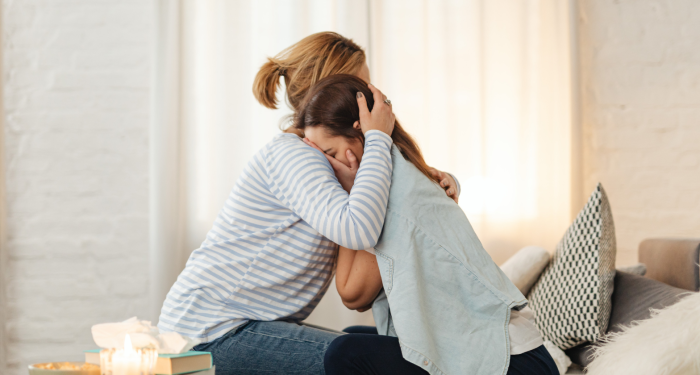
During those dark months, I discovered something profound: being useful isn't the same as being loved. All those years, I'd mistaken utility for connection. People loved what I could do for them - watch their kids, bring casseroles, offer advice. But when I needed someone to simply sit with me in my grief, when I couldn't be the strong one anymore, they didn't know what to do with that version of me.
Research supports what I learned the hard way. A study examining loneliness and mortality in older adults found that both loneliness and social isolation are significant risk factors for mortality, with social isolation having a stronger association with increased risk. But here's what the research doesn't always capture: sometimes that isolation is a choice, a boundary finally drawn after decades of depletion.
Learning the art of the closed door
I remember the exact moment I stopped chasing one-sided friendships. It was a Thursday morning, about a year after my husband's death. I'd called a friend - someone I'd helped through her divorce, whose children I'd tutored for free - to see if she wanted to have coffee. She said she was too busy but maybe next month. That was the fourth "next month" in a row. I hung up the phone and made a decision: I was done knocking on doors that never fully opened.
Does this sound harsh? Maybe. But after seven decades of life, I've earned the right to be selective with my energy. My Sunday calls with my daughter are sacred now. Thursday coffee with my neighbor happens rain or shine. My widow's support group has become something I never expected - genuine friendship with women who understand that showing up matters more than showing off.
I wrote about this transformation in a previous piece about finding purpose after loss. What I've discovered is that purposeful solitude feels entirely different from lonely isolation. Loneliness is being surrounded by people who don't really see you. Solitude is choosing your own company over relationships that drain you. There's profound freedom in that choice.
The healing power of intentional connection
These days, my life might look small to outsiders. I wake at 5:30 AM to write in my journal, tend my garden before the heat arrives, spend afternoons reading. My phone doesn't ring constantly. My calendar isn't packed with obligations. But this isn't emptiness - it's intentionality.
A systematic review found that various interventions, including multicomponent programs, exercise, and therapy, are associated with reductions in loneliness among older adults. But you know what's helped me more than any program? Finally understanding that quality matters more than quantity when it comes to relationships.
My volunteer work at the shelter connects me with purpose rather than obligation. The women in my supper club show up without performance or pretense. We've stopped trying to impress each other. We just exist together, and that's enough. Actually, it's more than enough - it's everything I was looking for in all those exhausting friendships that demanded so much and gave so little back.
Rewriting the narrative of worth
Why do we assume that someone with few friends must be difficult or unlovable? This narrative haunts so many of us as we age, especially women who were taught that our value lies in what we provide for others. We were the caregivers, the helpers, the ones who held everything together. And when we finally set down those roles, when we stop being useful in the ways people expect, we're suddenly invisible.
But here's what I know now: those of us with small circles in our 60s and 70s aren't the difficult ones. We're often the ones who gave too much for too long. We're the ones who confused being needed with being loved. We're the ones who finally learned that real friendship doesn't require us to disappear in order to be seen.
I think about that woman in the library, the one those young women pitied. Maybe she's not lonely at all. Maybe she's selective. Maybe she's learned what took me decades to understand: that ten surface-level friendships don't equal one authentic connection. Maybe her small circle isn't a failure but a carefully curated choice.
Final thoughts
At 70, I'm not unlovable. I'm discerning. The small circle I maintain - my children, a handful of true friends, my community connections - these relationships are real in ways my previous broad network never was. They don't require me to perform or prove my worth through usefulness. They simply require me to show up as myself.
If you're reading this and recognizing your own story, know this: your small circle isn't a verdict on your worth. It's evidence of your growth. Every relationship that fell away when you stopped overgiving was revealing its true nature. The few that remained? Those are the ones that matter. Those are the ones where love doesn't require exhaustion, where your presence is enough, where you're valued for who you are rather than what you provide. That's not isolation. That's liberation.