A perfectly organized drawer amid household chaos isn't incomplete tidiness—it's a deliberate sanctuary. Psychologists explain why people create one small space of total control when everything else feels overwhelming.
The neat drawer in a messy home is not a contradiction. It is a confession.
Most organizing advice treats this kind of person as a half-finished project, someone who got the spice rack right and just needs to apply the same logic to the closet, the desk, the entryway pile of unopened mail. The conventional wisdom assumes that order wants to spread, that the tidy drawer is the seedling and the rest of the apartment is fallow ground. What the research on perceived control actually suggests is something closer to the opposite. The drawer isn't a beginning. It's a destination.
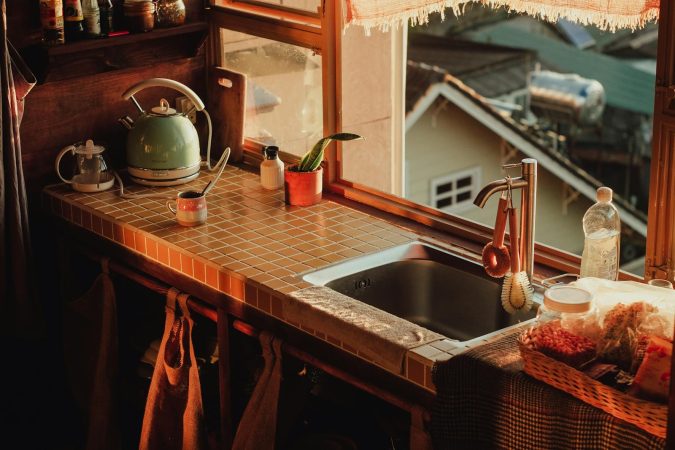
I notice these drawers in friends' apartments the way some people notice art on the wall. The kitchen counter is buried under mail and a half-dead basil plant, but pull open the drawer beside the stove and there they are: tea bags sorted by caffeine level, rubber bands grouped by size, a small ceramic dish holding exactly the safety pins a person could need in a lifetime. Meanwhile the dining table is a layered archaeology of receipts.
This is not a personality flaw. It is a regulation strategy.
The drawer as a thermostat
Locus of control describes the degree to which a person feels they can influence what happens to them. Someone with an internal locus believes their actions shape outcomes. Someone with an external locus tends to credit luck, circumstance, or other people. Most of us live somewhere on the spectrum, and where we sit can shift depending on the domain — confident at work, helpless about money, in charge of our health, at the mercy of our family dynamics. This framework is still one of the most cited ideas in personality psychology, partly because it explains so much about why people react so differently to the same stressful situation.
Then there is compensatory control theory. The argument: when people feel they have lost control in a domain that matters to them, they unconsciously seek to restore a sense of order somewhere — anywhere — they can. The mind doesn't tolerate the feeling of randomness for long. It will reach for structure even in places that have nothing to do with the original source of distress.
The perfectly organized drawer, in this reading, is a thermostat for the nervous system. The rest of the apartment is the weather.
Why the drawer gets chosen
Physical spaces aren't neutral backdrops. They function as external regulators of our internal states. A space we have shaped to our exact specifications gives back a particular signal — I made this, and it stayed made — that's hard to manufacture from inside the head alone.
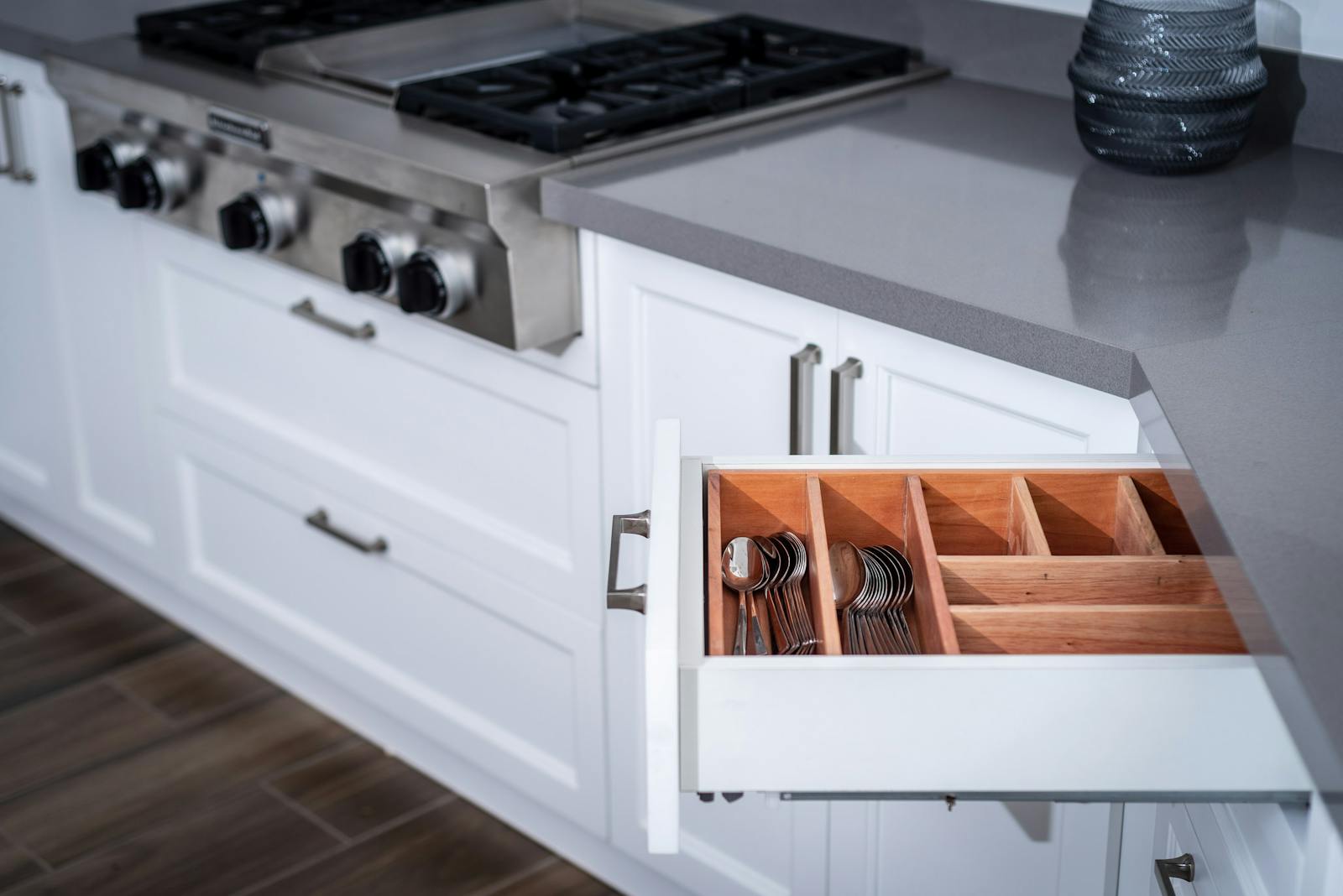
The drawer wins out over the room for practical reasons. A drawer is small enough to perfect in twenty minutes. It closes, which means entropy can't easily creep back in. It doesn't require negotiating with a roommate or a partner about what counts as clutter. And critically, it stays the way you left it. The rest of the apartment is in conversation with weather, mail carriers, deliveries, other people's habits, the small daily violences of living. The drawer is a sealed system.
This matters because our sense of control affects our capacity to handle stress. When people feel more in control of their stressors, they're more likely to actually resolve them. The effect appears to strengthen with age, suggesting that perceived control is something we can build, not something we are simply born with or without.
The phrase pockets of control is almost too perfect. The drawer is exactly that — a pocket.
What the drawer is really doing
If you live with a chronically stressful job, an unpredictable family member, a body that does things you didn't ask it to do, a city that keeps getting more expensive, or a news cycle that resists comprehension — and most of us are living with some combination of these — the drawer is doing real work. It is one place where cause and effect still behave the way you were promised they would as a child. You put things in. They stay. You open the drawer. They are still there.
That sounds small. It isn't. The opposite of stress is not relaxation; it is agency. During the pandemic, people who maintained a sense of agency over even small domains of their lives — what they ate, how they exercised, how they structured their day — fared significantly better psychologically than those who felt globally swept along by events. The people who improvised sourdough rituals and reorganized their linen closets weren't being trivial. They were medicating themselves with the only thing that works: small, repeatable evidence that their actions still shaped their environment.
Why it doesn't spread
Here is the part that organizing influencers tend to miss. The drawer's power depends on its containment. If the whole apartment got organized, the drawer would lose its function. It is precious because it is the exception, not the rule. The chaos around it is not a failure of willpower; it is the contrast that makes the drawer mean something.
This is also why the standard advice — just apply the same system to the rest of the house — tends to fail. Scaling up the drawer would require scaling up the available time, energy, and emotional bandwidth of a person who is already, presumably, allocating most of those resources to surviving whatever else is happening in their life. The drawer is a triage decision, not a starter project.
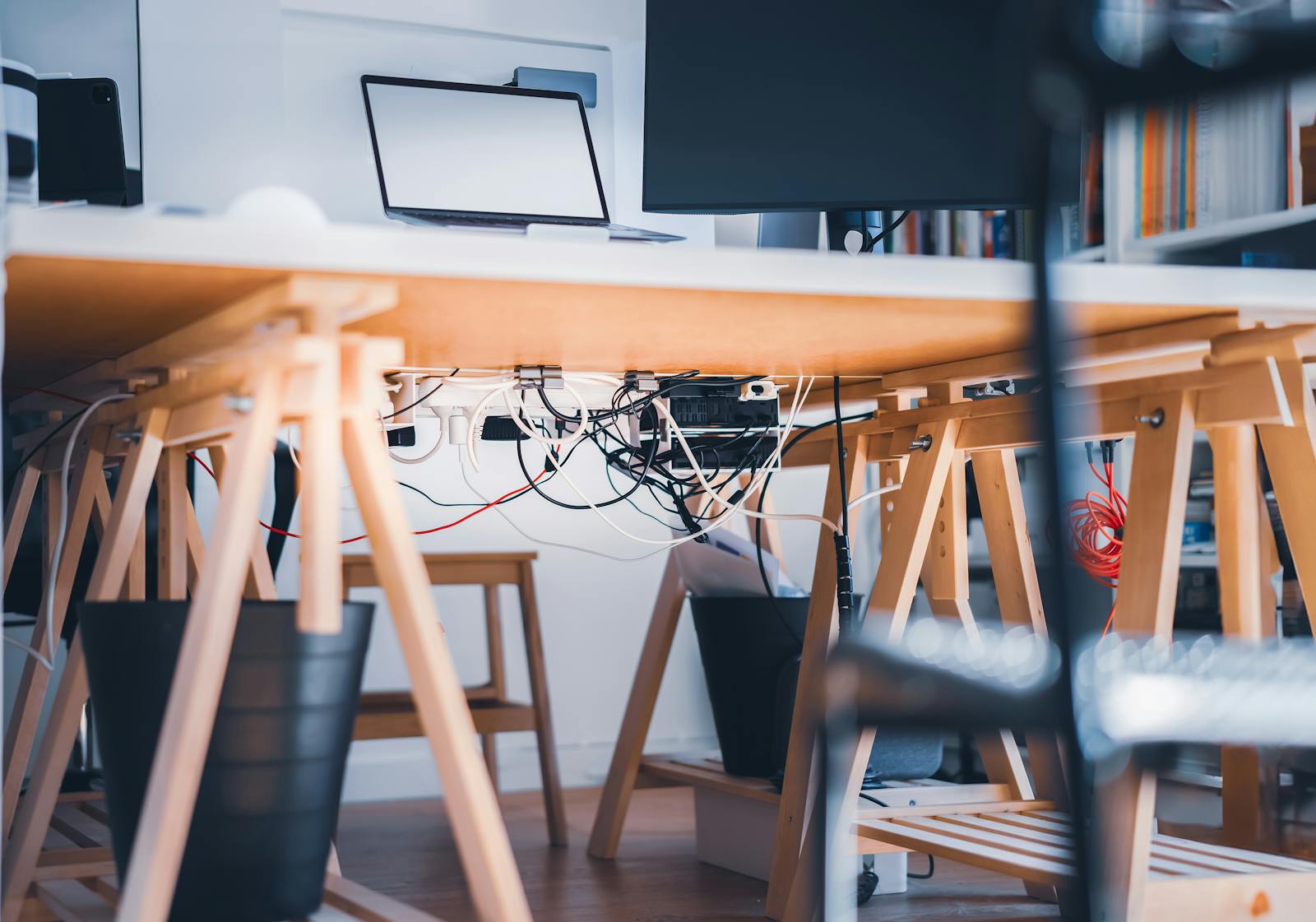
I think about this when I look at my own apartment. I share it with my best friend from college, and our shelves are a small civilization of books we've each read twice, plants in mismatched pots, a leather jacket I bought when I was nineteen and still wear, flea market plates that don't match anything. Sustainability, for me, has always meant keeping what you have rather than buying the next clean version of it. Which means our place is full. Which means it is, on most days, slightly chaotic. But the kitchen drawer beside the stove is something else entirely — tools inherited from my mother and my grandmother, each in its place, organized by material rather than function. That drawer is not an organizing project. It is a piece of psychological furniture.
The personality question
One thing worth taking seriously: doesn't this make these people contradictory? Tidy here, messy there — surely that's just inconsistency dressed up in psychology language?
The honest answer is that personality psychology has moved past the assumption that consistency across contexts is the marker of a coherent self. Behavior varies by situation, and what looks like contradiction usually reflects something more interesting: a person responding rationally to the specific demands of different domains. Someone might be ruthlessly organized at work and laissez-faire at home because work punishes disorder and home rewards spontaneity. The behavior changes. The underlying logic — meet each environment on its terms — stays consistent.
The drawer-keeper isn't contradicting themselves. They are doing exactly what the research on stress regulation suggests works.
How to read your own drawers
If you are the person with the immaculate sock drawer and the catastrophic kitchen, it might be worth asking what the drawer is compensating for. Not in a pathologizing way. In a curious way. What domain of your life is currently feeling out of your hands? The answer might tell you more than any productivity system.
And if you are tempted to feel guilty about the rest of the apartment, consider: the drawer is evidence that you are capable of order. You have simply made a quiet, mostly unconscious decision about where to spend that capacity. The fact that the rest is messy doesn't undo the drawer. It explains it.
Other small forms of agency do similar work. Regular movement is a more bodily version of the same idea — a controllable input that produces predictable outputs in a system (your mood, your energy) that often feels like it has a mind of its own. So is cooking the same breakfast every day. So is the bedtime routine you don't skip. So is the one plant you actually keep alive.
This connects to something I've been thinking about a lot lately, which is the kind of quiet self-knowledge people tend to develop later in life. In a recent piece I wrote about people over 50 who stop explaining themselves, the underlying mechanism is similar: a willingness to stop performing coherence for an audience and just live according to what actually works. The drawer is a younger version of that. A small, private declaration that this part is mine, and this part I keep.
The drawer as practice
Perceived control isn't a fixed trait. It fluctuates day to day, and it can be strengthened through practice — focusing on what's within reach, breaking large challenges into smaller steps, ending the day with a brief reflection.
The drawer, viewed generously, is already that practice. It is the smallest possible unit of I can. The fact that it sits inside an apartment otherwise resistant to organization isn't the problem the drawer is trying to solve. It's the reason the drawer exists in the first place.
Some people meditate. Some people run. Some people keep one drawer perfectly organized in an apartment that is otherwise a beautiful, lived-in mess. The mechanism is the same. The drawer is just quieter about it.