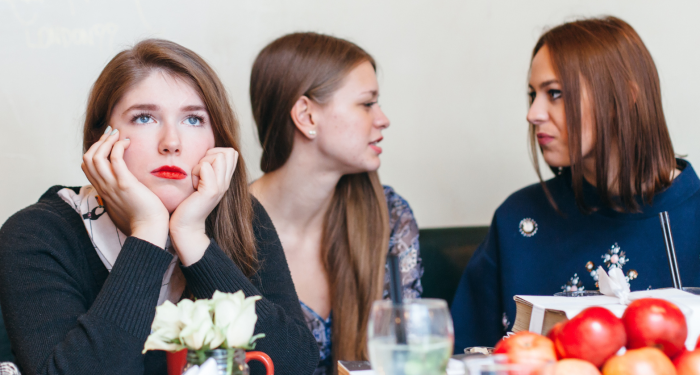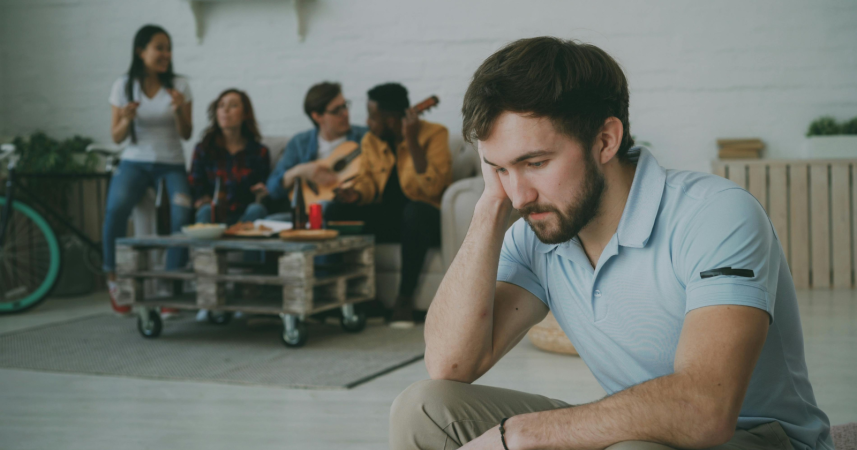
For years I believed everyone else had been secretly handed a social instruction manual at birth while I stood at the edge of conversations, desperately trying to decode the invisible choreography that seemed to come so naturally to others.
There's a moment at every gathering when I catch myself doing the math. How long have I been standing here? Is this the third time I've nodded? Did I laugh before the punchline or after? Somewhere across the room, someone is telling a story with their whole body, and the listeners are leaning in without calculation, and I am calculating.
That specific brand of loneliness hits different. It's not just being alone. It's watching the world operate on frequencies you can't quite tune into, no matter how hard you try to adjust the dial.
I've been thinking about this a lot lately, partly because of a conversation with someone who described their social anxiety as "being the only person at the dance who doesn't know the steps." That metaphor stuck with me. Because here's what nobody talks about: millions of us are faking those steps, hoping nobody notices we're improvising.
The myth of the social manual
Let me tell you something that took me years to figure out: there is no manual. That secret handbook you think everyone else got? It doesn't exist.
Sure, some people seem naturally gifted at reading rooms and working crowds. They glide through networking events like they were born with a glass of wine in one hand and a business card in the other. But even they learned through trial and error, through awkward moments they've conveniently forgotten.
I've mentioned this before, but behavioral science shows us that most social "rules" are actually just patterns we've collectively agreed upon. They vary wildly across cultures, generations, even friend groups. What passes for normal banter in my Los Angeles creative circles would be completely foreign in the suburban Sacramento neighborhood where I grew up.
The real kicker? Everyone's making it up as they go along. Even the social butterflies have moments of panic, wondering if they just said something weird or laughed too loud or stayed too long at someone's table.
Why poor social skills feel like a life sentence
When you struggle socially, every interaction becomes a minefield. You rehearse conversations before they happen. You analyze them for hours after they end. Did I talk too much about myself? Not enough? Was that pause too long? Why did they look at their phone?
This exhaustion isn't just mental. Research from UCLA shows that social rejection activates the same pain centers in our brain as physical injury. Our bodies literally hurt from social missteps, real or imagined.
The cruel irony is that the more we worry about our social performance, the worse we tend to perform. It's like trying to fall asleep by concentrating really hard on falling asleep. The effort itself becomes the obstacle.
You start declining invitations because the stress isn't worth it. You leave events early, before you can "mess up." You build walls to protect yourself from judgment that may or may not even exist. And slowly, that specific loneliness deepens into something more permanent.
The comparison trap that makes everything worse
Social media has weaponized our social insecurities in ways we're only beginning to understand. You see highlight reels of effortless friendships, spontaneous adventures, inside jokes you'll never be part of.
What you don't see are the awkward silences between photos. The events where nobody really clicked. The group chats that die after three messages. Everyone curates their social success and hides their social failures.
I learned this the hard way during my aggressive vegan evangelist phase. For three years, I was that guy who turned every dinner into a moral battlefield. I ruined my friend Sarah's birthday dinner once — transformed what should have been a celebration into a twenty-minute lecture about factory farming while the cake sat there melting. Years later, I still apologize for it.
Here's what's interesting, though: I thought I was being socially conscious and engaging. I genuinely believed I was contributing something valuable. It wasn't until much later that I realized I'd been so focused on my message that I'd completely missed the social cues screaming at me to stop.
The skills nobody teaches but everyone expects
Think about how bizarre our social education is. We spend years learning algebra we'll never use, but nobody formally teaches us how to enter a conversation already in progress. Or how to gracefully exit one that's dying. Or what to do with our hands at a standing reception.
These micro-skills matter more than we admit. How do you show interest without seeming creepy? How do you disagree without creating conflict? When is it appropriate to share personal information, and how personal is too personal?
Most of us learned through osmosis and observation, picking up patterns without conscious awareness. But what if you're not naturally wired to notice those patterns? What if your brain processes social information differently?
The expectation that everyone should "just know" these things is, frankly, lazy. We don't expect people to intuit music theory or tax law. We teach those things. Social fluency gets left to chance, and then we act surprised when a quarter of the room looks miserable at the cocktail hour.
Finding your people (even when people are hard)
Here's something I've noticed: the people worth knowing don't actually care if you're smooth. They care if you're genuine.
The best conversations I've had weren't with social maestros. They were with people who stumbled over their words while sharing something they actually cared about. Who forgot the "right" way to network because they got excited about an idea. Who admitted they felt awkward too.
There's profound relief in finding someone else who doesn't quite fit the mold. Someone who also replays conversations at 2 a.m. and worries about their laugh and feels like they're performing humanness rather than just being human.
These people exist. They're probably sitting at home right now, convinced they're the only ones who struggle. They're declining invitations and prebooking excuses to leave early and wondering why everyone else makes it look so easy.
What actually helps (beyond empty platitudes)
Can we skip past the "just be yourself" advice? If being yourself was working, you wouldn't be reading this.
What actually helps is understanding that social skills are exactly that: skills. They can be learned, practiced, improved. Not to become someone else, but to become a version of yourself that can navigate the world with less friction.
Start small. Practice one micro-skill at a time. Maybe it's maintaining eye contact for three seconds before looking away. Maybe it's asking one follow-up question in every conversation. Maybe it's staying five minutes longer than you want to at the next event.
Find low-stakes environments to practice. Coffee shops where you'll never see anyone again. Online communities where you can edit before hitting send. Volunteer work where the focus is on the task, not the socializing.
Find your format. Maybe you're terrible at parties but great one-on-one. Maybe you need an activity to anchor social interaction. Maybe you communicate better in writing than speech. There's no rule saying you have to be good at all forms of social interaction.
Wrapping up
The script you think everyone else has? They're improvising too. But that doesn't make your struggle a trick of the light, and I'm tired of the reassurance industry pretending it does. Some people really do find this harder. The cost is real. The exhaustion is real. The invitations you didn't send are real.
What I can't tell you is whether it gets easier or whether you just get better at carrying it. I've known people who grew into social ease in their forties, and people who stopped trying and seemed, in their own quiet way, relieved. I don't know which version is waiting for you.
What I do know is that the edge of the room has its own geography. You notice things from out there. Whether that's a consolation or a life sentence depends on the night, the room, and how long you've been standing there doing the math.