Grown up lower middle class? You've probably developed an almost supernatural ability to detect which luxury items in someone's home are genuine and which are carefully curated performances—and you've learned never to mention it.
You walk into a friend-of-a-friend's apartment for a dinner party and within about ninety seconds you've clocked it: the Le Creuset on the stove is the real one, but the kitchen island it's sitting on is veneer that's already lifting at the edge near the sink. The art on the wall is a framed print from a museum gift shop, not the original the hosts keep gesturing toward when they reference what they call their collection. The wine glasses are heavy and beautiful. The couch, when you sit on it, sags in a way that tells you it's been holding up this performance for years.
You don't say anything. You never say anything. But you know.
People who grew up lower middle class tend to develop this particular form of perception early, and they rarely talk about it because talking about it feels cruel. The conventional wisdom is that money is invisible until it's flaunted, and that people mostly can't tell the difference between old wealth, new wealth, and wealth-adjacent striving. That's not quite right. Most people can't tell. But a specific group of people can, and they've been reading rooms this way since they were about eleven years old.
Where the skill comes from
Children raised in households where money was tight but not desperate learn to notice things other kids don't. They learn it because the gap between what their family had and what their friends' families had was small enough to be confusing but large enough to matter. A kid in real poverty knows where they stand. A kid in real wealth rarely has to think about it. A kid in the middle spends a lot of time doing math.
That math becomes a sensory skill. You start reading the weight of a dinner plate, the draft around a window in winter, the specific smell of a house where the HVAC runs without anyone worrying about the bill. These aren't things you decide to notice. They become as automatic as recognising faces.
Studies suggest that socioeconomic pressure can sharpen certain forms of observational attention in children. A report from the Thomas B. Fordham Institute found that family socioeconomic status is strongly associated with various early academic gaps. But academic gaps are only the visible measure. Kids are doing other kinds of learning too, much of it unmeasured and largely invisible to the adults around them.
The cortex doesn't tell you everything
It would be easy to frame this as a gift, but that would be dishonest. The same environmental pressure that produces the skill also produces costs. Research has found that childhood poverty is associated with differences in brain structure, including reduced cortical surface area in regions that support cognitive skills. Children from lower-income families often develop present-focused thinking and face challenges with stress coping mechanisms.
So the sharpened perception isn't a clean upgrade. It's a trade. You get an instinct for authenticity in material things, and you pay for it with a baseline vigilance that doesn't turn off easily in adulthood.
Research has found that financial precarity pushes people toward meeting immediate needs and makes them more averse to risk. When you scale that down to a nine-year-old at a birthday party, you get a kid who is very quietly cataloguing which families have which versions of what, and filing it away for reasons they couldn't articulate if you asked.
What borrowed comfort actually looks like
Borrowed comfort is a specific aesthetic, and once you know it, you see it everywhere. It's the giant television in the small apartment. It's the luxury car parked outside the house with the roof that needs replacing. It's the designer handbag on a friend who asked you last month if you could Venmo her for groceries.
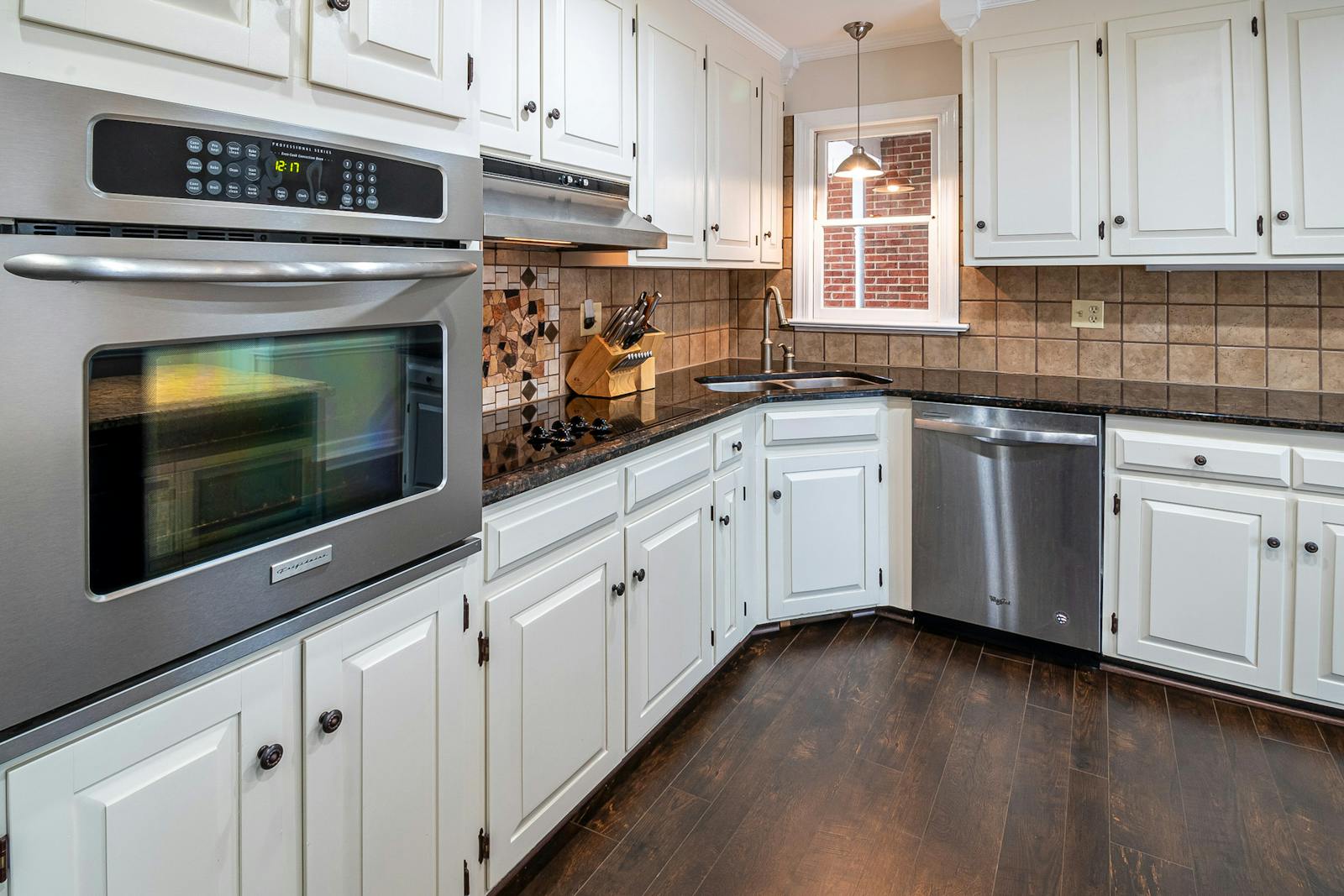
It's also much subtler than that, and this is the part that people miss. Borrowed comfort shows up in the things that almost work. The kitchen renovation that skipped the range hood. The expensive paint on drywall that hasn't been prepped properly. The linen sheets on a mattress that's ten years past retirement.
Real comfort, by contrast, is boring. It's infrastructure. It's a water heater that makes no sound. It's a thermostat nobody argues about. It's the quiet, unshowy competence of systems that have been maintained for a long time by someone who had the money to maintain them.
People who grew up in households where the infrastructure was always slightly failing learn to hear silence as luxury. A fridge that doesn't hum. A floor that doesn't squeak. A toilet that flushes on the first try every time. These are the markers most people never consciously register, because most people who have them have always had them.
Why the skill stays quiet
The instinct gets honed, and then it gets hidden. Nobody announces what they're noticing. There's no social benefit to telling your hosts that you can see the particleboard behind the marble contact paper. The skill exists almost entirely as private information.
This is where it connects to something I wrote about recently: the way people from lower middle class backgrounds quietly sort expenses into "worth it" and "disguise" without ever explaining their system to anyone. It's the same muscle. The ability to read other people's homes is just the outward-facing version of the ability to audit your own.
There's a reason for the silence. Naming the skill would require naming the class dynamics that produced it, and most people who have it were raised to not make those dynamics the subject of conversation. You notice. You don't mention. That's the whole code.
Environmental sensitivity, but with receipts
Psychologists sometimes describe a trait called high environmental sensitivity, which involves acute physical, mental, and social awareness of surroundings. Researchers have studied this for decades. The trait is usually framed as temperamental: some people are just born more sensitive to stimuli.
But sensitivity can also be cultivated by circumstance. A child who grew up needing to read a room before asking for new shoes develops a very specific subcategory of environmental sensitivity, one tuned almost entirely to signals of material status, household stability, and whether the adults around them seemed financially comfortable or financially performing.
That sensitivity doesn't evaporate in adulthood. It just changes targets. The adult version reads dinner parties, first dates, open houses, and coworkers' Instagram stories with the same instrument the child used to read their cousin's bedroom.
Class consciousness without the theory
None of this requires any political framework to operate. Most people who have this skill have never read a word of class theory. They're not thinking about theorists or about the broader question of what class consciousness means as a political concept. They're just noticing that their friend's new kitchen cost more than their own car, and adjusting their expectations about what kind of gift to bring.
The lived version of class awareness runs on pattern recognition, not ideology. It's accumulated data. It's the reason a person from this background can walk into a house and tell you, without quite knowing how they know, whether the family that lives there is stable or stretched.
The cost of always knowing
There's a loneliness to this skill that doesn't get talked about much. When you can see through the presentation, you end up carrying information about people that they didn't mean to give you. You know which friends are doing fine and which ones are one bad month away from trouble. You know which hosts are showing you their life and which ones are showing you a set they built for the evening.
That knowledge doesn't make you superior. It mostly makes you tired. You spend a lot of energy not reacting to things, not asking the obvious question, not flinching when someone describes a renovation you can see was done on a credit line they can't comfortably service.
And you learn, eventually, to be kind about it. Because borrowed comfort is almost always a sign that somebody is trying very hard to give their family something they didn't have. The particleboard behind the contact paper is usually love, expressed imperfectly, by a person doing their best with the resources they have.
What the skill is actually for
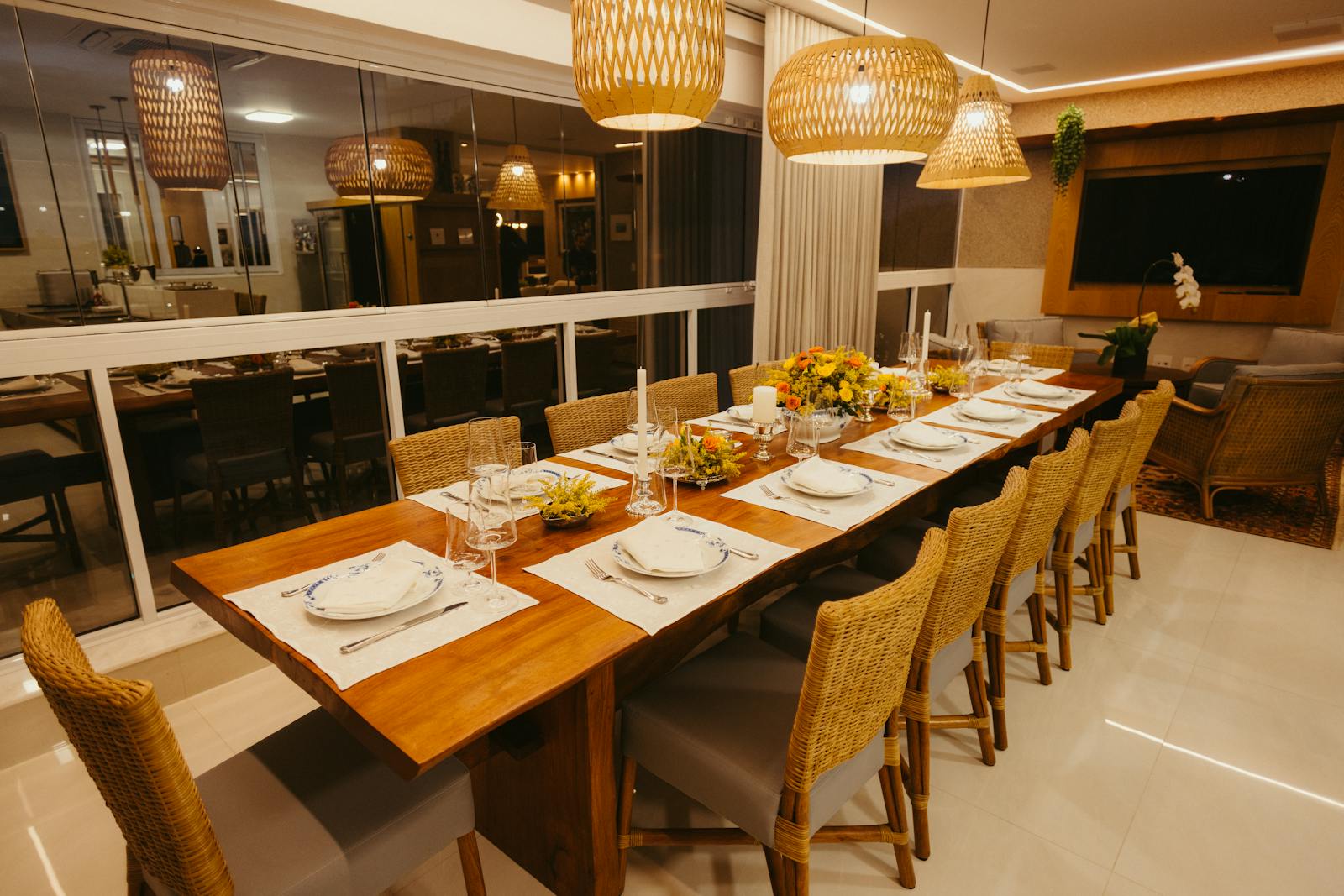
The useful thing about this particular form of perception is that it's portable. It works on homes, but it also works on companies, relationships, self-presentation, and the wellness industry. Once you've learned to tell the difference between real and borrowed comfort in a kitchen, you can apply the same test to almost anything.
You can tell when a brand's sustainability commitment is infrastructure and when it's contact paper. You can tell when a friend's confidence is grounded and when it's a performance that's costing them. You can tell when a restaurant is charging for quality and when it's charging for the lighting.
A lot of the way social class shapes adult identity is precisely this: you carry your childhood's measuring instruments into every room you enter for the rest of your life. You can't put them down. You don't really want to.
But here's the question nobody with this skill likes to sit with for too long: what kind of childhood hands a nine-year-old an instrument like this? The perception gets romanticised in retrospect, called intuition or emotional intelligence or street smarts, as if it were a gift the universe thoughtfully distributed. It wasn't. It was a response to pressure. Somebody's small nervous system learned to scan every room for threat and status because the adults around them couldn't afford to stop scanning either.
And the scanning never really ends. You walk into your own living room, the one you pay for now, the one nobody can take from you, and you still catch yourself doing it. You still notice the seam where the floor meets the wall. You still register the sound the fridge makes. Somewhere under the private literacy and the hard-won kindness is a child who never got to walk into a room and just be in it, and the honest question isn't what the skill is for. It's what it cost, and whether the people who have it would trade it back if they could.