She discovered the true cost of her six-year marriage not in the divorce settlement at 28, but in the quiet moments decades later when she couldn't answer simple questions about what she wanted, couldn't remember how to laugh without permission, and kept meeting the ghost of who she might have been in doorways she'd never walk through.
There's a photograph on my bookshelf from 1978. A young woman in a floral dress stands slightly behind her husband, her smile careful, measured, as if she'd practiced it in the mirror. Her hands are clasped in front of her, making herself smaller even in stillness. I barely recognize her anymore, though she wore my face for six years.
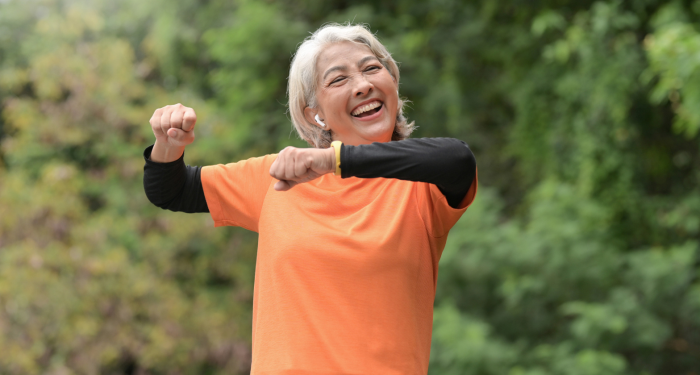
Next to it sits another photo from last week: me at 70, arms spread wide in my garden, dirt under my fingernails, laughing with my mouth wide open at something my granddaughter said. Between these two images lies the geography of a recovered self, mapped in decades rather than miles.
The arithmetic of abandonment
When people ask about the cost of self-abandonment, they expect numbers they can understand. Legal fees, therapy bills, starting over with nothing. But how do you calculate the price of learning to laugh quietly because someone found your real laugh "too loud"? What's the invoice for declining opportunities because your partner needed you to work while he pursued his goals?
I did the math recently. Six years equals 2,190 days of making myself smaller. If I'd saved just one authentic piece of myself each day, I'd have had enough to build a different life entirely. Instead, I spent those days becoming an expert at disappearing in plain sight.
The real accounting doesn't happen until much later. For me, it arrived in waves across decades. At 45, standing in front of my creative writing class, teaching teenagers to find their authentic voice while struggling to remember my own. At 50, when my second husband asked what I wanted for my birthday and I couldn't answer because twenty-two years after my divorce, I still didn't know how to want things without guilt. At 60, watching my daughter navigate her own difficult relationship, when she said, "Mom, I keep remembering what you told me about not pouring from an empty cup," and I realized I'd learned that lesson too late for myself.
The ghost in the doorway
Virginia Woolf wrote about the importance of having a room of one's own. What she didn't mention was how haunted that room becomes when you finally claim it, filled with shadows of the person you might have been.
Mine appears at unexpected moments. When I walk past the university. When I read poetry in The New Yorker and remember the manuscript I never submitted. When former students send me their published books and I think about the writing that lived in my drawer for years, too afraid to see daylight.
She's not angry, this alternate version of me. She stands in doorways I'll never walk through, patient and kind, like a teacher waiting for a student who will never arrive. The opportunities, the year abroad, the writing career. These weren't just opportunities; they were entire lives I didn't live.
The economics of recovery
Three years ago, I started volunteering at the women's shelter, officially teaching resume writing and interview skills. But between formatting guidelines and practice questions, I teach something else entirely: the true economics of self-abandonment and the compound interest of recovery.
"Leaving is just the down payment," I tell them, these women with bruises still healing, children clinging to their legs, fear and hope battling in their eyes. "The real work is learning to inhabit yourself again."
Recovery has its own timeline, resistant to rushing. At 40, I still flinched when anyone raised their voice. At 50, I still asked permission for things that didn't require it. At 60, I still felt guilty for being happy. Each decade brought its own reclamation project, like renovating a house that had been abandoned for years, discovering damage in unexpected places.
My second husband, who loved me through 25 years until Parkinson's took him, once said, "I wish I could have loved you when you were 22, before you learned to be afraid of yourself." I carry this wish like a smooth stone in my pocket, worn down by years of handling, a talisman against forgetting how much fear cost me.
Teaching what came too late
Have you ever noticed how we become teachers of the very lessons we needed most? Last month, my granddaughter, now 22, called me crying because her boyfriend said her ambitions were "intimidating." I could have given her platitudes about compromise and understanding. Instead, I told her the truth.
"Every time you make yourself smaller for someone else's comfort, you're putting a piece of yourself on layaway that you'll never be able to afford to get back. The interest rate is your own life, compounded daily."
She went quiet on the phone. Then: "Is that what happened to you, Grandma?"
"Yes," I said simply. "And it took me decades to pay off a debt I should never have incurred."
Two weeks later, she called to say she'd ended the relationship and accepted the job offer he'd wanted her to decline. I thought about my own declined opportunities, my own sacrificed possibilities, and felt something shift in the universe's ledger, a small balance restored.
The beautiful ruins
Here's what I need you to understand: I built a good life from the wreckage. Raised two children who know their worth. Taught thousands of teenagers over 32 years to find and trust their voices. Loved and was loved by a man who saw me completely. I tend an English cottage garden that blooms with stubborn beauty, have four grandchildren who will never learn to make themselves small for anyone.
But "good enough" and "could have been" live in different neighborhoods entirely. As I wrote in a recent post about purpose in later life, sometimes our greatest purpose becomes ensuring others don't repeat our most expensive mistakes. The woman I might have been is gone, dissolved the moment I chose someone else's comfort over my own possibility. But her ghost has become my teacher, showing me that every remaining day is one where I can choose differently.
Final thoughts
Yesterday, at the shelter, a woman about 35 asked me if it was worth it, leaving, starting over, trying to find herself again after years of erasure. I thought about sugarcoating my answer, but she deserved the truth.
"The bill for self-abandonment comes due in decades, not dollars," I told her. "You'll pay it in moments when you realize the person you could have been is standing in the doorway of a life you didn't live. But here's what I know at 70: late is infinitely better than never. The woman you become after choosing yourself, even if she costs you the woman you might have been, she's worth everything."
That young woman in the 1978 photograph paid a price I'm still calculating. But the woman in last week's photo, the one with dirt under her fingernails and joy on her face, she's teaching me that some payments, however late, are worth making. Even if the interest has been accumulating for decades. Even if the person you could have been has been waiting in the doorway for fifty years.
Especially then.
If You Were a Healing Herb, Which Would You Be?
Each herb holds a unique kind of magic — soothing, awakening, grounding, or clarifying.
This 9-question quiz reveals the healing plant that mirrors your energy right now and what it says about your natural rhythm.
✨ Instant results. Deeply insightful.
Marlene Martin
Marlene Martin is a retired high school English teacher who spent 38 years in the classroom before discovering plant-based eating in her late sixties. When her daughter first introduced her to the idea of removing animal products from her diet, Marlene was skeptical. But curiosity won out over habit, and what started as a reluctant experiment became a genuine transformation in how she thinks about food, health, and aging.
At VegOut, Marlene writes about nutrition, wellness, and the experience of embracing new ways of eating later in life. She brings a teacher’s instinct for clarity and patience to topics that can feel overwhelming, especially for readers who are just beginning to explore plant-based living. Her writing is informed by personal experience, careful research, and a belief that it is never too late to change.
Marlene lives in Portland, Oregon, where she spends her mornings reading research papers, her afternoons tending a modest vegetable garden, and her evenings knitting while listening to audiobooks. She has three adult children and two grandchildren who keep her honest about staying current.
More Articles by Marlene