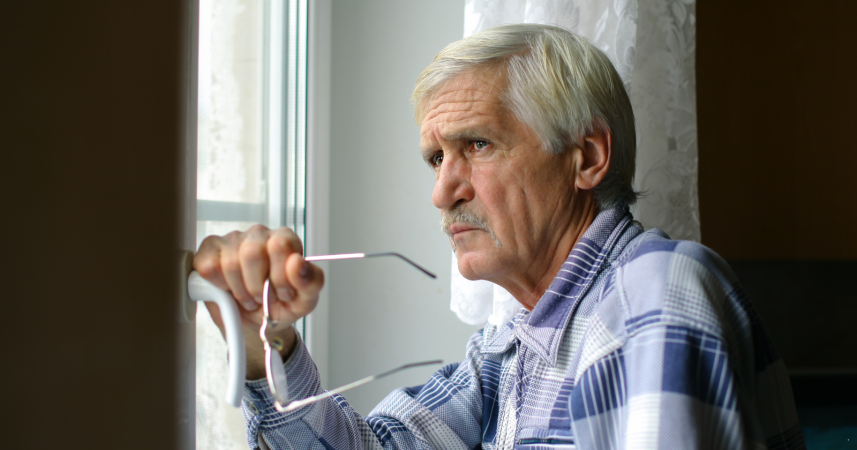
The woman who stopped calling her best friend first discovered in six months of silence what twenty years of Thursday lunches couldn't teach her: sometimes the emptiest rooms are the ones we've been filling with our own echo.
A 2023 longitudinal study tracking social networks across the lifespan found that adults over sixty lose an average of one close friendship every four years, and the attrition accelerates after retirement. What the data doesn't capture is who tends to be left holding the shorter end of that decline: the people who spent decades as the reliable initiator, the remembering one, the caller-first.
The pattern is quieter than rejection and slower than betrayal. It shows up as a phone that stops ringing six months after you stop dialing. It shows up in the retirement party attendance that can be counted on one hand despite thirty-two years of never missing a colleague's celebration.
If you're reading this in your sixties or beyond, you might recognize the arithmetic. You might already be doing it in your head.
The mathematics of unreciprocated effort
Have you ever done the math on your friendships? The calculation is simple but devastating: count how many relationships would survive if you stopped being the one who initiates.
For most of us who find ourselves with a shrinking social circle, the pattern started decades ago. We became the friend everyone could count on. The reliable one. The one who remembered anniversaries without Facebook reminders, who showed up with soup during flu season, who listened to the same complaints about the same spouse for the fifteenth year running. The more you give, the more you get back — at least, that's the premise most of us were raised on. What it doesn't address is what happens when you're the only one giving, what happens to a heart that spends forty years pouring out while running on empty.
The number, for most people who try this exercise, is smaller than they expected.
When your body becomes wiser than your heart
Arthritis taught me what my mind refused to acknowledge. Every ache in the hands seemed to catalog thank-you notes never reciprocated, casseroles delivered to doorsteps of people who never thought to cook in return, hours spent helping others move who vanished at the sight of my own grocery bags.
The insomnia that plagued my fifties was, by my therapist's reading, a nervous system rebelling against the constant monitoring of everyone else's needs while silencing my own. Bodies keep score in ways hearts refuse to.
Research from the Journal of Gerontology found that older adults who engage in daily interactions with friends experience better emotional well-being. The finding is consistent with decades of social connection research, and it's usually cited as evidence that older adults should prioritize friendship. But the study measures interaction, not directionality. It doesn't distinguish between the person hosting the dinner and the person who arrives empty-handed for the fortieth time. It doesn't account for the metabolic cost of being the sole engine in a relationship. A friendship that looks identical from the outside — two names, regular contact, shared history — can feel very different depending on which side of the ledger you're standing on. The exhaustion of one-way engagement rarely appears in the data, because exhaustion, like effort, is difficult to quantify.
The difference between being alone and being protected
After my second husband died, I spent six months barely leaving the house. Not just from grief, but from a terrible clarity: the people I'd spent decades supporting weren't there when I needed support. Some sent cards. A few texted. But the showing up, the sitting in silence, the bringing of casseroles that I'd done countless times? Notably absent.
People who are alone because they want to be alone feel less lonely. This distinction matters. There's a profound difference between isolation and the conscious choice to stop investing in relationships that deplete you.
The widow's support group I joined taught me something revolutionary: friendship is supposed to flow both ways. These women took turns hosting. They remembered each other's difficult anniversaries. They showed up without being asked and without keeping score. At 68, I was learning what friendship was supposed to feel like for the first time.
Learning to pull up what doesn't bloom
Emotional neglect can make closeness feel unsafe, even when you deeply want connection. For those of us who grew up earning love through usefulness, this rings painfully true.
My garden has become a teacher in boundaries. Plants that don't thrive despite careful tending get composted. No guilt, no second-guessing, just the acknowledgment that some things aren't meant to grow no matter how much you water them. The same principle now applies to friendships, something that would have horrified my younger self who apologized for existing too loudly.
The University of Chicago research indicates that older adults with fewer close friends and higher levels of loneliness report poorer mental and physical health. But what if those fewer friends are actually the right ones? What if the loneliness isn't from having fewer people, but from having spent decades surrounded by the wrong ones?
The surprising freedom of selective connection
Solitude is a positive state: the time and space to enjoy being with oneself — time out, or some space to drop out of the rat race, step off the treadmill, turn off the noise, and maybe enjoy nature.
My morning routine has become a practice in self-friendship. The 5:30 AM wake-up, the hour of silence with tea and journal, the evening gratitude practice. These aren't lonely activities; they're appointments with someone who finally deserves my attention: myself.
The five women in my weekly supper club have shown me what I missed for sixty years. We rotate cooking duties. We share driving to appointments. We check in without keeping score. The ease of it still surprises me, this natural reciprocity that doesn't require spreadsheets or hurt feelings.
Why giving less means having more
When young teachers ask me about workplace relationships, I tell them something I wish someone had told me at 28: "Be professional first, friendly second. Save your heart for people who've proven they'll protect it."
Research in the Journal of Youth and Adolescence found that unreciprocated friendships can negatively impact adolescents' mental health. The effect doesn't expire with age; we just get better at pretending it doesn't hurt when we're the only one reaching out.
I think of a colleague who competed with me for everything, even whose potluck dish got more compliments. When I won Teacher of the Year the second time, she didn't speak to me for a month. I apologized. For succeeding. The memory still makes me cringe, but it clarified something: shrinking yourself to make others comfortable isn't friendship. It's self-abandonment.
The revelation in the shrinking circle
The joy of long periods of solitude has also increased my joy in non-solitude: I love my children, my friends, my colleagues as much as ever, and I attend to them better when I am with them – and enjoy them more.
This is what I've noticed at 70. The shrinking circle isn't rejection; it's refinement. Every unreturned call, every forgotten birthday, every thank-you that never came — they weren't personal failures. They were data points, evidence of pouring into broken vessels.
My neighbor and I have shared Thursday morning coffee for fifteen years. We don't solve each other's deepest problems or share our darkest secrets. We simply show up, week after week, with consistency that matters more than intensity. This is friendship stripped to its essence: reliable presence, mutual care, no auditions required.
Final thoughts
The body that finally protected the heart has done real work. The aching joints, the stubborn insomnia, the exhaustion that forced the stopping — they weren't betrayals. Whether they qualify as interventions or simply as overdue consequences is harder to say.
What's less clear is whether the wisdom arrives in time to matter. Forty years of leaving the door open for people who never knocked on yours is a long time to learn a lesson, and the circle that remains at seventy is necessarily smaller than the one that might have formed at forty, had the filtering begun earlier. The refinement is real. So is the arithmetic of what it cost.
Maybe the honest answer is that both things are true at once: the protection was necessary, and it came late. The remaining friendships are the right ones, and there are fewer of them than there might have been. Whether that's a story of recovery or of quieter loss probably depends on the morning you ask.