She sat across from her therapist at 36, successful by every measure, yet when asked "What do you need?" the silence that followed revealed the devastating truth about how years of being everything to everyone had left her so empty she'd forgotten she was allowed to need anything at all.
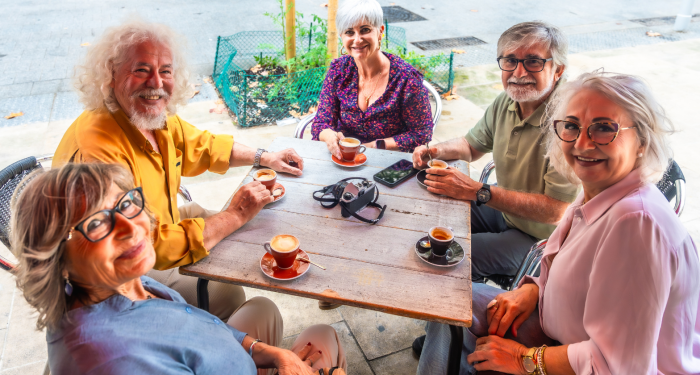
My friend Sarah keeps a mental list of everyone's coffee orders. Her mother-in-law takes oat milk now, her husband switched to decaf last spring, her sister drinks it black but only after noon. She recited all of this to me at a birthday party last month, unprompted, while I watched her forget to eat her own slice of cake. When I asked what she wanted for her birthday, she blinked at me like I'd asked her to translate something from Latin.
This is what erosion looks like. Not a dramatic collapse, not a single betrayal, but a woman who can tell you what everyone in her life prefers in their coffee and cannot name a single thing she wants for herself.
I learned this the hard way at 36 when burnout forced me into therapy. I'd been so busy being everything to everyone that I'd lost myself completely. My therapist asked me that exact question: "What do you need?" I sat there, successful career, checking all the boxes of a "good life," and I couldn't answer. The silence was deafening.
The invisible weight of constant giving
Here's what nobody tells you about being the person everyone depends on: it feels good until it doesn't. At first, being needed gives us purpose. We thrive on being helpful, being the rock, being indispensable. But somewhere along the way, that sense of purpose transforms into an invisible weight we carry everywhere.
Psychologists have observed that women conditioned to prioritize others may "gradually lose connection to their inner emotional world," leading to exhaustion, numbness, and identity erosion.
Think about your typical Tuesday. The 7:14 a.m. text from a friend whose marriage is in crisis again. The Slack message at 9:03 from the colleague who always forgets her kid has a half-day. The voicemail from your mother about your father's cardiologist. The neighbor who needs the spare key. The kid who needs the permission slip signed before the bus comes. Each request is reasonable in isolation, each one takes maybe four minutes, and by 10 a.m. you've already spent an hour on other people's lives without having touched your own. This is how the erosion works — not in earthquakes but in the slow wearing down of a coastline you don't notice is disappearing until someone shows you a photograph from ten years ago.
What makes this particularly insidious is that it happens so gradually. You don't wake up one day suddenly depleted. Instead, you give a little here, stretch yourself a little there, until one day you realize you're running on empty and can't remember when you last felt full.
Why receiving feels impossible
You'd think the solution would be simple: just start receiving more, right? But for chronic givers, accepting help or care from others can feel almost physically uncomfortable. We've built our entire identity around being the strong one, the capable one, the one who has it all together.
I remember the first time a friend offered to bring me dinner after a particularly rough week. My immediate response? "Oh no, I'm fine! Actually, let me know if YOU need anything." It took conscious effort to simply say thank you and accept the meal. That discomfort you feel when someone tries to help you? That's years of conditioning telling you that needing equals weakness.
"The gift of receiving may be the hardest lesson of all," notes Kimberly Key, Ph.D., a psychologist who specializes in this dynamic.
When you've spent years being the giver, receiving feels like admitting failure. It challenges the narrative you've built about who you are and what makes you valuable. But here's the truth: constantly giving without receiving isn't strength. It's a recipe for resentment and burnout.
The hidden cost of being everyone's anchor
What happens when you become everyone's go-to person? On the surface, it looks like success. People trust you, rely on you, seek you out. But beneath that surface lies a different reality.
Dr. Christine Carter, a sociologist at UC Berkeley, points out that "over-givers are often overwhelmed and exhausted, struggling with feelings of anger and resentment."
That anger often catches us by surprise. How can we be angry when we chose to help? When we said yes? When being helpful is who we are? But the anger isn't really about the individual requests. It's about the pattern, the expectation, the assumption that we'll always be available, always willing, always okay with giving more than we receive.
The research backs this up in sobering ways. A systematic review found that women spend more time on unpaid labor than men, leading to poorer mental health outcomes for women. This isn't just about household chores. It's about emotional labor, the constant management of everyone else's feelings and needs.
When helping becomes harmful
There's a fascinating paradox in chronic giving. Ari Väänänen, a researcher, discovered that "women who felt they gave more support than they received took 50 percent fewer sick days than their co-workers."
At first glance, this might seem positive. Look how strong and resilient these women are! But dig deeper and you realize what's really happening. These women aren't healthier; they've just learned to ignore their own needs so thoroughly that they push through illness, exhaustion, and pain because others are counting on them.
I've been there. I once presented a quarterly report with a 102 fever because I'd convinced myself my team couldn't reschedule. I postponed a mammogram three times in 2019 because someone else always had a crisis that felt more urgent than a screening I could "do next month." This isn't resilience. It's self-abandonment dressed up in a blazer.
Finding your way back to yourself
So how do you begin to reclaim your joy when you've been empty for so long? How do you learn what you need when you've forgotten how to ask the question?
Start small. When I began this journey after my burnout, I started with just five minutes each morning asking myself: How am I feeling right now? What would feel good today? Not what needs to be done, not who needs what from me, but what would genuinely feel nourishing to me?
At first, the answers were embarrassingly practical — a bath hot enough to turn my skin pink, an 8:30 bedtime, a "no" to the PTA email chain. But gradually, as I kept asking, deeper needs emerged. The need for creative expression. The need for genuine connection where I could be vulnerable. The need to stop performing friendships and start experiencing them.
Consider keeping a needs journal. Every evening, write down three things: something you gave today, something you needed but didn't ask for, and something small you could do tomorrow just for yourself. This isn't selfish; it's necessary maintenance for your soul.
Breaking the cycle
Here's what I wish someone had told me earlier: You don't have to earn the right to have needs. You don't have to be in crisis to deserve care. You don't have to give first in order to receive.
The research shows that total work time, including both paid and unpaid labor, is positively related to emotional distress in women, with unpaid work being a significant contributor. This unpaid work includes all those invisible tasks: remembering birthdays, managing family schedules, being the emotional support system for everyone around you.
Breaking this cycle requires conscious choices. It means disappointing people sometimes. It means letting some balls drop. It means accepting that not every problem requires your solution, not every crisis requires your intervention, not every person who asks deserves an immediate yes.
When someone asks for something, pause before responding. Ask yourself: Do I have the capacity for this right now? Am I saying yes from a place of genuine desire to help, or from obligation and guilt? What am I saying no to in my own life by saying yes to this?
Conclusion
The erosion of joy through constant giving without receiving is real, documented, and affecting countless women. But recognizing the pattern is the first step toward changing it.
Here is the part I can't tie up neatly for you. I've been asking myself "what do you need" every morning for almost four years now. Some mornings the answer comes — coffee on the porch, a walk, an hour of nobody's voice but my own. Other mornings the question lands in a room that still echoes, and I wonder if I asked it too late, if some part of the wanting muscle atrophied while I wasn't looking.
Maybe the question isn't a door that swings open. Maybe for some of us it's a door we stand in front of for years, knocking, listening for something on the other side. I don't know if my friend Sarah will ever be able to name what she wants for her birthday. I don't know if naming it would be enough even if she could.
What do you need? Ask it anyway. Keep asking. I can't promise you the answer arrives, only that the silence after the question is different from the silence before it.
What’s Your Plant-Powered Archetype?
Ever wonder what your everyday habits say about your deeper purpose—and how they ripple out to impact the planet?
This 90-second quiz reveals the plant-powered role you’re here to play, and the tiny shift that makes it even more powerful.
12 fun questions. Instant results. Surprisingly accurate.