Most people spend their lives trying to fix loved ones' bad moods, but the rarest form of adult love is simply sitting quietly beside someone's pain without trying to change it, solve it, or escape it.
In a 2014 study on emotion regulation in close relationships, researchers found that when people witness a partner in distress, the most common response is not comfort or curiosity but correction. We advise. We reframe. We redirect. The impulse fires within seconds, long before we've actually understood what the other person is feeling. Clinicians have a name for the opposite capacity, distress tolerance, and decades of data suggest most adults score poorly on it.
Which is why the scene is so familiar. Your partner comes home and sets their keys down too hard. They don't say anything for a minute. You can feel it. The day is still on them, heavy and unresolved. Everything in you wants to ask what happened, suggest a solution, or crack a joke to cut the weight. But the rarest thing you could do, the thing almost nobody does, is just stay in the room without trying to change what's happening inside them.
That capacity, the adult ability to sit beside another person's bad mood without trying to repair it, is one of the most underrated forms of love we rarely name. No fixing. No silver-lining speech. No quiet withdrawal because their heaviness feels like an indictment of your cheerfulness. Just presence. The conventional wisdom says good partners, good friends, good parents are the ones who help. Who offer solutions. Who know what to say. We've built an entire self-improvement economy around being useful to the people we love. But a growing body of work in clinical psychology points in a quieter direction: the people who actually steady us in hard moments aren't fixing anything. They're just staying.
Why being helpful often isn't
When someone you love is in a bad mood, the pull to do something is almost physical. You want to cheer them up, talk them down, point out the thing they're missing. This impulse feels generous. It usually isn't, or at least, it isn't only that.
Clinicians describe the alternative capacity as distress tolerance. A person's ability to be with uncomfortable emotions (their own or someone else's) without immediately acting to reduce the discomfort. People with low distress tolerance may struggle with uncomfortable emotions and often reach for avoidance behaviors when difficult feelings arise.
Here is the quiet truth behind most unsolicited advice: it is a distress-reduction strategy for the advice-giver. Your partner is upset. You feel the upset. You fix it so you don't have to feel it anymore. The help is real, but it's also a way of managing yourself.
That's not a moral failing. It's a skill gap. And it's a skill almost none of us were taught.
The thing people actually need
The word for what's often missing is validation, and it is routinely mistaken for agreement. To validate someone is not to say they're right. It's to say their feeling makes sense from inside their experience.
Writing in Psychology Today, therapist Jennifer Kolari describes invalidation as what happens when someone is told they shouldn't feel a certain way, that their beliefs are wrong, or that they did something bad. Invalidation triggers defensiveness and shuts down connection. Validation does the opposite. It signals: I see you, I'm not scared of this, I'm not leaving.
Most of us were raised in homes where emotional weather was something to be managed, corrected, or hidden. A kid in a bad mood was a problem to solve. A teenager with big feelings was an overreaction. So we grew up fluent in the language of fixing and nearly illiterate in the language of staying. Then we become adults and try to love other adults with tools designed to make uncomfortable feelings go away faster.
Where the capacity comes from
The capacity to sit with another person's mood without flinching isn't a personality trait. It's largely a product of early relational experiences and a lot of practice.
Research on attachment patterns has found that early relationships with parents and close friends meaningfully shape how we relate to the people closest to us in adulthood. People who developed secure bonds early tended to carry them forward. People whose early environments were anxious, avoidant, or inconsistent often reproduced those patterns, even when they badly wanted something different.
In other words: the friend who can hold space for your bad mood without needing to do anything about it almost certainly had someone do that for them once, or has done significant work to build the capacity from scratch.
Clinical psychologists have studied how these patterns play out in marriage. Research on newlywed couples found that participants who had insecure relationships with their parents were more likely to bring insecure attachment patterns into their current partnership. The happiest couples in the data showed secure attachment styles in both partners. The most distressed were pairs where both people carried anxious or avoidant patterns. However, people with insecure histories can still build good relationships. But it takes insight, and it usually takes work.
What this looks like in practice
Picture a partner coming home genuinely irritable. Not at you. Just at the day, the traffic, some conversation at work that didn't land right. There are three common responses.
The first is fixing. Asking if they've tried talking to their manager or considered taking time off. The advice is reasonable. The subtext, received, is: your feeling is a problem I need you to solve so I can relax.
The second is reframing, pointing out the positives or suggesting it could be worse. The intent is to lift them. The message received is: your perspective is wrong and you should adopt mine.
The third is taking it personally. Their bad mood becomes your emotional event. You get quiet. You retreat. Now they have to manage both their original mood and your hurt feelings about their mood.
The rare fourth option is the one the title is pointing at.
You stay. You listen. You say something small and honest acknowledging their difficulty. You don't try to move them off the feeling. You don't collapse under it. You don't take it on as a referendum on you. You trust that their mood is information about their day, not a problem you need to make go away to keep your relationship safe.

Why adults so rarely offer this
Part of it is the idea that we would be better off allowing people to feel what they feel and do what they do, rather than contorting ourselves to manage their experience. This framing has captivated millions precisely because it names something most adults are terrible at: not intervening.
The other part is structural. We live inside an economy that rewards output. Being useful is legible. Being present is not. You can't put something like 'sat with partner's bad mood without intervening' on a performance review. And so the muscle atrophies. We get very good at solving and very bad at staying. There's also the quiet truth that sitting with someone else's discomfort requires you to have somewhere to put your own. If their sadness activates your abandonment wiring, you can't be a calm presence for them because you're too busy managing the internal alarm. This is why people who've done real work on their own nervous systems tend to be the ones who can do this for others. You can only offer the regulation you have access to. Most of us don't realize how much of our "helping" is actually self-soothing in disguise, and we don't realize it because the culture keeps applauding us for it.
A wider picture of who holds us
The old model of who teaches us this capacity is narrower than the reality. For most of the 20th century, attachment research focused almost exclusively on mothers. More recent research has pushed back on that assumption. Studies, covered by Berkeley's Greater Good, have found that kids with secure attachment to both parents tended to have fewer symptoms of anxiety and depression and stronger language skills than kids with only one or zero secure attachments. Also, and this matters, there was no hierarchy. A secure bond with a father was as protective as one with a mother.
The broader implication is that the capacity to be steadily present for another person can come from many places: a parent, a grandparent, a coach, a partner who did the work before you met them. It takes a village to raise a child, and it takes a village to raise an adult who can sit with someone's bad mood.
As I explored in a recent piece, research on well-being in later life keeps returning to a version of this same finding: the strongest predictor isn't diet or exercise, but whether there's someone who knows the version of you that exists when you're not performing strength.
Why some people crave this and still flinch when it arrives
Here's the complication worth taking seriously. Not everyone who didn't get this as a kid becomes an adult who can receive it easily. Some people crave this kind of presence and still flinch when it shows up, because intimacy and danger got stored in the same drawer a long time ago.
If you've always had to perform okayness to be loved, someone sitting quietly beside your not-okayness can feel threatening. You'll want to reassure them, explain yourself, apologize for the mood, do anything to restore the old transactional terms. Letting someone witness you without earning it is its own skill.
A small practice
The next time someone you care about is in a bad mood, notice the urge to intervene. The pull to ask what's wrong, offer a plan, lighten the air. Don't act on it. Stay in the room. Let the silence have some weight. You don't have to say nothing. Sometimes a small, honest acknowledgment lands better than anything crafted. Something like "that sounds like a hard day" does more work than a ten-point plan for fixing the situation ever could.
That's the muscle. You notice the discomfort of their discomfort. You feel the itch to do something about it. And you trust the feeling will move, because feelings do, when they're not argued with. The practice isn't dramatic. It looks like nothing from the outside. But the person on the receiving end will feel the difference between someone who stayed and someone who started solving.
What counts as love, recalibrated
If you have someone in your life who can do this, who doesn't need you to be okay in order to stay, who doesn't take your mood as a personal affront, who doesn't rush to repair you, notice it. Name it. That person is offering something most adults were never taught how to give.
Now turn the question around. Are you that person for anyone? Honestly. Think about the last three times someone you love was in a bad mood in front of you. Did you stay, or did you start managing? Did you let them have their weather, or did you immediately begin rearranging it for your own comfort and call that love?
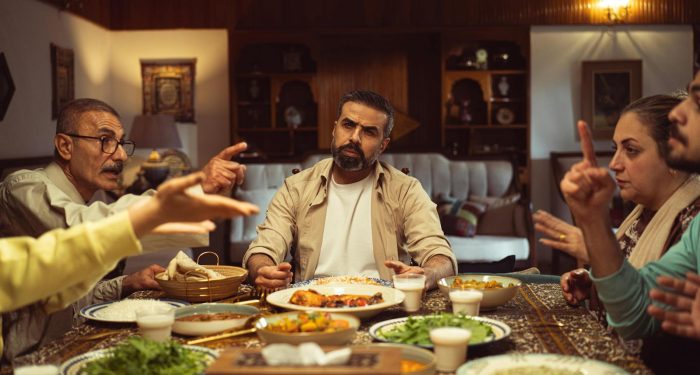
Most of us won't like the answer. We want to believe we're the steady one, the safe harbor, the person who can be trusted with someone else's darkness. But the evidence is in how we actually behaved the last time someone we loved was quietly falling apart across the kitchen table. If you reached for a solution, a reframe, a joke, or a wounded silence, you were not offering presence. You were offering performance. And the person on the other end of it felt the difference, even if they never said so.
The rarest form of love available to adults isn't loud. It doesn't announce itself. It sits in the room, unhurried, and asks nothing of the person suffering except that they be allowed to suffer without being corrected. Almost no one can do it. The uncomfortable question is whether you're willing to become one of the few who can, or whether you'll keep mistaking your interventions for intimacy and wondering why the people you love don't feel fully met.